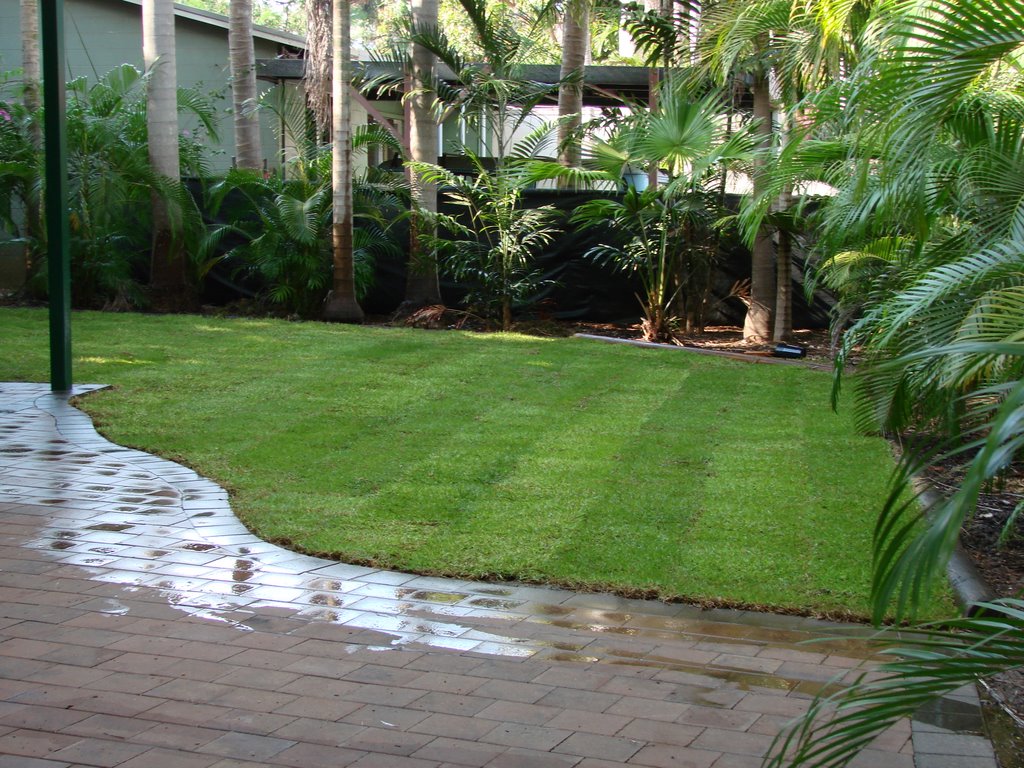
We are strong advocates of zoysia as a turf in Australia, especially in warmer areas, based on over thirty years of research and development in the tropics. The slower growth, less pest and disease issues and shade tolerance make it a great lawn. But anywhere north of Sydney on the coast and in the Perth area and into the northwest areas - Broome and Karratha for example, are also suitable. Try it yourself!
Zoysia is a well respected turf in Asian countries for golf courses, where it is slowly achieving a more positive use profile in lieu of couch. It is widely used on soccer football grounds in Thailand, Laos, Japan, Taiwan, South Korea and China. Zoysia has for many years been the median strip grass of choice in Thailand and adjoining countries, and is of increasing use as a domestic lawn. Singapore Kranji Racetrack also has horse races on zoysia turf, and most of the better golf courses in Singapore and Malaysia have zoysia fairways, with some already moving to replace couch grass on the greens.
Shade tolerance is a critical issue, with couch especially often dying in areas of shade, and that includes on sporting fields in the shadow of the grandstand. For home and commercial areas, most want to establish shrubs and often trees around a turfed area. Once they grow - there is shade! Zoysia can handle that well.
In the Darwin area there are quite a lot of examples of zoysia growing in deep shade below a large African mahogany tree, as well as in council park areas with trees. Couch turf cannot survive in shade. There are other shade tolerant turf species, but none with as good a turf performance as zoysia, overall.
We have seed available of Compadre zoysia and will deliver across Australia.
--------------------------
Why We Believe Zoysia Is The Best Lawn For Australia
The Lawn Guide is putting massive new focus onto Zoysia grass as the best lawn type for use in all the warmer regions of Australia. Here are all the reasons why we believe in Zoysia to become the future dominant grass type in the country.
 |
| Compadre zoysia seed sown - Darwin |
Zoysia Is Soft
Coming in first place is the softness of the Zoysia lawn. Zoysia is a lovely soft lawn to both walk across barefoot, or for children to play on. Zoysia has no irritating qualities to children, adults or pets.
Slow Growth Rates
One of the very best traits in favour of Zoysia is it's slow growth rate. Slow growth equates to far less lawn mowing than other grasses. Less lawn mowing means far less time spent mowing the lawn, or a saving in lawn mowing fees when using a contractor for lawn care. Finally, less lawn mowing means far less carbon emissions from using the lawn mower.
 |
| Darwin waterfront area - Compadre zoysia |
Slow growth rates also make Zoysia a very low risk to the Australian environment, where the grass almost never escapes into the wild, and if it ever does, it is very easy and quick to control.
Zoysia also has very low levels of thatch, requiring almost no de-thatching whatsoever through it's life.
Zoysia Is A Tough Guy
Zoysia is tough, it tolerates wear and tear very well, and can even tolerate the rigours of some sporting fields. This trait means Zoysia will not damage as quickly from rigorous activity as some other grasses can.
However, this resistance to wear and tear is balanced out by it's slow growth rate. Once Zoysia does become damaged, it will be slower to repair than a more aggressive lawn type.
So for most Aussie homes and businesses, Zoysia will suit perfectly and tolerate the wear and tear from these environments with ease.
Shade Tolerance
Zoysia has good tolerance to shade. Shade tolerance will be less than Buffalo and Durban Grass, but has greater shade tolerance than Couch and Kikuyu. So if shade is of moderate concern then Zoysia is a worthwhile consideration.
Low Fertiliser Use
Zoysia is also renowned for it very low need for fertiliser throughout the year. For the average homeowner who wants a the lowest maintenance lawn possible, fertilising once a year is often enough to keep the lawn looking good.
For those people who want a more manicured style lawn, then fertilising rates can be bumped up slightly to achieve this desired outcome. Even with this increase, Zoysia will still need less fertiliser than other grasses.
Less fertiliser usage makes Zoysia a great choice for an environmentally responsible lawn.
Low Water Use
Zoysia is a famed low water use grass. In fact, the best way to water Zoysia is to turn off all reticulation and only ever give Zoysia a drink of water when it shows signs of deteriorating from water loss. It's at this time we can give Zoysia a nice deep drink of water until next time it tells us it needs a drink.
Drought Tolerance
Along with most warm season grasses, Zoysia tolerates and recovers from drought very well.
Zoysia appears to brown off quicker than other warm season grasses when drought conditions arrive, but has equally excellent recovery from drought when compared to other grasses.
Studies in this area often show Zoysia to recover more slowly than other grasses, and that's OK. This simply shows Zoysia as a slower growing grass - which it is, and as such it will not grow and repair at the enormous speeds that a highly aggressive grass like Couch will. While drought repair may be slower, the chances of full repair are equal to other grasses, and after drought - Zoysia will continue to provide a far lower maintenance lawn over the years.
Weed Pest and Disease Resistant
The Zoysia family of grasses are highly resistant to many common weeds, pests and diseases. However, this does not mean Zoysia is immune to these problems, just less prone when compared to other lawn types.
When it does become necessary to treat lawn problems, Zoysia has excellent tolerance to all weed, pest and disease treatments, which is on par with Couch grass tolerance to these products.
For these reasons, Zoysia is both low maintenance, and is environmentally friendly.
Weeds
Zoysia has a very thick, dense and tightly woven layer of stolons (above ground runners) which will effectively choke out any new growth of invading weeds. This mat of stolons will continue to thicken over the first 3 years of the lawn being established.
Zoysia is not completely immune to weeds or invading grasses, but instead has very high resistance to being invaded. As a result, Zoysia will require far less weeding maintenance, including the use of weed sprays than most other lawn types.
Lawn Pests
Zoysia has brilliant natural resistance to lawn pests such as grubs and armyworm. Studies have shown that many lawn pests will often avoid a Zoysia lawn whenever there is an alternative lawn type such as Couch nearby, which the pests will invade in preference over the Zoysia, the same studies have shown that some lawn pests can sometimes die after feeding on Zoysia.
Zoysia is not immune to lawn pests, but they are significantly less prone to experiencing these problems.
Less lawn pest problems means less maintenance work and less use of chemical pesticides to treat pests. This makes Zoysia low maintenance and environmentally friendly.
Lawn Disease
Zoysia is also less prone to lawn diseases than other grass types, which also reduces the use of chemical sprays and homeowner maintenance. Making Zoysia an easy care lawn which is environmentally friendly due to the highly reduced use of lawn chemicals.

Zoysia The Way You Like It
The last great Zoysia characteristic is it's ability to be the lawn we all want - and with less effort.
Zoysia can be neglected with almost no watering whatsoever, no fertilising, and no mowing for months, and it will never become out of control or grow to the heights and weediness and thatch levels of grasses like Couch and Kikuyu. You simply give the grass another mow, and it all looks pretty good again.
For almost all lawn owners in Australia who want a nice looking lawn with minimum effort, minimum lawn mowing, least lawn problems, lowered costs, and is most environmentally friendly, then Zoysia is the perfect grass. Fertilise and water the lawn minimally, and mowing when required is all that's required to keep Zoysia up to a very high standard for most homes in Australia.
For those of us who like a manicured lawn, it's simply a case of increasing fertilising, increasing water, and increasing mowing frequency, and Zoysia will develop into a beautifully crafted lawn. And even with all of this, Zoysia will still maintain at this high standard with less work, and at less cost than other grasses.
This Is Why We Love Zoysia
And these are all the reasons we believe Zoysia should become the standard grass for use in all the warmer regions of Australia from now on.
In our opinion, Zoysia is the lowest maintenance lawn available, requiring the least watering, least pesticide use, least fertiliser use, experiences the least problems and requires the least lawn mowing. On top of this, Zoysia is tough and hard wearing, drought tolerant, and looks good under almost all conditions.
Zoysia has the lowest maintenance costs, with the least effort, and with the lowest negative impacts to the environment, and this is why we love Zoysia.
© Copyright ~ The Lawn Guide www.thelawnguide.com.au