Thursday, May 29, 2014

Better Sanitation SAVES Lives and Money

Open defecation costs $US260b globally


A Mexican sewer driver prepares for a dive in a drainage system

The UN is calling for the end of open defecation as it costs about $US260 billion worldwide. Source: AAP


THE United Nations says one billion people worldwide are still practising open defecation, which cost of billions of dollars annually due to illness, death and loss of productivity.

The practice spreads diseases like diarrhoea, dysentery, hepatitis A and typhoid through entire communities, the UN officials said, costing about $US260 billion ($A281 billion) worldwide.

It has kept women under the threat of harassment, violence and rape, and has forced young girls to abandon education at puberty.

"It is high time to talk openly about open defecation, and it is high time to bring it to an end," UN Deputy Secretary General Jan Eliasson said during the launch of the world body's sanitation campaign in New York. "Let us remember that the first step to solve any problem is talking about it." The practice is most widespread in poor and developing countries.

Some countries, including Vietnam and Bangladesh, where more than 30 per cent of their populations relieved themselves in open areas in the early 1990s, ended the practice entirely in 2012.

However, open defecation lingers in dozens of other countries.

In India an estimated 600 million people - more than half the population - defecate without using a toilet or latrine. 

"If we could end open defecation in just 10 countries, we would see the numbers of people affected drop by 80 per cent," Eliasson said, noting that the end of the practice could mean a direct reduction of 36 per cent in deaths due to diarrhoea for children under five.

I have written several prior posts about water and sanitation, in developing economies, as a vital for removing poverty and also empowering women especially.  It freaked me the first time I encountered it - which was in Africa - in the mid 1980s.  Hard to really believe what I was seeing.

While progress is being made - can we do more.........much more!

It seems simple - provide public toilets, but in some areas little seems to happen.  When the cost to society is so high - US$ 260 billion - a solution needs to be achieved.

We need to put more money into some of these simple things.  It does pay off!

[ some of this sourced via AAP]

Tuesday, May 13, 2014

More BSE Detection in Brazil

ALMOST a year and a half after declaring an atypical BSE (Bovine Spongiform Encephalopathy) case in Parana state in Brazil, the OIE (World Organisation for Animal Health) has confirmed a BSE case in Mato Grosso state – the largest beef producer in the country and the second largest exporter, reports Meat and Livestock Australia (MLA).

According to the latest OIE report, the source of the outbreak (or origin of infection) is unknown or inconclusive. Investigations have indicated a likely isolated case of an atypical form as the animal was raised under an extensive system (grass-fed with added mineral salt only) and slaughtered at an advanced age – approximately 12 years old. During the epidemiological investigation, 49 animals from the cohort, which did not show clinical signs of the disease, were destroyed.

Mato Grosso state has a significant role in the Brazilian beef industry with a herd of 28.4 million head (Acrimat) and accounted for 19 per cent of total exports in 2013 with significant shipments to Venezuela, Hong Kong and Egypt.

According to MAPA (Ministry of Agriculture, Livestock and Supply) only Peru has temporarily banned Brazilian beef so far – a 180 day ban was placed last Thursday. Beef exports to Peru totalled 1562 tonnes swt in 2013.
typical brahman cattle produced in tropical areas of the world

As of today, it also seems as if Egypt has also banned Brazilian beef.  Probably not unexpected, as they source meat from Mato Grasso state.  There are sure to be more......

While not lording it over Brazil as a significant competitor to Australia in international markets, it does highlight the ultra importance of Australia working very hard to continue to remain free of the BSE problems, and along with other major animal diseases including foot and mouth.

Australia remaining free of these diseases is of urgency.  We do not want to be in a clean up mode; it would be disastrous for our beef trade! 

Monday, May 12, 2014

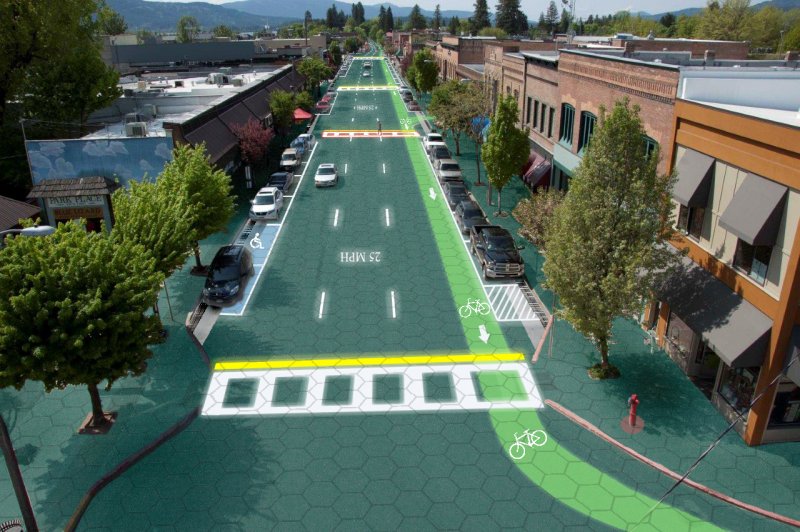
Solar Panels as Roads??

Solar Roadways

Solar panels that you can drive, park, and walk on. They melt snow and... cut greenhouse gases by 75-percent?!!!


Artist's rendition of Sandpoint, Idaho - Home of Solar Roadways
Graphic designed by Sam Cornett                                                 Thanks Sam!


Solar Roadways is a modular paving system of solar panels that can withstand the heaviest of trucks (250,000 pounds). These Solar Road Panels can be installed on roads, parking lots, driveways, sidewalks, bike paths, playgrounds... literally any surface under the sun. They pay for themselves primarily through the generation of electricity, which can power homes and businesses connected via driveways and parking lots. A nationwide system could produce more clean renewable energy than a country uses as a whole.

(http://solarroadways.com/numbers.shtml). They have many other features as well, including: heating elements to stay snow/ice free, LEDs to make road lines and signage, and attached Cable Corridor to store and treat stormwater and provide a "home" for power and data cables. EVs will be able to charge with energy from the sun (instead of fossil fuels) from parking lots and driveways and after a roadway system is in place, mutual induction technology will allow for charging while driving. 

Did you know: 

  • Solar Roadways has received two phases of funding from the U.S. Federal Highway Administration for research and development of a paving system that will pay for itself over its lifespan. We are about to wrap up our Phase II contract (to build a prototype parking lot) and now need to raise funding for production. 

  • Our glass surface has been tested for traction, load testing, and impact resistance testing in civil engineering laboratories around the country, and exceeded all requirements.
  • Solar Roadways is a modular system that will modernize our aging infrastructure with an intelligent system that can become the new Smart Grid. We won the Community Award of $50,000 by getting the most votes in GE's Ecomagination Challenge for "Powering the Grid" in 2010. We had the most votes again in their 2011 Ecomagination Challenge for "Powering the Home".
  • On August 21, 2013, Solar Roadways was selected by their peers as a Finalist in the World Technology Award For Energy, presented in association with TIME, Fortune, CNN, and Science.
  • Solar Roadways was chosen by Google to be one of their Moonshots in May of 2013. 
  • Solar Roadways was chosen as a finalist in the IEEE Ace Awards in 2009 and 2010.
  • Solar Roadways has given presentations around the country including: TEDx Sacramento, Google's Solve for X at Google's NYC Headquarters, NASA, Keynote Speaker for the International Parking Institute's Conference and much more...
  • Solar Roadways is tackling more than solar energy: The FHWA tasked us with addressing  the problem of stormwater. Currently, over 50% of the pollution in U.S. waterways comes from stormwater. We have created a section in our Cable Corridors for storing, treating, and moving stormwater.
  • The implementation of our concept on a grand scale could  create thousands of jobs in the U.S. and around the world. It could allow us all the ability to manufacture our way out of our current economic crisis.
---------------------

This seems like a great idea, as long as costs are reasonable.  A bit like the use of wastewater ponds to install floating solar panels, covered in another recent post.  


Friday, May 09, 2014

Australia's Northern Beef Industry - Maybe Unsustainable??

A recent analysis seems to be proposing that the northern Australian beef industry is unsustainable financially.

What it does not seem to say though, is that the analysis was focussed on the almost worst period in many years for the region - somewhat akin to the shock of the US stopping the purchase of northern beef in the mid 1970s, when a lot of properties went to the wall.  This period is the same as the dramatic drop in live cattle exports to Asia, especially Indonesia, a trade dramatically stopped by the government of Australia on animal cruelty grounds [arguable, at best].
NT brahman cattle for export

Since the conclusion of the report, prices and volumes have increased rapidly and are now at around A$2.30 per kg live and numbers are on track for maybe 800 000 head this year to Indonesia alone, and with new markets opening in Vietnam and China, although prices may be a bit lower.

It is all doom and gloom........BUT - a few critical points emerge from the study, one being that a herd size of 3000 head is seen as the minimum.

Read the summary below, and available on the MLA web site, as is the full report.

The Northern beef report - 2013 Northern beef situation analysis

Project code: 
B.COM.0348
Date commenced: 
June 26, 2013
End date: 
April 11, 2014
Project status: 
Completed

Description/Abstract:

The 2013 Northern Beef Report comprehensively details the performance of the northern beef industry, by region, market and herd size over the 12 years since the start of the century. On average, the profits achieved over that time frame have been low, but not trending down. However the profitability of the top performers across the industry has been trending down over the period analysed. Profit after interest is decreasing, and is mostly negative, as a result of increasing debt with no increase in profits. The majority of Northern Beef producers are not economically sustainable as they are not able to fund present and future liabilities. There is wide variation in performance across the industry; this report clearly identifies what separates the top performers and what factors determine the profitability of a beef business. This report provides analysis of a wide range of measures, providing the means for individual producers to understand their herd and business performance and to improve by setting realistic targets.

Final report summary:

• This report analyses in detail the performance of the northern beef industry for the 12 years from 2001 to 2012. Incorporating quality private and public data, this report provides a comprehensive picture of the performance of the northern beef industry by region, herd size and market.
• This report incorporates the concept of economic sustainability; clear definitions are provided and used to assess industry performance.
• On the basis of these definitions, the data indicates that the majority of northern beef businesses are not economically sustainable at present. This is not a recent phenomenon, with recent average business performance, before financing, similar to longer term averages.
• Economic sustainability takes a longer term view; in the short term many beef businesses are struggling to survive with cash deficits accumulating.
• Whilst profits before financing are largely unchanged (on average over the 12 year period analysed), after financing, performance is deteriorating due to increased debt with no increase in profit.
• Income has decreased over the period analysed, mostly a function of declining beef prices rather than a decline in productivity (kg beef/AE). Costs have reduced as income has reduced, through belt tightening, and improved labour efficiency, resulting in little change in profits.
• Profitability of the top performers has declined over the longer term, suggesting that industry profitability is decreasing.
• Excluding land value changes, return on assets has averaged less than 1% across the industry over the last 3 and 12 years.
• Comparison of profitability is made between businesses that supply different markets, namely live export, slaughter and store. When the effect of scale is excluded, producers primarily supplying the slaughter market recorded the highest profit per adult equivalent, due primarily to better productivity.
• Both total numbers of cattle in the north and stocking rates have risen, what these stocking rates are relative to carrying capacity is unknown. The extent to which environmental capital is substituting for financial capital is also unknown.
• There is considerable variation in performance between beef businesses within the industry. The Top 25% performers (across all regions, herd sizes and markets) consistently outperform the average and have businesses more likely to be economically sustainable over the long term. This indicates that there are successful business models for producing beef in northern Australia.
• The superior performance of Top 25% producers can be attributed to:
o Higher income through better herd productivity.
o Lower operating expenses, largely through better labour efficiency.
• There is no evidence that superior long term performance can be attributed to a higher average beef price received, more rainfall or better quality land.
• Operating scale (number of adult equivalents under management) has a significant influence on business performance. Operating scale, along with labour efficiency, can explain most of the differences in overhead expenses per AE between businesses.
• Lack of operating scale is a major impediment for smaller beef businesses (less than 3,000 adult equivalents), but the benefits of additional scale for larger businesses are limited with herd profits decreasing as herd sizes become very large. There appears to be an optimal operating scale range, either side of which different factors can erode performance.
• It is paramount that smaller producers understand the implications of operating scale on their viability and how best to address to it. There is mounting financial pressure for smaller producers to make structural changes to their business.
• Efficient use of labour is a key finding amongst producers in the Top 25%. Labour costs and achieving a highly efficient use of on-farm labour is a challenge that the industry must understand and work towards.
• There is no evidence of expense increases over the period analysed, this is not to say that some input costs have not increased in real terms, but any increases have been absorbed and the overall cost structure of businesses has not increased.
• Differences in income explain more of the differences in profit between average and Top 25% performers than expenses. Nearly all differences in income per AE between herds are attributable to productivity differences.
• Nearly all productivity differences between herds can be attributed to the better performers achieving:
o Higher reproductive rates
o Lower mortality rates
o Heavier sale weights
• The findings of this report now make it possible to construct a very clear roadmap for economic sustainability for a northern beef business, embracing both location and target market. This roadmap provides clear guidelines on factors critical to income (productivity) and expenses (scale & labour efficiency).
• This analysis is consistent with other recent and more targeted studies of herd productivity (reproduction and mortality). This analysis also finds wide variation between businesses in these measures of herd productivity and report that improvements in herd productivity have a big influence on overall business performance.
• There is wide variation across the industry in what it costs to produce a kilogram of beef (cost of production) and this analysis shows that there is significant scope for improvement for a lot of producers. There is far less variation in beef price received and much less scope for individual producers to improve beef price received. Therefore it could be said that it is the high cost of production that is the main cause of low profits for the majority of northern beef producers.

Researcher name:

Bush AgriBusiness Pty Ltd, Holmes & Co.   

Thursday, May 08, 2014

World's Tallest Green Wall - It Is Awesome!

World’s tallest indoor living wall | TallestLivingWall_hero-2014050513992669928300 | ODS
tallest indoor living wall
Green Over Gray just completed the world's tallest living wall in the new Desjardins building in Quebec. The 65 metre (213 foot) living wall is named "The Currents" and was inspired by the nearby St. Lawrence River.
With more than 11,000 individual plants and 42 different plant species, this super tall vertical garden works hard to improve indoor air quality and create a unique environment for employees and visitors to the building.


  World’s tallest indoor living wall | TallestLivingWall_1-2014050513992669929265 | ODS World’s tallest indoor living wall | TallestLivingWall_2-2014050513992669925101 | ODS World’s tallest indoor living wall | TallestLivingWall_3-2014050513992669924750 | ODS World’s tallest indoor living wall | TallestLivingWall_4-2014050513992669921925 | ODS 

“According to our research, this living wall is the tallest indoor vertical garden in the world,” said Patrick Poiraud, co-founder of Green Over Grey.

“The wall is fully hydroponic (i.e. soil-free) and incorporates plants that thrive in similar vertical environments found in nature, such as on tree branches and next to waterfalls. The end result is a visually pleasing piece that provides cleaner indoor air and improves both the acoustic and the value of the property.”

The vertical garden’s design is directly inspired by the St. Lawrence River, which can be seen from the building at its location in Lévis. Swirling currents of water are recreated in the layout of the wall with different shades of green, yellow, crimson, purple and cream along with different textures of the plants. Plant species include philodendrons, monsteras, fig trees, ginger, snake plants (Sansevieria trifasciata), elkhorn ferns (Platycerium bifurcatum), scheffleras, clusias and banana plants. The living wall provides a pleasant indoor environment and works to remove toxins and purify the air with plants like the peace lily, which is one of the most effective oxygen-producing plants.

Plants are grown in soil-free hydroponic panels made from 100 per cent recycled materials that eliminate 1.5 metric tons of recycled water bottles and plastic bags from landfills. The 15-story living wall is located on the north side of the new Desjardins building in a daylight-filled atrium. 

The eco-friendly building is expected to be completed later in September 2014 and was designed to achieve LEED Gold certification.

The tallest one I had personally seen was in Singapore - about 8 stories tall - but this is considerably higher.

I hope they have their maintenance ideas well sorted out, as that might be a bit tricky!! 

[ partially sourced from Outdoor Design Source May 2014]

Thursday, May 01, 2014

Contamination and Pollution in Land and Water in China - Frightening??

And people wonder why the Chinese are buying overseas land for agriculture!!  A recent report, noted in the official Xinhua news agency is sobering reading, with major contamination of land and water resources.

In Australia we should both consider ourselves very lucky..........but as sure a hell, we need to work hard to keep our soil and water clean both now and for the future.

That issue is part of the angst being expressed by many over the use of frackking in gas development along the eastern states, with concerns over both land and water damage.  It is also a concern along the Hunter Valley over mine expansion [ mostly coal] in that that will ruin the agriculture and horticulture there, not to mention the very valuable thoroughbred industry.

We have neither the people nor so far, the unregulated industrial development rampant in China. Luck or good management?  Whatever, let it continue!

The data from China is appalling, and not improving either it seems.
The soil close to Yangzong Lake, southwest China's Yunnan Province was seriously polluted by arsenic in 2009.

More than half of China's water reserves are moderately or heavily contaminated, the latest annual report released by the country's Ministry of Land and Resources has revealed. The findings confirm previously raised concerns over the condition of China's water and soil, despite large-scale cleanup programs that have cost billions of dollars, Xinhua reported.

The report revealed that 59.6 percent of the country's water was polluted last year, 2013. That's even more than in 2012, when the percentage was 57.4. Just over one tenth of water reserves fell into the high-quality category last year, although the methods used to determine quality were not specified.

These figures are similar to those from a 2010 report which found that the proportion of contaminated water was around 57 percent, suggesting that even though the government has made significant investments in cleanup efforts, the most it has been doing is keeping pollution at the same level. A proper improvement is still not noticeable in the results.

The situation is similar with the condition of China's soil, according to a new national soil survey released by the Ministry of Land and Resources and the Ministry of Environmental Protection. The results indicate that nearly one fifth of China's arable land was polluted, with about three percent of it classified as moderately or seriously polluted. The bulk of the pollution came from heavy metals, the report noted.  This is pollution - it does not discuss erosion damage and related matters - they must surely be very significant as well.

This recent data released from the Communist Party of China has indicated that 19.4 percent, or around 1.05 million square kilometres of China’s agricultural land is contaminated with an array of toxic metals including cadmium, nickel and arsenic. These can be carcinogens and with China a significant supplier of frozen vegetables to Australia, there is some degree of concern over the quality of the products being imported.  Our family will NOT use frozen Chinese vegetables, and has not done so for years.

 Australia's soils are mostly old and inferior, when compared to many countries, with poor nutrient levels and low organic matter and relatively poor structural conditions - so we do need to make the best from our poorer soils.

Wednesday, April 30, 2014

Seed Germ Bank for Cereal and Wheat's Future


It was recognised that for crops humanity depends on, we can’t assign a single owner

Plant Genetic Seed Banks have been around for many years with the first major one developed in the USA at Fort Collins in Colorado at Colorado State University, where I have spent some time involved with seed physiology and storage research, many years ago.

A lot more has happenend since then and most recently with the development of the Millenium Seed Bank project at Svalbard in Greenland, which has received a lot of publicity, as well as seeds from Australia.

For the major cereal crops - rice, wheat, corn etc there are a few of these facilities often associated with major research facilities.  CIMMYT has had a wheat seed bank [ along with similar cereals] basically since it commenced as a research centre.

THE future of the world’s wheat is reliant on the seed lines in the massive vaults at the CIMMYT research centre just outside Mexico City where 150,000 lines of wheat seed from primitive wild races to the latest purpose-bred varieties are safely stored.

Assembled over the past 40 plus years from countries around the world, including Australia, the facility’s temperature and humidity-controlled vaults house a diverse collection of bread wheats, durum wheats, triticales and barleys.

It is the largest collection in a network of 11 international genebanks around the world that, in total, hold 600,000 accessions.

CIMMYT wheat germplasm collection head Thomas Payne said the material held in the collection in Mexico was an important resource for plant breeders around the world. He said interest in the world’s botanical resources began in the era of exploration when early explorers sent botanical materials back to their “home countries”. But it was only in the last century that the importance of conserving the materials in a viable state for long term use was recognised. “People started to recognise the fragility of genetic resources and the fact that varieties could, and were, becoming extinct,” he said.

Mr Payne said that prompted a flurry of plant exploration and germplasm collection around the world for much of the 1900s, especially in the period between 1960 - 1980 as the Green Revolution was developing. “But that tailed off in the 1980s because nations became aware of genetic resources within their territories,” he said. “There was a recognition ultimately that was codified through international treaties that stipulated the genetic resources within the boundaries of a country belonged to that country.”

The resulting Convention on Biological Diversity recognised that the genetic resources within the territory of a sovereign nation were the property of that nation. “It was enacted because countries were concerned, for instance, that a big pharmaceutical company would come in and make millions of dollars out of acquiring a medicinal plant,” he said.  It was also a significant issue in Australia, as we both use the genetic resources from overseas acquired through exploration eg for new crop and pasture varieties as well as a major unexplored country for plant genetic resources [ see the recent Australian newspaper article of April 2014 on a very promising cancer drug from the north Queensland rain forest].

But Mr Payne said an inadvertent consequence of the convention was it stopped germplasm sharing – in particular, sharing of agricultural crops. “So it was recognised there needed to be another legal instrument to facilitate the exchange of germplasm and the sharing of agricultural crops,” he said. “A wheat variety that has been developed over the last 10,000 years and bred over the last 50 or 100 years has parentage representing many different countries. “So how can you say who is the legal owner of, say, triticum aestivum - bread wheat – which originally evolved 10,000 years ago in what is now the Caspian Sea area of Iran. Is Iran the owner of all bread wheat in the world? “We know many important varieties have come from Australia. Would you say Australia is the owner? “So it was recognised that for crops humanity depends on we can’t assign a single owner.”

In the International Treaty on Plant Genetic Resources for Food and Agriculture which was ratified in 2004 and came into action in 2007, agricultural germplasms were elevated to a special status that recognised their global significance. “The intent of the treaty is to open up the sharing of agricultural genetic material,” Mr Payne said. “It says the recipient of materials from CIMMYT or any of the genebanks under the treaty are free to do anything they want to with the material. “They are encouraged to share the materials they develop from the materials they receive from CIMMYT. “They are also free to patent or restrict access to the material. But if they choose to restrict access to the materials they have to pay a certain percentage of the income they receive into an international benefit sharing fund.”

Australian scientist and CIMMYT’s Generation Challenge Program transition manager Peter Ninnes said 

Australia was one of the first countries to sign up to the international treaty to share genetic resources.

Mr Ninnes has been instrumental in putting in place a structure from which Australia benefits from the genetic diversity of the wheat at CIMMYT. “Australian breeders make their selections in the field in Mexico, the seed goes into quarantine in Australia and is then made available to the Australian breeding teams. That is how Australia gets access to the genetic diversity,” he said. “The intention is that the information that comes out of the assessments in Australia feeds back into the program at CIMMYT.”

These facilities have also been instrumental in research work on seed storage - the ability to develop systems and practices to preserve seed viability and their intrinsic genetic message in the DNA for extended time periods.  And to also research those seed and crop lines that cannot be easily stored - the so called recalcitrant seeds [often tropical] that do not respond well in general to cool dry conditions, common for storage of many seeds incl wheat.  Recalcitrant seed management is a story in itself!

[ part of this article appeared in the online edition of Qld Country Life April 2014 ]

What is present in the world’s largest wheat collection in CIMMYT’s genebank


  • 150,000 varieties;
  • 350 grams of each variety;
  • two storage vaults;
  • a medium-term vault at zero degrees Celsius;
  • a long-term vault at minus 18 degrees Celsius;
  • seed viability remains at 85 percent or above for 30 to 100 years;
  • seed available to breeders around the world;
  • 5 grams of cultivated varieties sent;
  • 5 to 10 grains of rarer wild species sent.
  • Sunday, April 27, 2014

    Water Demand To Soon Exceed Supply in Many Areas

    Analysts with Bank of America Merrill Lynch Global Research have released a report that predicts global demand for fresh water will soon outstrip supply, according to an article on CBS MoneyWatch.

    Stylised water supply system
    "Water scarcity is a pressing people and planet issue," the report stated.  This is hardly new to many working in the sector, or those in aid / development areas.

    According to the article, 768 million people around the world have no access to clean drinking water and 2.5 billion are without proper sanitation, noted the article, while about 2.5 percent of all water on earth is fresh water.

    Addressing these issues is a priority for the Water and Sanitation Program [ see more at www.wsp.org] and many simple measures can be effective, especially on the sanitation side.  But fresh water supply is more difficult, with wasteful water use a big issue itself, especially in developed countries.

    The report states that humans have already reached "peak water," at or approaching the limit of renewable freshwater supply, the article reported, and half of the world's population will face "water stress" conditions by 2030.

    According to the article, as many as 50 nations can be expected to be involved in conflicts over water by 2050.

    You can read the full article here.

    Wednesday, April 23, 2014

    Temperatures ARE Rising - Data Shows Extent


    The proportion of days in the United States that are warmer than the long-term average increased from 42 percent in 1964 to 67 percent today, according to an analysis of 3.2 million temperature anomalies over the last 50 years.


    Enigma.io, a New York City-based company that specializes in searches of information from public databases, examined data from 2,716 U.S. weather stations to track the temperature anomalies. The company found that since 1964, temperature anomalies characterized as warm or “strong warm” have increased by an average of .5 percent a year.


    Temperature-anomalies-Enigma-800.jpg


    Enigma’s data show, for example, that in 2012, 84 percent of temperature anomalies in the U.S. skewed on the warm side. The company forecast that by the 2030s more than 70 percent of anomalous temperatures in the U.S. are likely to be higher than the historical average, rather than colder.

    Would similar data be apparent for Australia?
    My guess is that similar data could be derived fro Australia.

    So much for the climate change deniers, especially in both the US and Australia.
    Australia is about to change ideas about how to combat climate change by removing a carbon tax and to replace that with so called direct action efforts to control greenhouse gas emissions.

    Most scientists do not think the scheme would work.  Australia will be doing less to mitigate climate change.

    With recent international reports arguing that temperatures and greenhouse gas emissions that are driving that issue are increasing more rapidly, it is time to also accelerate efforts at reducing impacts, or we are all up the creek without a paddle!!!   Sorry............our kids are. 

    Tuesday, March 25, 2014

    Cassava - A Crop for Now and the Future

    International teams are working to bring cassava genetics into the 21st century and help food-insecure countries.
    Cassava plant drawings


    Cassava is a starchy, tuberous root first domesticated about 10,000 years ago in South America. Also dubbed manioc, cassava may be more familiar to many as tapioca—tiny pearls of starch used to thicken pies and jams.

    For about 800 million people in the tropics, however, it is a staple, not a baking aid.

    Now, concerted efforts at crossbreeding and genomic selection have created novel versions of cassava that could dramatically boost yields, ward off malnutrition and grow in a wide range of conditions.
    The typical cassava shrub produces unassuming brown roots with snowy white or creamy coloured interiors. 
    A cassava crop is perennial—after maturing for at least eight months roots can be harvested for a few years. New plants grow easily from cuttings. The root is carbohydrate-rich, protein-poor and must be boiled, roasted, fermented or otherwise processed to tame compounds that can produce toxic hydrogen cyanide during digestion.  In Africa, 500 million depend on the root as their main staple.

    Because many cassava consumers live in developing countries, the plant has not received the intense breeding that has benefited crops more familiar to the Western world such as corn, wheat and rice. In the past decade, however, cassava has started to garner attention. China and Thailand use it to make high-quality starch, and some countries see the crop as a potential biofuel. What’s more, cassava will likely do well in the world’s changing climate; it survives drought when other crops have failed and flourishes in warmer temperatures.  For many years Thailand has exported cassava chips to Europe to use in poultry feeds.

    Big boost in yield
    Among the latest and most impressive breeding successes comes from Nagib Nassar, a cassava breeder and professor emeritus of genetics at the University of Brasilia. He has developed a new variety that could dramatically boost yields. Each of his plants produces about 14 kilograms of edible roots after one year whereas traditional varieties yield just two to three kilograms.

    These are not the only new cassava varieties out there, with others including a cassava high in vitamin A, which turns the root orange, and one with extra protein.  Work is also advancing on varieties resistant to other problems including brown streak disease, green mites that devastate leaves, cassava bacterial blight that browns stems and defoliates the plants and cassava mosaic virus that yellows leaves and stunts plant growth.

    Cassava crop showing tubers with growing crop in background

    Getting to the next generation

    These promising varieties could be just the beginning in a cassava revolution. “There is a growing recognition for the importance of food security in the most food-insecure areas," says Jim Lorenzen, a senior program officer at the Bill and Melinda Gates Foundation, a major supporter of cassava research. The foundation aided researchers in the sequencing of the cassava genome and awarded $25 million in late 2012 to a massive international effort called the Next Generation Cassava Breeding (NEXTGEN) project, which aims to jump-start genetic improvement of cassava. "It’s a very good time for cassava research," Lorenzen says.
    He notes that this attitude is reflected in more researchers focusing on cassava and intense interest from African leaders, including Nigeria’s Minister of Agriculture and Rural Development, Akinwumi Adesina.
    Millions of small famers and their families stand to benefit from cassava researchers’ efforts.

    By the end of 2014, more than 9,000 farmers are scheduled to grow Nassar’s chimeras in Brazil. Expect to hear more about the starchy root in the future, as new varieties help feed the tropical world

    Tuesday, March 04, 2014

    Siamese Fighting Fish Established in the Top End of the NT

    When aquarium fish are disposed of - thrown out if you like - do they just go away?  Die from natural causes?

    Not necessarily it seems.  Some people even dispose of their aquarium fish in local waterways, where they can sometimes become a problem.  In this case there is now a local population of Siamese Fighting Fish established in Fogg Dam at Humpty Doo - they are not a welcome guest!

    The brightly coloured machisimo fish are beautiful in an aquarium but definitely an unwelcome invasive pest fish in the wilds of the NT, in freshwater dams and creeks.  Fogg Dam is a lovely spot, a tourist drawcard just outside Darwin, but the fish seem to be well established and removal is probably unlikely.

    No one is sure how they arrived in Fogg Dam, but the population seems to be developing and is well established according to media reports, as well as observations by locals.  Dumped from an aquarium seems most likely.
    one colour type - Betta splendens  - Siamese fighting fish

    They might look nice in an aquarium, but they are an invasive pest fish and unwelcome!

    Thursday, February 27, 2014

    Australia Has the World's Oldest Rock

    They reckon that Australia is the oldest continent.  Most Australia's have tended to agree with the statement, alluding to stromatilites off the West Australian coast, which were said to be pretty old.


    Recent investigations now add a new dimension to the answer..........where are the oldest rocks?


    It seems that yes, they are in Australia, with the secrets of early Earth lying in a bright red crystal no larger than a dust mite.


    A group of scientists claim to have dated a 400-micrometer zircon crystal to about 4.4 billion years ago — a discovery that could help scientists understand the geological conditions of early Earth.


    The crystal was found in a region north of Perth, Australia known as the Jack Hills in 2001, Reuters reported.


    The scientists published their findings in the science journal Nature Geoscience on Feb. 23; in the publication, Valley and his team explained their use of a technique called atom-probe tomography to date the crystal. The technique allows scientists to image and assess single atoms of lead to determine the age of a rock with increased accuracy.


    Earth is thought to be around 4.54 billion years old, but according to fossil records, no evidence of life has been found prior to 3.5 billion years ago. Even the oldest rocks before this discovery were about 3.8 million years old.


    This gap in rock formations and life accounts for about 600 million years during which scientists knew very little about the state of early Earth. Still, it's often thought to have been "hell-like" with a magma ocean, according to John Valley, a professor in the Department of Geoscience at the University of Wisconsin-Madison, who led the group of scientists.


    Evidence like this zircon crystal suggests that the Earth cooled to form the planet's crust earlier than previous rock evidence has suggested, within the first 100 to 200 million years. In that cooling process, steam from the atmosphere would have condensed to create oceans.


    If oceans were present, it could've been possible that microbial life also existed, Valley told Reuters — a wildly different portrait of our planet than a nightmarish, lava-covered Earth.


    Wow............this could also mean that life  may have also evolved a whole lot earlier too, if these conditions with water and minerals were conducive to primitive life form development.

    Friday, February 14, 2014

    World's Largest Solar Power Station Officially Open

    Solar power is taking some big steps with the official opening of the 400MW solar power station in the Mojave Desert in the USA.

    Read more on the media reports here - http://www.environmental-expert.com//news/huge-thermal-plant-opens-as-solar-industry-grows-412652?utm_source=News_Energy_13022014&utm_medium=email&utm_campaign=newsletter&utm_content=feattextlink

    While operating for a few months already, this week was the formal opening.

    There are  hundreds of thousands of mirrors into the largest solar power plant of its type in the world, a milestone for a growing industry that is testing the balance between wilderness conservation and the pursuit of green energy across the West.

    The Ivanpah Solar Electric Generating System, sprawling across roughly 5 square miles of federal land near the California-Nevada border, formally opened Thursday after years of regulatory and legal tangles ranging from relocating protected tortoises to assessing the impact on Mojave milkweed and other plants.

    The $2.2 billion complex of three generating units, owned by NRG Energy Inc., Google Inc. and BrightSource Energy, can produce nearly 400 megawatts - enough power for 140,000 homes. It began making electricity last year.

    More large systems are now under development, and these newer ones, along with other large systems around the world will begin to allow a decent system evaluation as they feed electricity into large grids for domestic and industrial use.

    Ivanpah Solar Power station


    A portent of future energy systems or just a curiosity?

    Some authors believe it will take 50 years to switch over, and away from fossil fuels.  These large systems may just show the way.

    Tuesday, February 11, 2014

    Compadre Zoysia Turf - Seed or Sod??

    We have seed available of Compadre zoysia now [in fact, we keep stock of Compadre zoysia seed] and summertime is a great time to be considering sowing.

    Zoysia seed needs soil temperatures above 20C for satisfactory germination and establishment.  In warm temperate areas think mid spring onwards.  In the Australian tropics sowing is possible year round, but drier conditions between about May and October mean a long time to irrigate to get good establishment and growth to build a dense lawn.

    Compadre zoysia is a dense, laterally spreading japonica zoysia, with short leaf blades, well suited to warm temperate, tropical and sub tropical areas.  Generally, there are fewer disease and insect problems with zoysia in comparison to most other warm season grasses.

    Email to:  office@abovecapricorn.com.au  for more information.

    We have case studies, photos and information leaflets to get you started in developing your own area of what is probably Australia's best warm season lawn turf grass.  And of course, we can also sell you the seed and provide the know how, based on over 35 years professional agronomic experience with zoysia grasses in Australia and overseas, for you to get the job done.

    Search on the LHS of the blog for more articles with information on zoysia.  It is a great lawn!

    And remember.......it does thrive with less care and management, including less fertiliser and mowing, and it will grow in the shade, something few turf grasses are capable of doing.

    20 week old Compadre turf, seed sown, near Darwin

    Compadre zoysia turf sod is also available in a few locations around Australia, although availability does sometimes change.  Contact us for more information.

    UPDATE - January 2015 - Seed of Compadre generally unavailable from early January 2015 as stocks in Australia have been sold.  More coming later in 2015.

    We are able to supply Zenith zoysia seed only at present, a very similar - in fact near identical  - variety developed by the same company. We are using this variety ourselves for commercial work across N Australia in place of Compadre at present.  Characteristics of Zenith are similar to Compadre, with only minor differences most users would not notice, especially in warmer regions.

    Wednesday, February 05, 2014

    Organic Beef - A Growth Story in Australia

    While the number of producers applying for formal certification to the main organic certifying bodies is not huge, it is steadily increasing, with over 60 producers being added in the past year or so.


    For many extensive graziers, who do not use huge external inputs into their beef cattle operation and graze natural pastures, the change is not necessarily a major one, on the production areas.


    But where it really counts is the better price on offer for organic beef, often 16 - 25% more for the producer.


    This additional return adds a considerable benefit in a somewhat depressed Australian domestic cattle market, and with virtually all organic beef being sold - either locally or overseas, a much better secure income.


    Two groups are among the major players in Australia - Arcadian Organic Beef and OBE [ probably the significant player who got the market started].  The former sources cattle within both Queensland and NSW predominantly, while OBE tends to source livestock from the Channel country.


    There are issues around handling, slaughter and processing to ensure the organic certification is maintained from paddock to plate, and where cattle need to move from extensive to more intensive pastured areas, they must go via organically certified properties, which is often a bit tricky.


    But very doable.


    While organic beef is an already established market commodity, the newcomer - certified pasture fed beef is also rapidly developing a market profile.


    Some argue that grass fed beef is superior in quality to grain finished beef, and there is some evidence to support that in terms of fat quality and the presence of higher omega-3 levels in grass fed meats.  Certainly, grass fed beef is good eating!


    But it is the organic meat story that is thriving - more power to the quality of Australian produced food.


    Wednesday, January 22, 2014

    Aid Works - Ask Bill Gates!

    Each year Bill Gates [ you know the guy - the Microsoft man!] writes a lengthy letter on work within the Foundation he and his wife now chair.

    His predictions for 2035 are illuminating, and somewhat uplifting.  Read the full letter here - it is worthwhile - http://annualletter.gatesfoundation.org/#section=home .

    Basically, he has strong hopes that aid is working and that more and more of the world's poor are moving out of abject poverty.  And that health, disease control, water and sanitation are improving and quite significantly.  It is these community efforts that are making a difference, and the plight of the less fortunate in the world IS improving.


    The naysayers of the world are regularly opposed to aid and support, and even Australia is reducing the aid monies available.  While governments are not the only donors around the world, they do tend to be among the more significant, although some philanthropic and charitable organisations are now doing more, and contributing more money and support.

    Money is not everything, but it sure helps.

    The basics we take for granted are often optional extras for many in the world.  Clean water, sanitation and access to health resources are not available to all.............yet.  But it is getting better.

    If you believe someone like Bill Gates who is close to the scene........ do not give up hope, nor abandon support.


    Thursday, January 09, 2014

    Composting Mortalities for Disease Control in Poultry Disease Outbreaks

    This research improves the readiness of industry and government agencies to respond quickly to contain and eradicate emergency animal diseases in the Australian poultry industry.

    The project investigated the feasibility of using composting for emergency poultry carcass disposal in Australia and validated the effectiveness of the process in eliminating Newcastle disease virus in poultry carcasses.

    The project findings will assist the development of more robust emergency disease response procedures since the research that was undertaken simulated the scale and ‘real-world’ character of emergency mass mortality composting without compromising scientific integrity.

    Composting of carcasses in mass livestock disease outbreaks has commonly been considered sceptically by many.  Yet, the physical conditions in well managed compost operations will achieve conditions that can eliminate disease organisms.

    I am aware of work using the in vessel VCU technology conducted in the 1990s that was able to eliminate plant diseases by in vessel composting, as well as effectively transform poultry carcasses killed by a small outbreak of Newcastle disease in NSW into compost as well as eliminating the disease organism.

    The timely work by lead author Kevin Wilkinson from Victoria, with a long connection with composting activities as well as government policy, shows it can be done on a large scale, a scale sufficient to handle a major disease outbreak.

    The full document can be downloaded free from here - https://rirdc.infoservices.com.au/items/13-098

    Well done to RIRDC for supporting the work.

    There are lessons here also for some of Australia's near neighbours in handling mass poultry disease outbreaks.  After all, composting is not that difficult, over expensive, nor logistically problematical and it works!!

    Another big plus for composting as an organic low energy driven solution.