Thursday, August 04, 2016

Are Take Away Coffee Cups REALLY Recyclable?


Hugh Fearnley-Whittingstall standing in front of a bus made of cups

A waste mountain of coffee cups........

Every day hundreds of thousands of Britons put their coffee cup into a recycling bin. They're wrong - those cups aren't recyclable, and the UK throws away 2.5bn of them a year. It must stop, writes Hugh Fearnley-Whittingstall.

One chilly morning last March - exactly the sort of morning when a warming cafe latte could seem appealing - I took to the streets of London in a double-decker bus adorned with 10,000 empty takeaway coffee cups.

It might have looked like a piece of dodgy conceptual art, but it was actually designed to illustrate the vast volume of takeout cups we throw away daily in the UK.

My bus didn't represent all of them, though - 10,000 is the number of cups the UK gets through in just two minutes.

The British - like the Americans and Italians - are a nation of caffeine addicts. Walk down any busy street and you'll see people clutching coffee-filled cardboard vessels.


Woman holding plastic cupsImage copyright iStock
That adds up to a huge number of used cups - more than seven million a day, or 2.5 billion a year. The sorry truth is, next to none of them are recycled - and the even sorrier fact is that no-one's taking responsibility for that, least of all the big coffee retailers who have created this takeout trash mountain.

During my War on Waste battle, I've looked at all kinds of issues related to food waste, such as the heinous "cosmetic standards" applied to supermarket fruit and veg that lead to mountains of perfectly good produce being dumped.


Hugh Fearnley-Whittingstall standing with a megaphone in front of a bus covered cups
Hugh's War on Waste: The Battle Continues  -  on BBC One at 21:00 BST on Thursday 28 July or catch up later via iPlayer

The coffee cup crisis is somehow even more glaring - a wanton waste going on right under our noses.

Most consumers wrongly assume that paper cups are a "green" choice.

It's an assumption coffee companies are happy not to challenge. They know differently, but they're keeping that to themselves. They're not going to tell conscientious consumers that putting a used coffee cup in a recycling bin is pointless. But it is.

The takeout cups that are the stock-in-trade of High Street coffee giants such as Starbucks, Caffe Nero and Costa are currently almost impossible to recycle.


Caffe Nero, Costa and Starbucks cupsImage copyright Ben Pruchnie
To make these cups waterproof, the card is fused with polyethylene, a material that cannot be separated out again in a standard recycling mill.

What's more, the cups are not even made from recycled material in the first place - the way they are designed means one thin seam of card inside the cup comes into contact with the hot drink, so they have to be made from virgin paper pulp.

And of course, they have very brief lives - just the time it takes to down a macchiato. The millions of coffee cups we use every day are, in effect, virgin materials with a single use, thrown almost immediately into the bin - a horrendous waste, with a hefty carbon footprint.

These poly-lined cups are, technically, capable of being recycled - a fact that enables coffee companies to describe them as "recyclable".

However, the reality is this is only possible in a highly specialised recycling facility - of which there are only two in the UK. One of these sites has never actually dealt with a single paper cup - the other has processed a very tiny number.


Two takeaway coffee cupsImage copyright a-plus image bank / Alamy Stock Photo
In every meaningful sense, conventional paper coffee cups are not recyclable in Britain.

There is nothing, of course, on the average takeout cup to let you know this. 

Some cups even sport the little Mobius-loop symbol - the three arrows in a triangle - which communicates a pleasant whiff of eco-friendliness to the hard-pushed coffee consumer. But this symbol is not necessarily an indication that the object can be easily recycled.

If you go to the websites of the big coffee brands, you'd be forgiven for thinking they've got sustainability completely covered. But their claims are about as substantial as the froth on a poorly made cappuccino.

More from Hugh Fearnley-Whittingstall


Hugh Fearnley-Whittingstall standing in front of a mountain of parsnips
"Watching 20 tonnes of freshly dug parsnips consigned to the rubbish heap in a Norfolk farmyard - purely because they didn't look pretty enough - is still one of the most shocking things I've ever seen," wrote Hugh Fearnley-Whittingstall.
The rejected vegetables that aren't even wonky

On the Costa website, for example, under the misleading headline "great taste without the waste", the company has the sheer brass neck to describe its cups as "eco-friendly" - perhaps the least accurate use of the term I've ever heard.

By way of justification, Costa explains that the card for its cups comes from sustainable wood pulp, before claiming that said cups "are recyclable in a number of locations across the UK". The number of locations, as I've said, is two - max. And Costa sends less than 1% of its cups for this treatment.

Starbucks, meanwhile, is uselessly vague. "We're working on a solution to the challenges of paper cup waste," it says, before adding reassuringly that "paper cups make up a small proportion of the waste produced in our stores".


Woman holding cupImage copyright iStock
That's a statement that means little without hard figures - though it does suggest they are being ridiculously wasteful in other ways too.

These are just a couple of the companies keeping the UK awash with discarded coffee cups - there are, of course, many more. All of them are silently passing the responsibility for recycling cups on to their customers without fessing up to the fact that it is an all but impossible task.

What's the alternative to eco-unfriendly cups? Reusable ones are an option and Starbucks does offer customers a small incentive to choose these. But that incentive should be substantially increased and adopted by all the major coffee chains - reusable cups are not currently making any kind of dent in the problem.

A change in coffee cup design is the second obvious answer. And the frustrating fact is that a recyclable paper coffee cup already exists. I visited inventor Martin Myerscough who demonstrated his version of the takeout cup which can be made from recycled paper and recycled after use in standard paper recycling facilities.


Coffee cupImage copyright iStock
Starbucks have announced that they are interested in testing out these new cups - but why aren't other coffee retailers snapping at his heels for the blueprint?

When I challenged some of these retailers on camera, they earnestly expressed their commitment to "look into" the cup waste problem. That's not the same as doing something about it.

If we're to see genuine progress, not just kneejerk PR responses, these companies need to feel the heat from the only people who can actually hurt them - that's you, the coffee-drinking public.

Consumer pressure can make change happen very quickly. Following my War on Waste programmes last year, more than 300,000 people signed a letter to the UK's big retailers demanding they do something to reduce the waste they generate.


3 cupsImage copyright iStock
Since then, many supermarkets have begun stocking more of the "imperfect" vegetables they had previously rejected, and increasing the amount of surplus stock they donate to charities, rather than to landfill.

These are small steps, but encouraging and certainly cast-iron proof that the voices of customers ring in retailers' ears.

If enough people make a noise, these companies will have no choice but to step up and start dealing with their woeful waste issue.
  • Starbucks says: "Reusable cups are a key part of our overall waste reduction strategy - and we have been offering a money off incentive to anyone who brings in a reusable cup for over a decade. We don't include recycling symbols on our paper cups. We are... undertaking a trial with our waste management supplier Veolia on cup segregation and collection. We are also exploring potential solutions with cup suppliers, including testing Frugalpac on our standards for safety and quality."
  • Jason Cotta, managing director, Costa, says: "Costa's takeaway cups and lids are recyclable, as evident in our partnerships with Veolia and James Cropper, who recycle our cups. We do, however, agree that not enough takeaway cups are recovered and recycled and it is right that the industry as a whole is challenged to confront this issue. Until we are satisfied that more of our takeaway cups are being recycled we have removed the Möbius Loop symbol." The firm met FrugalPac early last year and ran similar tests to those announced by Starbucks last week but concluded that the cup on offer at the time would not work for them.


Coffee capsules in front of a coffee cupImage copyright iStock
The German city of Hamburg has banned coffee pods from state-run buildings as part of an environmental drive to reduce waste. Should others follow suit?
Is there a serious problem with coffee capsules?

----------------------------------------------------------

Original article appeared in   in late July 2016. 

Hugh Fearnley-Whittingstall is a well known UK based  TV personality in the food area with a number of TV series over the past few years around country style food, sustainable farming and living.

Wednesday, August 03, 2016

Zero Food Waste and the Circular Economy - the View From Asia


Achieving a circular economy with zero food waste is the collective responsibility of government, academia, private enterprises, non-government organizations and consumers. It is also a constantly evolving issue across the globe.

[original article by Dalson Chung - see below]

We live in a world of diminishing resources but growing appetites. In fact, about a third of the food produced for human consumption every year is lost or wasted, according to the United Nation’s Food and Agriculture Organization (FAO).1 Singapore alone generated about 800,000 tons of food waste in 2015—equivalent to two bowls of food per person per day—an amount which has increased by 45 percent over the past 10 years.2

Given the place of pride that food holds in our collective identity and as a small island nation that imports most of our food, this might come as a surprise. But this is a statistic that Singaporeans should be aware of, and hopefully, endeavor to change by conserving, maximizing, re-using and recycling, as much as possible, to reduce food waste.

The Circular Economy and Food Waste
In a circular economy, the value of products and materials is maintained for as long as possible; to minimize waste and resource use, resources are kept within the economy when a product has reached the end of its life, to be used again and again to create further value.

And that is where the challenge begins. Food wastage, unfortunately, occurs at various phases of its journey from farm to plate. This occurs mainly at the early stages of the food value chain for a variety of reasons, including inefficient harvesting techniques or inadequate storage facilities. On the other end of the spectrum, consumer behavior plays an important role in countries importing the food. For example, consumers tend to buy only the best looking produce of the same price range, leaving perfectly edible but unsold items to be discarded.

All of this wastage adds up. According to estimates by the FAO, almost 50 percent of all fruits and vegetables, 30 percent of cereals, 20 percent of meat and dairy and 35 percent of fish are wasted.3 

The Washington-based Food Tank says that up to 40 percent of the food produced in the U.S., and approximately 1.3 billion tons of food globally, is wasted every year.

At the same time, more than 800 million people worldwide are going hungry. Up to 100 million tons of food are wasted annually in the European Union, potentially increasing by a fifth to 120 million by 2020,4 while China generates more than US$32 billion worth of food waste every year.5

The long-term impact of this wastage goes beyond just food. Agriculture uses 70 percent of the global freshwater withdrawal and when food is wasted, so is water.6 Food wastage would also be the third biggest contributor to global carbon emissions, producing an estimated 3.3 Gtonnes of CO2eq (carbon dioxide equivalent), including methane emissions from landfills, a gas more than 25 times as potent as carbon dioxide at trapping heat.7 Failing to resolve the issue of global food waste would have far-reaching effects on global sustainable development and the creation of a circular economy.

Concerted Global Effort
These statistics have illustrated the impact of food wastage and triggered an urgency for world leaders to tackle the issue. Champions 12.3 was recently formed at the World Economic Forum in Davos to galvanize the international community to reduce food loss and waste. The group aims to accelerate the progress to meet Target 12.3 of the UN Sustainable Development Goal—halve per capita food waste and reduce food losses by 2030. It is led by a coalition of 30 members, including high-level executives from Nestlé, Tesco, the U.S. Department of Agriculture, World Resources Institute and World Wildlife Fund (WWF) International, to name a few.
At the national level, countries have introduced different initiatives to reduce food wastage, ranging from China’s “Clean Your Plate” movement, to France banning supermarkets from throwing away or destroying unsold food.

In 2015, the U.S. Department of Agriculture (USDA) and Environmental Protection Agency (EPA) announced the country’s first-ever national food loss and waste goal—to cut food waste in half by 2030.8 As part of this scheme, a wide range of initiatives will be launched, including the development of innovative technologies that aim to increase the reduction, recovery and recycling of food waste. Consumer education about food loss and waste will also be a key focus, including an app to help consumers understand how to store food and read food date labels.

The Singapore Context
In Singapore, the National Environment Agency (NEA) is taking an active role in reducing food wastage in every link of the food chain, by cultivating an understanding of food wastage among consumers, businesses and organizations, kick-starting initiatives to reduce food wastage and ensuring that food waste is given a second lease on life where possible. In January of this year, NEA launched a pilot to test the feasibility of recycling food waste onsite at hawker centers,9 and there is a second pilot coming up to explore the collection and transportation of food waste from multiple premises to a demonstration facility for co-digestion with used water sludge. In addition, it is also now mandatory for large malls and hotels to submit reports on their waste data and waste reduction plans to NEA.

With greater awareness, an increasing number of businesses in Singapore are taking a more proactive approach to reducing food waste. NTUC FairPrice, the largest supermarket chain in Singapore, developed a Food Waste Index10 that measures the annual total food waste against the total retail space of its stores in order to track its progress on various food waste reduction initiatives. To minimize wastage, McDonald’s Singapore uses a production management system that forecasts the quantity of products that needs to be prepared as well as a “cook in smaller quantities, but cook more often” approach, where food is prepared only after an order is received.11

It also makes business sense to reduce and recycle food waste. Hotels like Swissotel The Stamford, Singapore uses a composter to convert its food scraps into organic fertilizer for the hotel’s herb garden, which in turn supplies organically grown herbs, vegetables, fruit and edible flowers to all of the hotel’s F&B outlets. The Swissotel Merchant Court uses a digester system to transform its 350 tons of food waste produced per year into water, which can be used for washing floors and plant irrigation.12 Onsite food waste treatment systems, on top of producing resources from waste, also mean that organizations benefit by paying less for waste that needs to be hauled away for disposal—a win-win solution that benefits both businesses and the environment.

Changing Public Mindsets and Consumer Behaviors
The biggest challenge in reducing food waste will be to change longstanding perceptions and consumption patterns. One approach is through educating consumers on the potential savings from reducing food wastage or refraining from overbuying.

To do so, NEA’s food wastage reduction program encourages consumers to engage in smart food purchases, storage and preparation habits to extend the lifespan of groceries, helping households conserve valuable resources while saving on costs. Materials have also been developed to provide suggestions on meal planning, food storage, as well as recipes and innovative ideas on how to use leftover food to create tasty dishes.

Initiatives by supermarkets to repackage and sell unsold, cosmetically imperfect food also help to educate consumers about the quality of food for consumption, while reducing the amount of food that businesses throw away. This not only helps to change consumer behavior over the long term, but will also result in cost savings for businesses as well as consumers.

Leading the Food Waste Agenda in Asia
Achieving a circular economy with zero food waste is the collective responsibility of government, academia, private enterprises, non-government organizations and consumers. It is also a constantly evolving issue across the globe, with most countries now beginning to address the issue fully.

Dalson Chung is Managing Director of the CleanEnviro Summit Singapore as well as the Director in the Industry Development and Promotion Office and the Director in the Sustainability Office with the National Environment Agency (NEA). NEA, one of the two Statutory Boards of the Ministry of the Environment and Water Resources (MEWR), is the public organization responsible for improving and sustaining a clean and green environment in Singapore. For more information, visit www.cleanenvirosummit.sg.
Notes
  1. http://www.fao.org/save-food/resources/keyfindings/en/
  2. http://www.channelnewsasia.com/news/singapore/singapore-needs-to/2413008.html
  3. http://www.fao.org/save-food/resources/keyfindings/en/
  4. http://ec.europa.eu/food/safety/food_waste/index_en.htm
  5. http://www.worldwatch.org/food-waste-and-recycling-china-growing-trend-1
  6. http://www.fao.org/fileadmin/templates/nr/sustainability_pathways/docs/Factsheet_FOOD-WASTAGE.pdf
  7. http://www.fao.org/fileadmin/templates/nr/sustainability_pathways/docs/Factsheet_FOOD-WASTAGE.pdf
  8. http://www.usda.gov/oce/foodwaste/faqs.htm
  9. Open air food complexes
  10. http://bit.ly/1UQXvy7
  11. https://www.mcdonalds.com.sg/sustainability/
  12. http://www.swissotel-sustainability.com/Cms_Data/Contents/Swissotel/Media/Files/Swissotel-Sustainability-Report_2015.pdf
CleanEnviro Summit: Singapore 2016
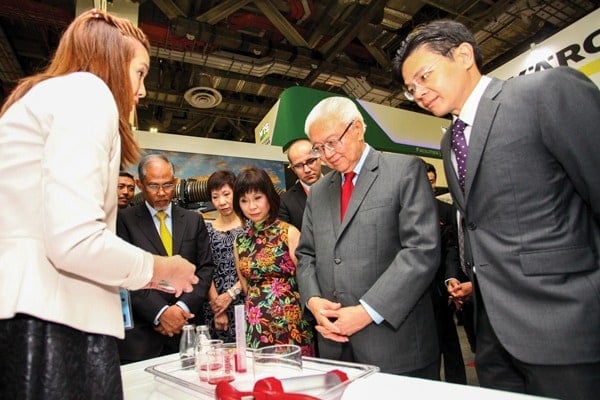
Singapore, with her track record of balancing the needs of urban development with protecting the environment, along with innovative waste and cleaning management solutions, is keen to lead the conversation on food waste. In its third edition, the biennial CleanEnviro Summit Singapore 2016 was a key platform for policy makers, academia and industry players to exchange ideas and insights on the latest environmental market trends including circular economy and effective management and reduction of food waste. These insights will be critical for the long-term sustainable development of not only this food-loving nation of ours, but for the world at large. A myriad of activities including the Clean Environment Convention and high level plenaries, business forums and Clean Environment Regulators Roundtable were held at the CleanEnviro Summit Singapore 2016. The inaugural City Solutions Singapore Expo and Innovation Pitch had also showcased the latest innovations in waste management, cleaning, environmental technology and recycling solutions. Dr Tony Tan, President of Singapore, on the expo tour following the opening ceremony of WCS-SIWW-CESS, watching the demostration of EcoWorth Tech’s Carbon Fibre Aerogel (CFA) technology.  Photo courtesy of the CleanEnviro Summit Singapore.
Singapore, with her track record of balancing the needs of urban development with protecting the environment, along with innovative waste and cleaning management solutions, is keen to lead the conversation on food waste. In its third edition, the biennial CleanEnviro Summit Singapore 2016 was a key platform for policy makers, academia and industry players to exchange ideas and insights on the latest environmental market trends including circular economy and effective management and reduction of food waste. These insights will be critical for the long-term sustainable development of not only this food-loving nation of ours, but for the world at large.
A myriad of activities including the Clean Environment Convention and high level plenaries, business forums and Clean Environment Regulators Roundtable were held at the CleanEnviro Summit Singapore 2016. The inaugural City Solutions Singapore Expo and Innovation Pitch had also showcased the latest innovations in waste management, cleaning, environmental technology and recycling solutions.

Dr Tony Tan, President of Singapore, on the expo tour following the opening ceremony of WCS-SIWW-CESS, watching the demostration of EcoWorth Tech’s Carbon Fibre Aerogel (CFA) technology.
Photo courtesy of the CleanEnviro Summit Singapore.

-------------------------------

Worth reading and thinking through the ideas as they fit your country and city.  What can you do to lessen food waste?  At home?  At work?  In your town?

There are many other articles on managing food waste that provide a way forward........  remember the cliche from Nike ......just do it!

Tuesday, August 02, 2016

Sowing and Nutrition - for Seed Sown Zoysia


This question is a perennial one that is regularly asked by those developing a new turf area.  While there are some guides about how to sow seed, the nutrition aspects are not widely available particularly for conditions outside of the USA.  

Zoysia from seed is effectively established with modest nutrition – we suggest 2 applications each of 200g / 100 sq m of a good mixed NPK fertiliser with trace elements, applied evenly to dry soil before sowing and raked into the soil, and at 3-4 weeks after sowing which can be irrigated into the ground.  Suitable products include Yara Hydrocomplex NPK 12:15:10 [or similar as many blends are close to this] plus trace elements and iron.  Others potentially available include Crop King 55 and 88, Nitrophoska Blue and a range of other suitable all-purpose fertilisers used at sowing depending on availability at your local supplier.

Follow that by switching to a slow release fertiliser eg Scotts  - [ or other brands that may be available from many garden shops incl Bunnings and BigW in 2kg and 4 kg  bags, but do not use any with herbicide while the area is so young], applied at about 6-8 weeks  from sowing and thereafter at 12 week intervals in year 1 – you can use about one half of the recommended rate for zoysia – the recommended rate is broadly based for use on couch.  After that maybe 2-3 times a year is enough -August to October [depending on location], early March and [maybe in warm areas] May. for larger areas, sometimes a 25kg bag is a sensible buy - store it in a secure lidded plastic pail and it will be okay for several years. 

Slow release fertiliser is strongly recommended for all zoysia turf areas.  Avoid excess fertilising and non-slow release nitrogen fertiliser – that encourages thatch development.

If more green colour is needed for your turf – apply 0.5% - 1% iron sulfate solution [no stronger please] – great colour can be achieved but not too much growth! 

We strongly suggest additional potassium in September/October and March each year [ southern hemisphere areas] – use potassium sulfate [sulfate of potash] at 1kg / 100 sq m, and avoid muriate of potash.  This potash product is sold in 1.5 and 2.5 kg pails from many major garden stores and also is available in larger sizes [25kg] if required.

At sowing, a very light mulch cover can be helpful to manage and assist with holding moisture close to the surface during the vital early few weeks.  Light materials are best including sugar cane mulch and mature fine compost or similar, with a very thin cover helpful – no more than 1-2mm that holds moisture close to the surface where the seed is germinating.  

After sowing, irrigation during the day, for a few minutes each time, is needed to dampen the surface but not make it too wet.  As to the number needed - suggest 2-3 times each day at late morning and early afternoon as a start………but need to adjust as needed, and it will be temperature and wind dependent.  This can be reduced once seedlings emerge – some individual judgment is needed on this issue, as all sites and conditions are different.  The need is for SURFACE DAMP not SURFACE  DROWNING.

Seed emergence can be sped up with seed priming – soak seed for up to 36 -48hrs in warm [definitely not cold] water at around 20C eg and keep inside where it is warmer, then drain and lay out seed to surface dry in the sun next morning………..can speed emergence by a quite a few days [ see info from Pickseed].

Weeds can be troublesome at some, often older or renovated sites.  Make sure the weed is identified correctly before rushing to use any herbicide. Often repeated mowing will aid removal of the weeds as the turf species develops and strengthens often choking out the weeds. 

DO NOT use glyphosate / Roundup® or similar products on zoysia – it is quite sensitive to this type of product!  There are some products that may be useful; with an MCPA /dicamba mix often well suited for broadleaf weed control [one trade name is Kamba M – there are some others].  Try to avoid use of herbicides when the area is very young, unless you really understand what you are doing or have sought professional advice.  If in doubt ask us – there are often solutions available.

Prepare in advance, be organised at sowing and be prepared to invest time and effort then – it will be rewarded with a great lawn nearly always achievable [If in doubt, checkout the You Tube videos].  Most poor outcomes are traced back to problems at sowing and site preparation.

For larger zoysia seeded areas – eg over 1000 – 2000 sq m, often using hydroseeding may be a suitable option.  It works very well with the mulch used at sowing acting as a very good surface mulch and erosion management tool.  For smaller areas costs of cleaning equipment before hand  can make using hydroseeding too expensive, even though results are generally very good.


Monday, July 18, 2016

Solar Pumping for Farm Irrigation

Solar pumping: the economic & enviro rewards


Energy is one of the fastest growing on-farm costs. The CRDC-funded Improving energy efficiency on irrigated cotton farms project found in 2015 that the average direct energy cost was $298 per hectare, with diesel counting for at least 85 percent.

But not for cotton grower Andrew Gill of Narromine.

The installation of a solar diesel hybrid irrigation bore pump on his Central West NSW farm has led to big cuts in fuel costs, greater irrigation efficiencies and a massive reduction in greenhouse gas emissions.
Attracted by the drop in the price of solar panels in recent years and the prospect of the system paying for itself in less than four years, Andrew decided to install a solar diesel hybrid system at one of the pump sites on their Narromine farm at the end of last year.
The move has led to a cut in pumping costs from $76/megalitre to $41/ML and slashed diesel use by between 45,000 and 55,000 litres a year. Over 25 years, that equates to a saving of more than 1 million litres of fuel and a reduction of over 3000 tonnes in carbon emissions.


Learn more about Andrew's system in this CottonInfo case study and in this video. And find out more about how you can improve your on-farm energy efficiency here.
------------------------------

While using solar energy for farm water pumping is not new, nor is this the first ever story on the subject it does highlight that this approach is now effectively MAINSTREAM.

And it can work in many many locations around Australia and the world.

Sure capital cost is an issue so a planned approach to financing is important........but it has a big payoff in cost savings and a feel good outcome too.  And it works........that has to be a critical issue as well in the present time of 2016!

Wednesday, June 22, 2016

Will the EU Ban Glyphosate?

Why Europe may ban the most popular weed killer in the world - It’s not just about cancer, is it?

Why Europe may ban the most popular weed killer in the world
Without ​glyphosate, ​fighting weeds ​will get more ​expensive and ​more complicated.​
Chafer ​Machinery/​Wikimedia ​Commons ​

Why Europe ​may ban the ​most popular ​weed killer in ​the world ​

By Erik Stokstad Jun. 17, 2016 , 10:00 AM
It's hard ​to find an ​herbicide like ​glyphosate. ​It’s ​cheap, highly ​effective, and ​is generally ​regarded as one ​of the safest ​and most ​environmentally ​benign ​herbicides ever ​discovered. But ​a report last ​year that ​glyphosate ​could cause ​cancer has ​thrown its ​future into ​jeopardy. Now ​the European ​Union faces a ​30 June ​deadline to ​reapprove its ​use, or ​glyphosate will ​not be allowed ​for sale. ​Here's a ​quick ​explanation of ​the issues. ​

Who uses glyphosate?

Just about ​everyone who ​hates weeds. ​The herbicide ​is widely ​sprayed to ​fight weeds ​along railroad ​tracks, in ​backyards, city ​streets, parks, ​and elsewhere. ​Many kinds of ​agriculture ​rely on ​glyphosate as ​well—and ​farmers are by ​far the biggest ​users. (Sales ​skyrocketed in ​the United ​States and ​Latin America ​after Monsanto ​and other ​companies ​genetically ​modified ​soybeans and ​other crops to ​withstand the ​effects of ​glyphosate. ​That means ​farmers can ​easily kill ​weeds without ​harming their ​crops.) The ​herbicide has ​done more than ​benefit ​farmers' ​profits; ​glyphosate has ​also curbed ​soil erosion by ​facilitating no-​till agriculture,​ the practice ​of spraying ​fields before ​planting ​instead of ​plowing up ​weeds. ​

Why is it controversial?

Environmental ​advocates have ​long worried ​about health ​effects of ​pesticides and ​herbicides, ​including ​glyphosate. The ​U.K. Soil ​Association, ​for example, ​wants a ban on ​pre-harvest ​spraying of ​wheat fields, a ​practice that ​kills green ​heads of wheat ​and allows an ​earlier harvest,​ but also ​leaves residues ​of glyphosate ​in the grain. ​Trace amounts ​have been found ​in bread and ​beer, causing ​anxiety among ​consumers. If ​you're a ​chemical ​company selling ​herbicides in ​Europe, it'​s very bad news ​to mess with ​the perceived ​purity of food. ​

What makes ​glyphosate a ​big issue in ​Europe right ​now?

A bombshell ​report. Like ​other ​regulatory ​agencies, the ​European Food ​Safety ​Authority (EFSA)​ reviews the ​science on ​pesticides and ​herbicides ​every decade or ​so. If the ​evidence still ​suggests that ​the chemical is ​safe enough, ​EFSA allows ​member nations ​to decide ​whether or how ​they want to ​make it ​available. EFSA ​was in the ​process of ​reviewing ​glyphosate, ​when the ​International ​Agency for ​Research on ​Cancer (IARC)​—which ​independently ​gathers health ​data for the ​World Health ​Organization—​ declared glyphosate   a “​probable human ​carcinogen”​  in 2015. Nongovernmental ​organizations ​began a ​vigorous ​campaign to ​prevent the ​reregistration ​of glyphosate. ​Meanwhile, ​chemical ​companies and ​agricultural ​trade groups ​defended its ​safety record, ​pointing out ​that every ​regulatory ​agency had ​given ​glyphosate a ​green light.​  ​

Wait, why ​didn't the ​health reviews ​of glyphosate ​come to the ​same conclusions?​

One reason is ​that they ask ​different ​questions. IARC ​evaluates the ​hazard of a ​chemical—​in this case, ​whether it ​could cause ​cancer. It does ​not ask how ​likely that is ​to happen, or ​in how many ​people. ​Regulatory ​agencies like ​EFSA also ​evaluate the ​risk of harm, ​depending on ​factors such as ​the toxicity ​and the way ​people are ​exposed to a ​chemical. Given ​the trace ​amounts of ​glyphosate that ​people ​typically ​ingest, EPA and ​other ​regulators have ​concluded that ​glyphosate is ​not likely to ​cause cancer or ​other harm. ​IARC noted ​“limited ​evidence” ​of a cancer ​risk to farm ​workers, but ​regulators have ​not been ​convinced that ​glyphosate is a ​danger there ​either. ​

Is that the ​only difference ​between IARC ​and the other ​reviews? ​

There's ​also an issue ​of transparency ​and trust. IARC ​only considers ​peer-reviewed ​scientific ​papers and ​government ​studies. ​Regulatory ​agencies also ​look at ​unpublished and ​confidential ​studies ​conducted by ​and for the ​herbicide ​manufacturers. ​Industry ​critics are ​highly ​skeptical of ​such data. ​

It’s ​not just about ​cancer, is it? ​

No. Many ​Europeans are ​worried about ​ the environmental impact as well. And ​glyphosate has ​come to ​symbolize ​industrial ​agriculture and ​corporate ​control of food ​and farming. ​Europeans who ​value locally-​owned ​agriculture and ​organic farms (​which can’​t use ​glyphosate and ​other synthetic ​agro-chemicals) ​are more likely ​to support a ​ban, regardless ​of whether ​glyphosate ​causes cancer ​or not. ​ But the only ​“​easy” ​legal mechanism ​to clamp down ​on glyphosate ​is because of ​its alleged ​human health ​risk. ​

What happens next?

So far ​there's ​been a deadlock.​ The decision ​was in the ​hands of the ​Standing ​Committee on ​Plants, Animals,​ Food and Feed (​PAFF), which is ​made up of ​representatives ​from the ​European ​Union's 28 ​member states. ​But PAFF has ​failed to reach ​a majority in ​several past ​meetings, even ​as the ​proposals were ​scaled back to ​ever-shorter ​reapproval ​periods for ​glyphosate. ​ On 23 June, ​an appeals ​committee will ​vote. It may ​decide to renew ​the approval ​for a short ​period, say 1 ​year, to keep ​glyphosate ​available while ​the debate ​continues. ​Without a ​qualified ​majority ​deciding to ​renew, the ​approval will ​expire on 30 ​June, and the ​compound will ​have to be ​taken off the ​market in all E.​U. countries. ​

And what would happen then?

Industry’​s Glyphosate ​Task Force ​warns of dire ​consequences, ​such as rising ​food prices, ​falling exports,​ and crop ​yields dropping ​by 5% (for ​oilseed rape) ​to 40% (for ​sugar beets). ​Environmental ​advocates point ​to alternative ​strategies for ​weed control, ​including ​mowing, plowing,​ and rotating ​crops. Other ​herbicides are ​available, but ​they're not ​as effective. ​Without ​glyphosate, ​fighting weeds ​will get more ​expensive and ​more complicated.​   ​

Saturday, June 04, 2016

Zoysia Turf Growth Slows

June is here as well as the much cooler weather, here in the Southern Hemisphere.

While tropical Australia is still hot and seems to have no cool weather coming anytime soon, much cooler weather is now predicted over the coming week for much of temperate Australia - say Brisbane and south.

This probably signals a cessation of growth in zoysia turf until spring.  It has been a great run while the warm weather lasted, but it seems as if it might be over!

The met bureau is predicting cool to cold and wilder wet weather from the weekend........and the zoysia turf growth will dramatically slow down.  It is true that soil will tend to remain warmer, so some root growth will continue but with weather in the daytime likely in the teens.........growth will virtually stop.

Some agronomists suggest a very light fertiliser application, probably should have been last week, but if not then, very soon.  This ensures accumulation of plant food stores ready to allow growth in spring, and an improved turf colour, even if growth is low in cool weather.

While okay to mow and remove weed growth, try to avoid cutting the turf low in cool weather, when light levels are low, as the removal of leaf will be hard to replace by the now struggling warm season grass.

And if weather gets really cool - the zoysia turf may discolour to a bright golden colour.

Friday, June 03, 2016

Allergy Free Peanuts Now Seem Possible

The issue over nut residues in food products is quite serious, with potential life threatening consequences.  Whether it be related to nuts in school lunches of children or with peanut residuals affecting adults.  Presence of specific genes in peanuts have long been assumed to be the problem.

Scientists from The University of Western Australia have joined a global research team that have identified genes in peanuts that when altered will be able to prevent an allergic response in humans.

The world-first finding was carried out by scientists from UWA and several global research organisations including the International Crops Research Institute for the Semi-Arid Tropics (ICRISAT).

The scientists identified the genes by decoding the DNA of peanuts. The discovery will also lead to increased crop productivity and nutritional value.

Peanuts are an important global food source and one the most economically important crops. They are grown in more than 100 countries, with approximately 42 million tonnes produced every year.

Peanut allergies have a high prevalence in Australia, affecting approximately three per cent of the population and can cause a severe allergic response if not treated quickly.

Professor Rajeev Varshney, Research Program Director- Genetic Gains from ICRISAT and also Winthrop Research Professor with UWA’s Institute of Agriculture and School of Plant Biology played a lead role in the study.

Professor Varshney said the findings were an important achievement for the agricultural industry and farming community.  “This discovery brings us that one step closer to creating peanuts that will have significant benefits globally,” Professor Varshney said.  “We will also be able to produce peanuts that have more health benefits with improved nutritional value.”
Professor Varshney said the next step would be to alter the genes the researchers had identified in the study and test the results in geocarpy (the productive process in the peanut), to develop new varieties of peanuts.

The findings have been published in the journal Proceedings of the National Academy of Sciences (PNAS).

Wednesday, May 18, 2016

More Carbon in Soil - Better Soil and Better Environment


Photo

At a farm in Peru, charcoal from bamboo burned in special ovens is used to fertilize the soil. Carbon farming is seen as a way of replenishing depleted farmland and helping reduce damage to the environment. Credit Enrique Castro-Mendivil/Reuters

LONDON — When Gabe Brown and his wife bought their farm near Bismarck, North Dakota, from her parents in 1991, testing found the soil badly depleted, its carbon down to just a quarter of levels once considered natural in the area.

Today the Brown farm and ranch is home to a diverse and thriving mix of plants and animals. And carbon, the building block of the rich humus that gives soil its density and nutrients, has more than tripled. That is a boon not just for the farm’s productivity and its bottom line, but also for the global climate.

Agriculture is often cast as an environmental villain, its pesticides tainting water, its hunger for land driving deforestation. Worldwide, it is responsible for nearly a quarter of all greenhouse gas emissions.

Now, though, a growing number of experts, environmentalists and farmers themselves see their fields as a powerful weapon in the fight to slow climate change, their very soil a potentially vast repository for the carbon that is warming the atmosphere. Critically for an industry that must produce an ever-larger bounty to feed a growing global population, restoring lost carbon to the soil also increases its ability to support crops and withstand drought.

“Everyone talks about sustainable,” Mr. Brown said. “Why do we want to sustain a degraded resource? We need to be regenerative, we need to take that carbon out of the atmosphere and put it back into the cycle, where it belongs.”
Since people began farming, the world’s cultivated soils have lost 50 percent to 70 percent of their natural carbon, said Rattan Lal, a professor of soil science at the Ohio State University. That number is even higher in parts of south Asia, sub-Saharan Africa and the Caribbean, he added.

Globally, those depleted soils could reabsorb 80 billion to 100 billion metric tons of carbon, reducing atmospheric carbon dioxide by 38 to 50 parts per million, Mr. Lal said. That does not include the carbon that could be simultaneously sequestered into vegetation, but the numbers are significant on their own, equaling up to 40 percent of the increase in concentrations since pre-industrial times. Last year, atmospheric carbon dioxide for the first time hit a monthly average of 400 parts per million, a symbolic threshold but one that many experts say could indicate that warming will soon spiral beyond control.


Sometimes it happens more suddenly. The thick prairie sod of America’s Great Plains was a rich carbon store until settlers tore it up for farms, leaving hundreds of millions of tons of topsoil to be blown away in the Dust Bowl years. The destruction of millions of acres of carbon-rich Indonesian peatlands for palm oil plantations is helping to drive climate change today.

Low carbon levels leave the ground nutrient-poor, requiring ever-greater amounts of fertilizer to support crops. They also make for thin soil that is vulnerable to erosion and less able to retain water, so yields suffer quickly in times of drought.

To bring levels back up, a set of techniques known as carbon farming, or regenerative farming, encourage and complement the process by which plants draw carbon dioxide from the atmosphere, break it down and sequester carbon into soil. They include refraining from tilling, or turning, the soil; mixing crops together rather than growing large fields of just one type; planting trees and shrubs near or among crops; and leaving stalks and other cuttings on fields to decay.

Mr. Brown keeps his fields planted for as much of the year as possible to minimize nutrient loss. When he mixes clover and oats in the same field, the clover fixes nitrogen into the soil. After the oats are harvested, livestock graze the clover and leave their manure behind.

Such strategies have allowed him to stop using synthetic fertilizers and pesticides, reducing costs. And the rich soil not only yields higher volumes, but the crops are more nutritionally dense than those grown on depleted land, he says.
“Economically, it’s much, much, much more profitable,” he said.
Mr. Brown’s approach is very different from the techniques of industrial-scale farming that have taken hold in the United States and other wealthy countries, where single crops stretch over many acres, and fertilizers and pesticides are used heavily.

Things are worse in poorer nations, where farmers’ desperation often means they are unable to care for the soil, Mr. Lal said. He recalled seeing a Mexican sharecropper carting corn straw away from the fields to sell: “I said, ‘Why don’t you leave it on the land? The land will be better next year.’ And he said, ‘This land will not be mine next year, and I need money now.”’

There is some momentum behind a shift. The French government, which helped broker last year’s landmark Paris Agreement on climate change, is pushing an effort to increase soil carbon stocks by 0.4 percent annually, which it says would halt the rise in atmospheric carbon dioxide levels.

Mr. Lal called the target unrealistic, but said achieving just a quarter of that sequestration would be meaningful. In a generation, he said, agriculture could become carbon neutral, removing all the emissions it creates, for example through the energy used by farm equipment.

Worldwide, 5 percent to 10 percent of growers are using regenerative, climate-friendly techniques, said Louis Bockel, a policy officer at the United Nations’ Food and Agriculture Organization. That number is likely to increase, he said, as multinational institutions and wealthy nations start incorporating carbon sequestration incentives into existing aid to farmers in poor countries.
“More and more additional funding will be available” to encourage such efforts, Mr. Bockel added. “We are moving quite quickly on this.”

Farmers need financing to help them adopt new techniques, though generally only through a two-to-three-year transition period, said Eric Toensmeier, author of “The Carbon Farming Solution.” That money could come through a higher price charged for foods whose cultivation encourages sequestration, via a carbon tax or through trading systems in which polluters buy credits to offset their emissions, he said. Programs known as payment for environmental services, in which governments or others pay farmers for stewardship of land, are another potential avenue.

With that kind of support, the industry could be ready to do things differently, said Ceris Jones, a climate change adviser at the National Farmers Union in Britain.
“People say that farmers are pretty conservative, but actually practice can change quite quickly,” she said.

Another obstacle is the lack of an agreed-upon system for measuring carbon sequestration in soil, which will be required as the basis for any payments, Mr. Toensmeier said.

Technically, though, many elements of carbon farming are ready to be put into practice quickly, he said. Something as simple as planting trees around fields drastically increases the amount of carbon fixed into soil, Mr. Toensmeier said.  “I would love to see a huge, major transformation of agriculture in the industrialized world, but if we started with just adding trees to the system we have, it’s a huge gain,” he said. “We can sort of meet farmers where they are”

It’s not just crops. The earth beneath the world’s grasslands, from America’s Great Plains to the Tibetan Steppe and the Sahel of Africa, holds about a fifth of all soil carbon stocks, the Food and Agriculture Organization estimates. In many places that soil is badly depleted.
“This land is waiting to be filled up again with carbon if we could manage it sustainably,” said Courtney White, author of the book “Grass, Soil, Hope.”

That means moving livestock frequently so each patch of land is grazed just once a year, mimicking the patterns of the native bison that once roamed the American West, he said. The combination of stimulation during animals’ brief presence and long periods of rest encourages plants to lay down more carbon, Mr. White said.

With policies that encourage change, Mr. Toensmeier said, agriculture could benefit the climate rather than harming it. “There do seem to be a remarkable number of win-win opportunities, which is great news,” he said. “You don’t hear a lot of great news about climate change.”

Thursday, May 05, 2016

What A Difference Zenith Zoysia Can Make

The difference is a modest 18 weeks, over a very dry wet season in 2015/ 2016.  Quite startling!

And there was a hiccup or two along the way with some nutritional issues that caused a bit of yellowing - solved with appropriate fertiliser treatment.

The property is in Townsville, north Queensland.

Photos show before and after, plus a close up of the turf density at around 18 weeks.

Could you home benefit from a similar lift?

Please contact us for more information how using Zenith zoysia turf seed could help you achieve a great looking turf area at your property.

Before sowing Zenith zoysia

After 18 weeks -Zenith zoysia turf

Close up of density of Zenith zoysia turf

Monday, April 11, 2016

Olive Groves in Italy under MAJOR Disease Threat

The olive groves of southern Italy are under threat from an insidious disease that potentially threatens olive production throughout Mediterranean regions of Europe, including the bulk of Italy.

Last summer many infected groves were destroyed by burning - that is a serious move!

The article linked to below provides more information - 

http://www.scientificamerican.com/article/italy-s-olive-trees-didn-t-have-to-die/?WT.mc_id=SA_ENGYSUS_20160407

and there are further articles around in the scientific press as well.  There are links to other articles from this report in Scientific American online.

Olives - Italy

It is certainly very serious for world olive production, particularly in Europe and north Africa, although it may be beneficial to commercial producers in Australia, USA and Chile for example.  Fruit is not affected, only the tree, and that reduces yield, often to nil.  Some varieties seem to offer a degree of resistance or tolerance based on some studies in Italy, but that is not total immunity.

While removal by burning the infested olive groves has been the most common option, there are some questions being asked about alternatives.  Substantial heavy pruning may offer some options to manage the bacterial disease.  However, it does not appear that a reasonable overall solution has been developed.

Biosecurity issues require strict movement controls on trees and planting materials as well as measures to prevent host insect movement.  Management of the groves to reduce or remove sites for the insect to live are also needed.  This whole problem is likely to prove difficult, with growers and tourists being potential, maybe even unwitting, dispersal agents.

This is a very serious plant pest and will require a major effort to manage the problem, for many years to come, and there will be further developments, no doubt.  Losses are already substantial, and likely to be worse before any improvement.