Each year Bill Gates [ you know the guy - the Microsoft man!] writes a lengthy letter on work within the Foundation he and his wife now chair.
His predictions for 2035 are illuminating, and somewhat uplifting. Read the full letter here - it is worthwhile - http://annualletter.gatesfoundation.org/#section=home .
Basically, he has strong hopes that aid is working and that more and more of the world's poor are moving out of abject poverty. And that health, disease control, water and sanitation are improving and quite significantly. It is these community efforts that are making a difference, and the plight of the less fortunate in the world IS improving.
The naysayers of the world are regularly opposed to aid and support, and even Australia is reducing the aid monies available. While governments are not the only donors around the world, they do tend to be among the more significant, although some philanthropic and charitable organisations are now doing more, and contributing more money and support.
Money is not everything, but it sure helps.
The basics we take for granted are often optional extras for many in the world. Clean water, sanitation and access to health resources are not available to all.............yet. But it is getting better.
If you believe someone like Bill Gates who is close to the scene........ do not give up hope, nor abandon support.
Wednesday, January 22, 2014
Thursday, January 09, 2014
Composting Mortalities for Disease Control in Poultry Disease Outbreaks
This research improves the readiness of industry and government agencies to respond quickly to contain and eradicate emergency animal diseases in the Australian poultry industry.
The project investigated the feasibility of using composting for emergency poultry carcass disposal in Australia and validated the effectiveness of the process in eliminating Newcastle disease virus in poultry carcasses.
The project findings will assist the development of more robust emergency disease response procedures since the research that was undertaken simulated the scale and ‘real-world’ character of emergency mass mortality composting without compromising scientific integrity.
Composting of carcasses in mass livestock disease outbreaks has commonly been considered sceptically by many. Yet, the physical conditions in well managed compost operations will achieve conditions that can eliminate disease organisms.
I am aware of work using the in vessel VCU technology conducted in the 1990s that was able to eliminate plant diseases by in vessel composting, as well as effectively transform poultry carcasses killed by a small outbreak of Newcastle disease in NSW into compost as well as eliminating the disease organism.
The timely work by lead author Kevin Wilkinson from Victoria, with a long connection with composting activities as well as government policy, shows it can be done on a large scale, a scale sufficient to handle a major disease outbreak.
The full document can be downloaded free from here - https://rirdc.infoservices.com.au/items/13-098
Well done to RIRDC for supporting the work.
There are lessons here also for some of Australia's near neighbours in handling mass poultry disease outbreaks. After all, composting is not that difficult, over expensive, nor logistically problematical and it works!!
Another big plus for composting as an organic low energy driven solution.
Tuesday, December 31, 2013
Generosity Counts
Generosity: It Doesn’t Cost a Penny to Pay It Forward
By The John Maxwell Company.In 1792, on a chilly December day in Salzburg, Austria, an unmarried embroiderer gave birth to her third child, a baby boy named Joseph Mohr. The child’s father had deserted the mother immediately upon learning about the pregnancy. The abandoned mother, already short on money, was fined a year’s worth of wages for having conceived a child out of wedlock.
With an absentee father and an impoverished mother, Joseph’s life prospects were dim. This was especially true in the late 18th century, when so-called “illegitimate children” were socially stigmatized. They were routinely denied apprenticeships and educational opportunities.
One place where Joseph felt accepted was at his local church, where he sang in the choir. The cathedral’s vicar, Johan Nepomuk Hiernle, took notice of the boy’s musical talent, and intervened on Joseph’s behalf so that he could receive an education. Joseph did well in school, and he excelled musically, learning to play the guitar, violin, and organ. Eventually, he decided to enroll in seminary.
Joseph’s plans were blocked, however, as his illegitimate birth prevented him from studying for the priesthood. Hiernle again came to his aid, successfully seeking an exemption so that the young man could attend seminary. After completing his studies, Joseph was ordained, and then appointed as priest of a small parish in Oberndorf.
His second year at the church, Joseph scrambled to pull together a concert for Christmas mass. He had written a poem and shared it with a friend whom he asked to compose a melody to go with it.
Joseph’s friend obliged, and together they performed the song for the congregation on Christmas Eve. The tune, “Silent Night,” has gone on to become a holiday favorite, popular with churches and carolers almost 200 years later.
Thought to Ponder
If not for a kind-hearted vicar, who generously used his connections to aid a fatherless, underprivileged young boy, “Silent Night” would likely never have been written or sung. In fact, who knows what would have become of Joseph Mohr without the vicar’s support and guidance?
At some point, I’ll bet someone has generously intervened in your life in order to give you a better shot at success. As a way of honoring this person, take a brief moment to comment on the impact their generosity had on you. How might you be able to “pay forward” their generosity?
-------------------------------
I obviously did not write this, but the thoughts are too pertinent to ignore. I was especially touched in 2013 by the Typhoon Haiyan [ Yolanda] in the Philippines, as I have been through several cyclone events including one similar in intensity to this one.
Truly some thoughtful ideas at this time of Christmas and New Year. And free!
All the best to readers for Christmas and New Year of 2014. Be generous - however you can.
Labels:
Asia,
asian monsoon,
cyclones,
emergency,
generosity,
Silent Night song
Thursday, December 05, 2013
Nutella - Produced from Australian Hazelnuts Soon
Nutella is a speciality food spread well liked by kids and adults alike. And hazelnut chocolates are also a bit of a treat. More of these will be locally produced over the next few years as new production of hazelnut trees start bearing nuts.
A new
agricultural industry is emerging in Australia with more than two hundred thousand
hazelnut trees now successfully imported from Chile.
Minister for
Agriculture, Barnaby Joyce, said a second consignment of hazelnut trees cleared
quarantine on 27 November 2013 thanks to several years of careful planning to
ensure biosecurity risks associated with the introduction of new planting stock
were managed.
“This sort of
collaboration, between government and the horticulture industry, is a model
other sectors could draw on if looking to create new agricultural industries
and products in Australia,” Minister Joyce said.
“This is a good
example of a committed importer who was willing to work through our biosecurity
requirements in order to establish a sustainable industry here.
“Their
perseverance has created an opportunity for some of our farmers to diversify
and grow this alternative crop, increasing their farm-gate returns and
positively impacting their local communities.”
The Department of
Agriculture has worked closely with scientists from the NSW Department of
Primary Industries, the Chilean quarantine service and the Australian
importer—Agri Australis, part of the Ferrero Group—to import the high-quality
hazelnut trees.
The
consignments of Chilean hazelnut trees were placed in mandatory quarantine and
screened for pests and diseases of biosecurity concern. This group of trees now
joins the first consignment which was released from quarantine at the end of
last year, and will be planted near Narrandera, in NSW.
Agri
Australis General Manager, Alessandro Boccardo, said working through the
biosecurity requirements had been important to fulfilling the business
objective – to develop a reliable Southern Hemisphere supply to ensure counter
seasonal availability of a high quality standard.
“The
intention is to develop a large scale hazelnut demonstration farm near
Narrandera in the Riverina– planting a million trees over 2000 hectares – that
will demonstrate the sustainability and profitability of the hazelnut business
to Australian farmers and potential investors.
“By 2022
the modelling forecasts about 5000 tonnes of hazelnuts will be harvested from
the demonstration farm – and we’re hoping local growers can match that volume
in the medium term,” Mr Boccardo said. Ferrero, through Agri Austraia is keen to
assist other local growers to also plant hazelnuts and to be part of the
project to boost Australian sourced nut product for their Nutella production
facility in the Sydney area.
The
hazelnut project highlights the role biosecurity plays in facilitating the safe
entry of new plant and animal material to improve the competitiveness of
Australia’s agricultural industries.
The
department’s role is to protect Australia’s biosecurity status and the
environment from pests and diseases, and this underpins the productivity of our
primary industries.
Agri
Australis was presented with a Biosecurity Award from the Department of
Agriculture for its collaborative approach to meeting Australia’s biosecurity
requirements.
Wednesday, December 04, 2013
Vegetable Powered Christmas Tree
It is getting close to Christmas and this is a good news story about vegetables doing their bit for society. No, not as food but as a battery......yes, a battery!!
Scientists have used Brussels sprouts to power a Christmas tree in
London.
A battery, made up of a thousand Brussels sprouts, will
generate lights on a Christmas tree through the festive season, only using the
power harvested from the produce.
Scientists
created the worlds first vegetable powered Christmas tree
for Britain's Big Bang UK Young Scientists and Engineers Fair.
![]() |
| Brussels sprouts powering a Christmas tree in London |
Labels:
Brussels sprouts,
Christmas,
Christmas tree
Wednesday, November 27, 2013
Toilets - What Are They Worth?
As they say........shit happens! But where it happens is important to many.
In developed areas we take toilets for granted. Many do not have them around the world and there is a society cost. A toilet is a major development issue in many countries.
And it can be especially important for women and teenage girls even more so than men.
The infographic shows this clearly. Combine this issue with lack of opportunities, or failure, to wash hands to prevent and improve disease management, even in western societies is also relevant.
Simple stuff really. And it needs support to happen. It shocked me to see people toileting in public areas because there were no toilets, while working in some developing countries - an issue that seems so simple to remedy.
The infographic may not be as clear as needed - try here if you need to see it better - http://www.worldbank.org/en/news/feature/2013/08/30/whats-a-toilet-worth-infographic
Tuesday, November 26, 2013
In the Christmas Giving Spirit
This is in the spirit of Christmas giving. While produced by a Spanish bank [ Banco Santander ] for a 130th Anniversary event, it is truly uplifting. And it is popular - about 20 million hits on you tube!
Enjoy the break from dry agricultural issues.............
Friday, November 22, 2013
Compadre zoysia seed - AVAILABLE FOR SALE
Compadre zoysia seed available NOW. We supply predominantly anywhere around Australia and also overseas in the Asian region.
Have a new lawn this summer..................
In Australia we prefer to use Australia Post Express satchels that provide prompt and trackable delivery. Sizes up to 5kg available.
For large quantities, commercial road freight is used.
E-mail to office@abovecapricorn.com.au for more information.
Written advisory sheets for site preparation and sowing as well as ongoing maintenance available, and there is also additional information on this blog if you search under zoysia on the LHS.
Compadre zoysia lawns have been successfully established over the past few years, from seed, in the NT, NSW, Qld, WA and with new areas also recently sown in Victoria. We provide free consulting advice to help with your questions.
![]() |
| A new Compadre zoysia lawn - approx. 20 weeks from sowing |
Labels:
Compadre zoysia,
Compadre zoysia seed,
seed,
zoysia
Wednesday, November 20, 2013
Does Biodiesel Deserve a Better Deal??
Biodiesel and ethanol both fall under the category of
“biofuels,” which describes any fuel synthesized from plant or animal matter.
But that’s pretty much where the similarities end.
Biodiesel offers a significantly improved environmental
impact compared to both ethanol and standard petroleum-derived diesel. It can
be used in standard diesel engines with little or no negative impact on engine
health. Just add it to the tank of your Toyota, Nissan, Volkswagen or Mercedes
diesel vehicle – or pretty well any other diesel including light trucks. In tropical warm weather it even starts well
in the morning.
Meanwhile, ethanol deserves scrutiny for its relatively high
emissions, and the way it can damage engines that aren’t specifically designed
to burn the fuel.
In recent years, ethanol has been the target of a backlash
from environmentalists and critics of government waste, who argue that the
limited benefits of the fuel don’t justify the federal support it received over
the last few decades. In the USA, the Renewable Fuels Standard, which sets a
production mandate for both ethanol and biodiesel, has recently been a target
of reformers, who would like to see the standard cut to reflect the low demand
and perceived declining promise of ethanol. If that happens, biodiesel
production could get caught up in the reforms, with the EPA opting not to raise
production targets for biodiesel in 2014.
Biodiesel can be produced from vegetable oils, animal fats
or recycled food by-products like restaurant grease, or from algae, which can
be grown using waste materials like sewage. It can be sold in a variety of
blends with petroleum diesel or as a pure 100-percent blend known in some areas
as B100.
Locally in the NT there is one small scale production
facility near Berrimah, using waste vegetable oils and greases………plus one large
mothballed facility at East Arm where current production is zero, but capacity is 130 million litres per year.
![]() |
| The mothballed biodiesel facility near Darwin |
The cost of the fuel to consumers varies depending upon
blend and location, but may be more expensive than mineral based diesel. That extra cost brings the benefit of about a
50-percent reduction in greenhouse gas emissions, according to a 2010 study by
Argonne National Laboratory in the USA.
Should there now be more emphasis on biodiesel production, with
this very high reduction in greenhouse gas emissions, especially as Australian mineral
derived diesel seems to be remaining persistently high in price?
Labels:
algae to biodiesel,
biodiesel,
ethanol,
greenhouse gas
Tuesday, November 19, 2013
Donating to the Haiyan Disaster in the Philippines - Is Your Preferred Aid Donor Operating with Best Practice?
Our region has seen some awful disasters in recent times.
Going back to the Aceh and Nias disasters of about 10 years ago, through to more recent events in the Philippines of both earthquakes and the very recent Haiyan typhoon [ cyclone], aid donors have been active in the region.
There are many agencies operational - local ones based in the recipient country, plus many international ones [ Oxfam, Red Cross, Save the Children, AUSAid, CARE, Caritas etc ] with many of the latter group also with Australian operations that seek donations from Australians, as well as from other countries.
Australians tend to be a generous lot, and do give quite a lot of money to the aid cause.
The big question is - are you getting value for your donation, and is the money being spent wisely?
A good starting point is whether your preferred agency operates according to a series of best practice guidelines for aid.
Best practices have all or many of these characteristics:
One answer to this question is obvious: employing a method or program that’s been tested and found successful increases the chances that you’ll accomplish your goals, and that life will therefore be better for the folks who participate. There are, however, further reasons why the use of a best practice can be advantageous.
Promoting the adoption of best practices should probably be an ongoing activity, but some times are especially appropriate for it.
A word of caution here: as mentioned above, strict use of best practices can sometimes get in the way of flexibility and new ideas.
Some have tried to categorise aid agency performance based on a few criteria.
A 2011 research paper looks at “five dimensions of agency ‘best practices’:
aid transparency,
minimal overhead costs,
aid specialization,
delivery to more effective channels, and
selectivity of recipient countries based on poverty and good government / governance”
and calculates an overall agency score.
With the recent disasters, the last point is probably not directly relevant - aid needs to go to a specific country, so four issues are probably relevant. However, the governance issue is especially critical in some areas [with Afghanistan seen as a bad example in recent times - too much corruption / poor governance], and in disaster areas can distort what is happening, as governance is often lacking at least initially, although improving once the major effort starts to build momentum.
Not all agencies do the right thing - there are a few shonky ones around.
Major aid agencies tend to be effective and efficient, but all can do better. A good point is always to see what their overheads are, and reject those where overheads are excessive. There are some online comparisons around.
Going back to the Aceh and Nias disasters of about 10 years ago, through to more recent events in the Philippines of both earthquakes and the very recent Haiyan typhoon [ cyclone], aid donors have been active in the region.
There are many agencies operational - local ones based in the recipient country, plus many international ones [ Oxfam, Red Cross, Save the Children, AUSAid, CARE, Caritas etc ] with many of the latter group also with Australian operations that seek donations from Australians, as well as from other countries.
Australians tend to be a generous lot, and do give quite a lot of money to the aid cause.
The big question is - are you getting value for your donation, and is the money being spent wisely?
A good starting point is whether your preferred agency operates according to a series of best practice guidelines for aid.
Best practices have all or many of these characteristics:
- They are comprehensive, aiming at all aspects of an issue.
- They are flexible and responsive, reacting to the needs of the population and changes in circumstances and conditions.
- They persevere, keeping at it as long as is necessary – indefinitely, if that’s what it takes.
- They look at issues and people in their context – family, history, community, etc.
- They target the underlying causes in addition to the symptoms of an issue or problem.
- They have – and stick to – a clear mission.
- They evolve over time, as need dictates.
- They are managed by competent people with appropriate skills.
- Their staff members are trained and supported to provide high-quality, responsive service.
- They foster strong staff/participant relationships based on mutual respect.
- They collaborate, both internally and externally.
- Both the organization and individual staff members have a set of core values that strengthen their dedication, morale, and resolve, and that give them a shared sense of purpose for the work.
One answer to this question is obvious: employing a method or program that’s been tested and found successful increases the chances that you’ll accomplish your goals, and that life will therefore be better for the folks who participate. There are, however, further reasons why the use of a best practice can be advantageous.
- Using a recognized best practice makes it easier to justify the work. .
- Using recognized best practices can bolster the credibility of an organization. It shows not only that the organization is using a tested process, but that it has been thinking ahead and conducting research to make sure it’s doing the best job possible.
- Using best practices can make it easier to get funding.
There is a downside to this advantage as well, as it also minimizes the possibility of innovation and the development of new best practices. Moreover, it ignores the fact that best practices don’t always work in every situation, and that some organizations may get outstanding results using practices that don’t show up in the research.
- Using a best practice removes a lot of the guesswork from planning. Employing a program or method whose structure and process are carefully documented makes it easier to set up and implement, and increases the chances that it will go smoothly.
- The originators of the practice are known, and might be available to consult on how to best implement it. If the originators aren’t available, there may be others experienced with the practice who can help.
- Most important – and most obvious – we know that best practices work. They’ve been shown to provide the changes in behaviour or conditions and the outcomes we’re interested in.
Promoting the adoption of best practices should probably be an ongoing activity, but some times are especially appropriate for it.
- Before a new intervention or program begins.
- When there’s a serious community problem that has to be tackled.
- When what’s being done isn’t working well.
- When the community requests it.
- When funders or officials request or demand it.
A word of caution here: as mentioned above, strict use of best practices can sometimes get in the way of flexibility and new ideas.
Some have tried to categorise aid agency performance based on a few criteria.
A 2011 research paper looks at “five dimensions of agency ‘best practices’:
aid transparency,
minimal overhead costs,
aid specialization,
delivery to more effective channels, and
selectivity of recipient countries based on poverty and good government / governance”
and calculates an overall agency score.
With the recent disasters, the last point is probably not directly relevant - aid needs to go to a specific country, so four issues are probably relevant. However, the governance issue is especially critical in some areas [with Afghanistan seen as a bad example in recent times - too much corruption / poor governance], and in disaster areas can distort what is happening, as governance is often lacking at least initially, although improving once the major effort starts to build momentum.
Not all agencies do the right thing - there are a few shonky ones around.
Major aid agencies tend to be effective and efficient, but all can do better. A good point is always to see what their overheads are, and reject those where overheads are excessive. There are some online comparisons around.
Labels:
aid,
best practice,
disaster,
Haiyan,
Philippines,
Value
Wednesday, October 30, 2013
Sowing Compadre Zoysia Seed - Starter Fertiliser
The starter fertiliser we suggest is Nitrophoska Blue ,
Yara Mila [ sometimes sold as Yara Hydrocomplex] , Crop King 55 or Crop King
88. All are okay and have slightly
different NPK blends, and different retailers sell them, so you need to see what might be around in
your area through Bunnings, Elders, Landmark etc.
We recommend 2kg / 100 sq m at or before sowing, another
2kg/100 sq m at about 4-6 weeks [after emergence and when small seedlings are
present] and then to switch to a slow release turf product at about 8-10 weeks,
and then repeat every 12 weeks after that, until cooler months [say May or
June]. From the next year in September /
October restart the slow release fertiliser and repeat at 12 weeks
intervals. From midway in the next year, cease fertiliser application when
cooler weather starts, then recommence with a 2 or 3 times per year schedule of
slow release turf fertiliser from September /October, omitting mid-summer and mid-winter periods. [more details on product in an earlier post]
For zoysia use half of the recommended rate on the bag,
so normally use about 2kg/100 sq m [ usual recommendation is 3-5kg/100 sq m,
which is based around couch - do not need as much for zoysia.]
It is very important to spread fertiliser evenly. Use a push type spreader or a small hand applicator for smaller areas. Lightly water into the ground after application, aiming to avoid burning the small seedlings. In hot weather, apply fertiliser late afternoon or early evening to avoid burning plants.
Labels:
Compadre zoysia,
fertiliser,
lawn,
seeded zoysia,
turf,
turf fertiliser,
zoysia
Tuesday, October 29, 2013
What Mowing Height for Compadre Zoysia?
The non answer is - "it depends"!!
A good option is to aim for around 20 -25mm cut height, a height easily achieved using a common rotary mower.
Some people have used a much higher cut height - 100mm and even up to 150mm. Personally, I believe that is probably too high, although for less maintained larger commercial areas there can be justification for maybe more than 25mm as a cut height. Cutting too high all the time often reduces lawn vigour, especially lateral development, so that when cut lower at a different time of the year, the appearance of the area is not good. A good compromise is to use a cut around 35 - 50 mm, which can reduce mowing frequency even more while having a reasonable appearance. A word of warning though - zoysia turf can get spongy if cut too high repeatably, and develop thatch, as well as often developing a bit of loss of leaf green colouring due to lower light at the grass surface. Yes, an area can be left to grow a little, for example, if the owner is away for a period, but getting back to a lower height is desirable, and that may take two cuts to reduce lawn height from 100mm or more, back to 25mm
Compadre zoysia can also be cut much shorter which encourages better lateral development and a dense surface appearance. To do it well, a sharp bladed cylinder mower is preferred, and a cut of 5-10mm is certainly possible, although a good flat, hollow free surface is essential to have a good final finish and avoid scalping of the surface.
The occasional cut with a rotary mower at 12-15mm is okay though as it will pick up surface debris and reduce accumulation of thatch. All zoysia turf varieties do have more material closer to the ground and it is surprising how much additional leaf material will be cut once you start lowering the mowing height below 20mm - you can often double the amount of clippings collected.
That also raises an important issue - with zoysia turf it is important to collect the clippings and remove them after mowing. Some types of turf can tolerate leaving the clippings on the surface eg carpet grass and Bahia grass, but it is not prudent to do so for zoysia. It promotes thatch development, and can boost disease and related problems. Yes - collect and remove the clippings when you mow. The exception is when a lawn is still developing and some additional organic material may be useful. But leaving material may be unwise if there are a lot of weed seeds present on the area as can occur in new lawn development. Use some judgment on this one!
In most warm areas, a 20 - 25mm cut of zoysia turf, and modest fertiliser and irrigation, will allow at least 2 -3 weeks between mowings in the warm season and up to 6 weeks in cooler periods of the year, while still maintaining a great appearance. You might also get a longer period as well particularly with prudent reduced irrigation, that does not reduce aesthetic appearance. I do!
A good option is to aim for around 20 -25mm cut height, a height easily achieved using a common rotary mower.
Some people have used a much higher cut height - 100mm and even up to 150mm. Personally, I believe that is probably too high, although for less maintained larger commercial areas there can be justification for maybe more than 25mm as a cut height. Cutting too high all the time often reduces lawn vigour, especially lateral development, so that when cut lower at a different time of the year, the appearance of the area is not good. A good compromise is to use a cut around 35 - 50 mm, which can reduce mowing frequency even more while having a reasonable appearance. A word of warning though - zoysia turf can get spongy if cut too high repeatably, and develop thatch, as well as often developing a bit of loss of leaf green colouring due to lower light at the grass surface. Yes, an area can be left to grow a little, for example, if the owner is away for a period, but getting back to a lower height is desirable, and that may take two cuts to reduce lawn height from 100mm or more, back to 25mm
Compadre zoysia can also be cut much shorter which encourages better lateral development and a dense surface appearance. To do it well, a sharp bladed cylinder mower is preferred, and a cut of 5-10mm is certainly possible, although a good flat, hollow free surface is essential to have a good final finish and avoid scalping of the surface.
The occasional cut with a rotary mower at 12-15mm is okay though as it will pick up surface debris and reduce accumulation of thatch. All zoysia turf varieties do have more material closer to the ground and it is surprising how much additional leaf material will be cut once you start lowering the mowing height below 20mm - you can often double the amount of clippings collected.
![]() |
| Compadre sod production |
In most warm areas, a 20 - 25mm cut of zoysia turf, and modest fertiliser and irrigation, will allow at least 2 -3 weeks between mowings in the warm season and up to 6 weeks in cooler periods of the year, while still maintaining a great appearance. You might also get a longer period as well particularly with prudent reduced irrigation, that does not reduce aesthetic appearance. I do!
Labels:
Compadre zoysia,
cut height,
lawn mowing,
mowing,
seeded zoysia,
turf management,
turf mowing,
zoysia
Tuesday, October 22, 2013
Which Fertiliser for Compadre Zoysia?
Choice of fertiliser is always a bit of a conundrum these days with so many types and blends available.
There is some benefit in using organic fertiliser for example pelletised chicken manure , or DPM - densified poultry manure. It adds organic matter and some nutrients but the nutrient level is relatively low, and it can be more expensive if freight costs are an issue eg in rural and remote areas. It can be short in some nutrients as well. It can be useful if the turf is growing on light sandy loam soil or sand.
Conventional inorganic fertiliser is modestly priced, and there are blends that mostly meet criteria for use on turf, but all have generally rapid availability of nutrients and they can often leach quickly. Because they are mostly readily available you get rapid lawn growth = more mowing, then the nutrients disappear and you need more, maybe in 4 weeks. And more mowing still!! Not the best choice at all.
Slow release turf fertilisers are ideal. They release the nutrients, especially the nitrogen, over an extended period [often 10 -16 weeks, but longer release period products are also available]. The result is less mowing, a better appearance lawn and better availability of plant nutrients. Many are available in small bags through garden stores and chain shops - 2-4kg sizes, but for best cost effectiveness, buy a 25kg bag and store it in a sealed plastic bin, in the bag. It will stay usable for 2-3 years at a lower cost.
The blend is important, and a general use product has around 15- 25% nitrogen, 1-3% phosphorus and 10 -20% potassium, plus some sulfur [ 5-10%] , trace elements if possible, and most importantly a small amount of iron - 0.5 -1.0%. The iron boosts the lawn colour to a lovely green, without much effect on growth.
The potassium level is important, particularly in wetter and /or warmer climates. Potassium is mobile so can leach out in wetter periods but its role is to strengthen cell walls and provide better stress resistance, hence the need for decent potassium levels in hot weather. Modest to low phosphorus is better, assuming the soil does have a reasonable base P level. With more P you tend to promote legume growth [ essentially a weed in turf].
For zoysia, which is not a prolific growing lawn, the iron is especially important as mowing is less frequent and that delightful green colour is impressive for many weeks, without being cut off.
The other question is always how much. We suggest halving any recommendation on a fertiliser bag if applying to zoysia, of any type. Many products recommend 3 - 4kg/100 sq m for slow release fertiliser for eg couch lawns. For zoysia - 1-2 kg/100 sq m is usually enough. The exception may be on new lawns less than 1 year old, when you are building up a store in the soil when the recommended rate may be okay in peak growth periods.
And of course in cooler months - applying fertiliser is really not needed as the lawn is not growing very much anyway. And not too much in wet summer conditions - it means more mowing!
If one of the common types of slow release turf fertiliser is used with a nominal 12 week release period, for zoysia of any type - twice a year is okay, once established. Nominally apply in Autumn and Spring [or late wet season and late dry season].
The fertiliser question is always tricky and individual areas may require a slightly modified approach in areas where particular nutrients are in short supply or even may be in abundance.
But the above maxims apply in many areas, and are a suitable starting point.
Enjoy your zoysia turf.....and apply a bit of TLC!!
There is some benefit in using organic fertiliser for example pelletised chicken manure , or DPM - densified poultry manure. It adds organic matter and some nutrients but the nutrient level is relatively low, and it can be more expensive if freight costs are an issue eg in rural and remote areas. It can be short in some nutrients as well. It can be useful if the turf is growing on light sandy loam soil or sand.
Conventional inorganic fertiliser is modestly priced, and there are blends that mostly meet criteria for use on turf, but all have generally rapid availability of nutrients and they can often leach quickly. Because they are mostly readily available you get rapid lawn growth = more mowing, then the nutrients disappear and you need more, maybe in 4 weeks. And more mowing still!! Not the best choice at all.
Slow release turf fertilisers are ideal. They release the nutrients, especially the nitrogen, over an extended period [often 10 -16 weeks, but longer release period products are also available]. The result is less mowing, a better appearance lawn and better availability of plant nutrients. Many are available in small bags through garden stores and chain shops - 2-4kg sizes, but for best cost effectiveness, buy a 25kg bag and store it in a sealed plastic bin, in the bag. It will stay usable for 2-3 years at a lower cost.
![]() |
| Domestic Compadre zoysia turf - Darwin area, 20 weeks after sowing seed |
The blend is important, and a general use product has around 15- 25% nitrogen, 1-3% phosphorus and 10 -20% potassium, plus some sulfur [ 5-10%] , trace elements if possible, and most importantly a small amount of iron - 0.5 -1.0%. The iron boosts the lawn colour to a lovely green, without much effect on growth.
The potassium level is important, particularly in wetter and /or warmer climates. Potassium is mobile so can leach out in wetter periods but its role is to strengthen cell walls and provide better stress resistance, hence the need for decent potassium levels in hot weather. Modest to low phosphorus is better, assuming the soil does have a reasonable base P level. With more P you tend to promote legume growth [ essentially a weed in turf].
For zoysia, which is not a prolific growing lawn, the iron is especially important as mowing is less frequent and that delightful green colour is impressive for many weeks, without being cut off.
The other question is always how much. We suggest halving any recommendation on a fertiliser bag if applying to zoysia, of any type. Many products recommend 3 - 4kg/100 sq m for slow release fertiliser for eg couch lawns. For zoysia - 1-2 kg/100 sq m is usually enough. The exception may be on new lawns less than 1 year old, when you are building up a store in the soil when the recommended rate may be okay in peak growth periods.
And of course in cooler months - applying fertiliser is really not needed as the lawn is not growing very much anyway. And not too much in wet summer conditions - it means more mowing!
If one of the common types of slow release turf fertiliser is used with a nominal 12 week release period, for zoysia of any type - twice a year is okay, once established. Nominally apply in Autumn and Spring [or late wet season and late dry season].
The fertiliser question is always tricky and individual areas may require a slightly modified approach in areas where particular nutrients are in short supply or even may be in abundance.
But the above maxims apply in many areas, and are a suitable starting point.
Enjoy your zoysia turf.....and apply a bit of TLC!!
Friday, October 18, 2013
Australian Consumers Want Australian Produced Canned Fruit and Frozen Vegetables
In a stunning announcement, Woolworths has admitted that local consumers prefer /want Australian produced frozen vegetables, and that they will now source most if not all product from Australia, and not China as is the case now for many of the lower price items.
They have announced a major, near $17 million contract with Simplot, to source product from their processing plant in Tasmania, a major and possible business saving contract for the company, as well as the supplier growers, which has been discussing shutting down totally in Australia.
Media reports are focussing on the deal to grow and process in Australia, but is not the real issue that maybe, just maybe, that consumers in Australia are beginning to favour the quality, safety, health status and food biosecurity issues related to poorly supervised and often less appropriately produced product from places such as China, where there have been so many food safety alerts over food products?
And is Woolworths now tapping into that concern? The media report from late yesterday seemed to have more focus on that aspect, yet today there is maybe a bit less emphasis on that aspect.
This is an important deal for Australian vegetable growers, and especially those in Tasmania. And for whatever reason, Woolworths also deserve some plaudits to "use Australian". Now lets see how it develops.
It also follows an earlier deal in which Woolworths switched to Australian canned fruit, rather than overseas product and saw a 40% sales rise in the canned fruit product.
See more here - http://www.abc.net.au/news/2013-10-18/simplot-woolworths-deal/5030720
and here - http://www.theaustralian.com.au/business/woolies-imports-freeze-boosts-farmers/story-e6frg8zx-1226741990944
Labels:
agriculture,
food,
food quality,
food safety,
horticulture,
Simplot,
Woolworths
Monday, October 14, 2013
Freckle Freaks the Banana Industry in the NT
A fungal disease which was found in the Cavendish banana variety in August has become a catalyst to the destruction of banana trees across the Northern Territory. A $2.8m plan to control the fungus which is known as banana freckle, will be undertaken in an effort to protect the spread of the disease to Queensland where 90 percent of the country's bananas are grown. Australian Banana Growers Council representative, Doug Phillips said that the disease would cause significant damage to the industry. This eradication program commenced in the NT last week, with a significant plantation near Batchelor a major loss with many more smaller and domestic crops also affected. Others have boosted biosecurity to ensure they do not get the disease on their property. |
|
Labels:
banana freckle. biosecurity,
bananas,
quarantine
Saturday, October 12, 2013
Opium Poppy Production Coming to the NT
This past dry season the NT has had a couple of small crops of opium poppy grown.
Yes, legally.
Opium poppy production is quite a large industry in Tasmania, but therapeutic demand has outstripped production, and they are looking at geographically diverse areas to grow more.
Some companies have been investigating production in Victoria, but one of the major companies has grown trial areas in the NT.
And they have done well. So well, that up to 500ha is planned for next year, with potential for significant area increase after that.
Yes - the NT has seen crops come and go before, often before they increase in area even to be successful. But this has some reasonable promise. Strong demand for an industrial, not food product into a market that seems to continue to grow modestly. The company wants to diversify geographically, but I am sure the NT will get the "extra" areas needed with the bulk of ptoducyon still in Tasmania.
Legal issues need to be addressed, but id does look promising.
More here - http://www.abc.net.au/news/2013-10-11/opium-poppies-in-the-northern-territory/5015606 with some audio also available.
As an agronomist, it is great to see another possible crop showing local potential. With rice and guar also being revived it seems a throw back to the 1970s, when crop production seemed to offer much potential - will we see a few other possibles again? Mung bean, more peanuts, and probably a few more.
Thursday, September 19, 2013
World Soil Day - International Year of Soils
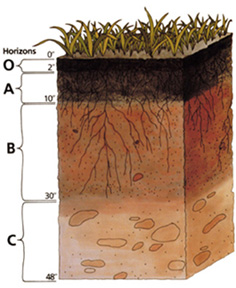
Soil is getting some
worldwide recognition:
The United Nations' Food and Agriculture Organization has declared December 5 World Soil Day, launched an effort called the Global Soil Partnership, and designated 2015 the International Year of Soils.
The goal is to raise awareness of the importance of healthy soils for food security, ecosystem functions, and sustainable development.
Do your bit -------for your soil.
![]() |
| One of many soil profiles that is reasonably common |
Labels:
International Year of Soils,
soils,
World Soils Day
Monday, September 16, 2013
Global Food Wastage - US$750 Billion Annually!!!
The article below is a recent one that has looked at food waste globally. There are studies for Australia and the USA that I am aware of [ the US one was the subject of a post a while back], but different regions tend to have food waste in different parts of the food chain, with production and other early areas more common in less developed areas.
But the big one is that the further along the chain the loss is, the greater the energy and other embedded costs are that are lost, or wasted. Westernised societies thus do not do well in this regard.
We all need to lower our food wastage and losses - this is another timely reminder. It is not a new issue - see the old poster from WW1.!!
----------------------------------------
Who wastes what?
According to the FAO, 54% of the world's food waste occurs
'upstream' - during production, post-harvest handling and storage, while 46%
happens 'downstream,' at the processing, distribution and consumption stages.
The report also found that the later a food product is lost
along the chain, the greater the environmental consequences - as the
environmental costs incurred during processing, transport, storage and cooking
must be added to the initial production costs.
Meanwhile fruit waste was said to contribute significantly
to water waste in Asia, Latin America, and Europe - mainly as a result of
extremely high wastage levels.
Similarly, large volumes of vegetable wastage in industrialised Asia, Europe, and South and South East Asia was shown to translate into a large carbon footprint for that sector.
Causes and solutions
A combination of consumer behaviour and lack of
communication in the supply chain were found to underlie the higher levels of
food waste in affluent societies.
“All of us - farmers and fishers; food processors and
supermarkets; local and national governments; individual consumers - must make
changes at every link of the human food chain to prevent food wastage from
happening in the first place, and re-use or recycle it when we can't,” urged
FAO director general, José Graziano da Silva.
Read More
Recycling Food Waste into Animal Feed within the UK’s Legislative Framework
Paul Featherstone, group director of SugaRich, looks at legislation and logistics to reduce the waste of former foodstuffs and instead turning them into valuable resources.
VIDEO:
Micro Anaerobic Digestion Biogas Unit Wins U.S. Defense Award
UK based small scale biogas technology specialist, SEaB Energy, has been selected as one of the Winners in the 2013 Defense Energy Technology Challenge.

But the big one is that the further along the chain the loss is, the greater the energy and other embedded costs are that are lost, or wasted. Westernised societies thus do not do well in this regard.
We all need to lower our food wastage and losses - this is another timely reminder. It is not a new issue - see the old poster from WW1.!!
![]() |
| Not a new issue - but a bigger one! |
----------------------------------------
Around the world some 1.3 billion tonnes of food waste is
produced annually, at a direct economic cost of some $750 billion, according to
a new report by the Food and Agriculture Organization of the United Nations
(FAO).
The report claimed that the huge volume of food going to
waste annually is not only causing major economic losses but also wreaking
significant harm on the natural resources that mankind relies upon.
The study, Food Wastage Footprint: Impacts on Natural Resources
is said to be the first to analyse the impacts of global food waste from an
environmental perspective, looking specifically at its consequences for the
climate, water and land use, and biodiversity.
As a general trend, developing countries were found to
suffer greater losses during agricultural production, while food waste at the
retail and consumer level tends to be higher in middle- and high-income regions
- where it accounts for 31% to 39% of total wastage - than in low-income
regions (4% to 16%).
Hot spots
Several world food waste hot-spots' were identified by the
study:
The waste of cereals in Asia was found to be a significant
problem, with major impacts on carbon emissions and water and land use. Rice's
profile is particularly noticeable, given its high methane emissions combined
with a large level of wastage.
The volume of meat waste across the globe was found to be
comparatively low. However, the meat sector generates a substantial impact on
the environment in terms of land occupation and carbon footprint, especially in
high-income countries and Latin America, which in combination account for 80%
of all meat wastage. Excluding Latin America, high-income regions are
responsible for about 67% of all meat waste
Similarly, large volumes of vegetable wastage in industrialised Asia, Europe, and South and South East Asia was shown to translate into a large carbon footprint for that sector.
Causes and solutions
According to the FAO consumers fail to plan their shopping,
over purchase, or over react to 'best before dates’, while quality and
aesthetic standards lead retailers to reject large amounts of perfectly edible
food.
In developing countries, significant post-harvest losses in
the early part of the supply chain were reported to be a key problem, occurring
as a result of financial and structural limitations in harvesting techniques
and storage and transport infrastructure, combined with climatic conditions
favourable to food spoilage.
To tackle the problem, FAO has launched a 'tool-kit' that contains recommendations on how food loss and waste can be reduced at every stage of the food chain and details three general levels where action is needed:
High priority should be given to reducing food wastage in the first place. Beyond improving losses of crops on farms due to poor practices, doing more to better balance production with demand would mean not using natural resources to produce unneeded food in the first place.
In the event of a food surplus, reuse within the human food chain - finding secondary markets or donating extra food to feed vulnerable members of society - represents the best option. If the food is not fit for human consumption, the next best option is to divert it for livestock feed, conserving resources that would otherwise be used to produce commercial feedstuff.
Where reuse is not possible, recycling and recovery should be pursued: by-product recycling, anaerobic digestion, composting, and incineration with energy recovery allow energy and nutrients to be recovered from food waste were all said to represent a significant advantage over dumping it in landfills.
Read More
Recycling Food Waste into Animal Feed within the UK’s Legislative Framework
Paul Featherstone, group director of SugaRich, looks at legislation and logistics to reduce the waste of former foodstuffs and instead turning them into valuable resources.
UK based small scale biogas technology specialist, SEaB Energy, has been selected as one of the Winners in the 2013 Defense Energy Technology Challenge.
Biofuel
from Food Waste Certification in US Following Corn Plant Conversion
California based renewable fuel specialist, Aemetis has been granted approval to produce ethanol from separated food waste at its 55 million gallon per year renewable ethanol plant in Keyes, California.
Labels:
energy,
FAO,
food loss,
food wastage,
food waste
Monday, September 09, 2013
Green Walls - Getting Artistic, as well as Green
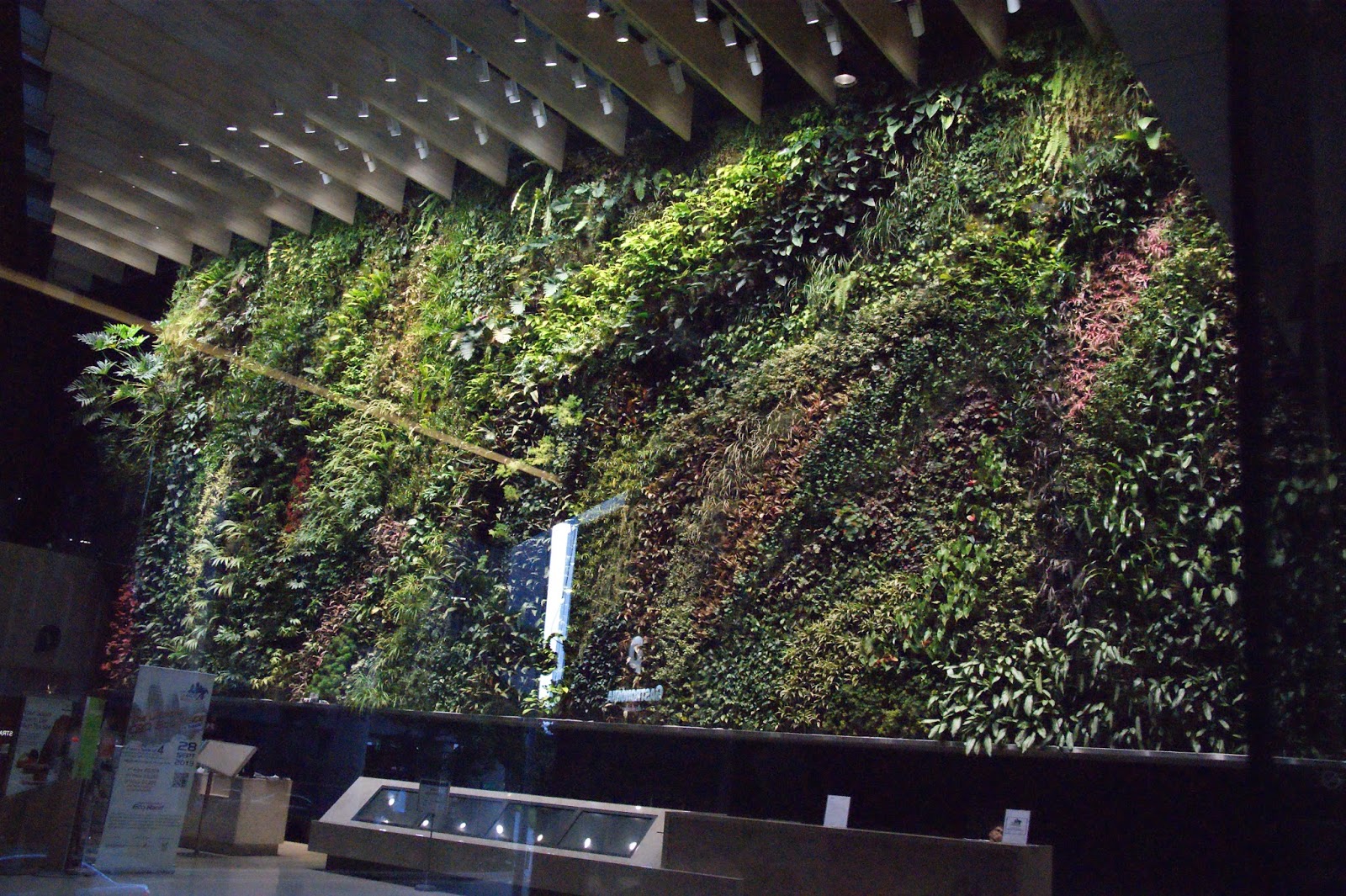
While the concept of installing green walls is now more
common in buildings – both new and during refurbishing, a recent trend has been
to actually make the walls a piece of art.
This is achieved through changes of texture and colour in
the plants being used, their leaf length and shape, and growth habit.
Photos of a few examples illustrate this trend quite
clearly.
One is a large outdoor green wall on the outside of a
building, with the pattern providing a clear arty look.| outdoors green wall - with art pattern |
This option of a pattern or design allows the green wall
creators some additional flair in the design process. I am sure we shall see more along this trend
line over the next few years as better understanding of plant performance
itself in these green wall scenarios, as well as better use of more variable
colours in the plants – there are many, many leaf patterns and colours
available, not just the more common
green and yellowish or variegated leaves.
Subscribe to:
Posts (Atom)