skip to main | skip to sidebar

AboveCapricorn

Above Capricorn Technologies - agricultural and environmental consultants /managers focussing on agriculture, horticulture, turf, sportsturf, livestock, land and land rehabilitation, erosion management, bioremediation, phytoremediation, water/wastewater and waste management [especially organics] in the tropics

Showing posts with label solar power. Show all posts

Friday, May 11, 2018

Solar Panel Disposal - Emerging Problem?

So far there has been a relatively modest need for safe disposal of solar panels - most are going onto the roof and not off the roof!

Elsewhere in the world though some areas are now discussing how this disposal of the solar panels at "end of life" can be managed effectively.


The growth in solar energy use over the past 25 years has been exponential, at times being called a "sunrush". In addition to increasing global capacity from 100 MW to over 300 GW in that time, costs in 2017 were an impressive 86% less than in 2009!
A solar array in rural area
One emerging concern, however, results from the fact that the effective life cycle of a typical solar panel is about 25 years. The glass and metal material from retired photovoltaic (PV) panels will begin to add up to millions of metric tons in the near term, and current recycling infrastructure may not be sufficient for dealing with such a large quantity of these materials.
Perhaps unsurprisingly, the process of recycling solar panels is fairly complicated, involving heat systems that burn up the adhesives as well as other methods used to separate out the crystalline silicon and the precious metals in the panels. The wide variety of materials used—from glass, aluminum, and synthetic sealing materials to metals like lead, copper, and gallium—makes it difficult to efficiently process and recycle them. Mark Robards, director of special projects for ECS Refining in the USA, says, “Nearly 75% of the material that gets separated out is glass, which is easy to recycle into new products but also has a very low resale value” (quoted on the website Ensia.com). 
If they aren’t recycled, PV panels in many jurisdictions around the world cannot be sent to landfills since they are made with heavy metals and other toxic substances that can contaminate the surrounding soil, air, and water.  And not a lot to effectively solve the problem is occurring in Australia [maybe okay in South Australia].
Along with the current difficulties of recycling solar panels, the changing makeup of the panels themselves presents a challenge. As manufacturers continue to improve their technology, they search for more cost-effective ways to construct panels. These methods often involve using alternative components—like a material called perovskite—rather than more easily recyclable materials like silver and copper. While solar panel costs are dropping and enabling the technology to become more widespread, the need for better recycling infrastructure is growing every year as more and more panels reach the end of their life span.
Large commercial solar plant
The solar energy industry in the US may take inspiration from a recycling association in Europe called PV Cycle which has developed a process for PV module recycling that is both environmentally and economically conscious. In 2016, they achieved a 96% recycling rate, a new record for silicon-based solar panel recycling. The head of Treatment & Operations at PV Cycle, Olmina Della Monica, remarks that their success “is the result of both continuous improvement and intensive research and development along the value chain.” Here in Australia there has been so far, little recognition of the emerging and potential problem, and with solar energy development widespread across remote areas, safe disposal is looming as expensive and difficult.
In contrast to the US, Europe’s PV panel disposal management is regulated by the EU’s WEEE (Waste of Electrical and Electronic Equipment) directive. Manufacturers of solar cells must obey legal requirements and specific recycling standards, operating with the mindset that these panels will need to be recycled at the end of their life span. There is no similarly strict control in the US, but California has initiated legislation on solar panel disposal that supports the PV module industry in making end-of-life management of PV modules convenient for both consumers and the public. 
As the “sunrush” continues, legislation like this will hopefully become ubiquitous across some of the major adoptors including China, Australia and the USA.  If solutions are not explored and widely developed the disposal of these panels will be a serious and very significant waste problem.  Designing for easy separation of components and metals would be a sensible start to better disposal and recycling options.
[some material based on an article by Jessica Read in Forrester Daily News April 30 2018]
Posted by surfie999@gmail.com at 11:31 No comments:
Labels: e-waste, recycling, recycling solar panels, solar panel, solar panel end of life disposal, solar power, waste, waste solar panels

Friday, June 23, 2017

Northern Territory - To Get Australasia 's Biggest Electricity Network Back Up Battery

Northern Territory seeks solution for battery storage

June 23, 2017
Simon Mackenzie
Vector has won a multi-million-dollar Australian contract to supply the Territory Generation Alice Springs Battery Energy Storage System (BESS) project.
Vector was one of a number of Australian and international firms bidding for the contract that will see it supply Australasia’s largest grid-tied lithium ion battery storage solution to stabilise and enhance generation on the Alice Springs electricity network.
The 5MW battery system will improve reliability on the network while helping smoothly switch energy use between renewable sources and the grid as needed. Vector will be responsible for the design, engineering, construction, and installation of the system and once commissioned, will also be responsible for ongoing maintenance.
Vector Chief Executive, Simon Mackenzie, said this contract further endorses Vector’s strategy and commitment to delivering customers world class sustainable energy solutions.
“It’s not just the technology Vector’s using that is innovative, it is the way we’re tailoring the solutions to meet quite specific and widely varied customer needs that is the game changer,” says Mackenzie. “It’s our mindset that is proving as innovative as the technology we’re using to meet the unique challenges and aspirations of the Alice Springs network.”
“When we complete this contract, Vector will have delivered the two largest grid-tied battery storage projects in Australasia. It’s a great endorsement of our expertise.”
Sort of nice to see the NT in the spotlight for renewable energy - in a positive story!!

Posted by surfie999@gmail.com at 17:25 No comments:
Labels: battery back up. renewables, renewable energy, solar energy, solar power

Monday, July 18, 2016

Solar Pumping for Farm Irrigation

Solar pumping: the economic & enviro rewards


Energy is one of the fastest growing on-farm costs. The CRDC-funded Improving energy efficiency on irrigated cotton farms project found in 2015 that the average direct energy cost was $298 per hectare, with diesel counting for at least 85 percent.

But not for cotton grower Andrew Gill of Narromine.

The installation of a solar diesel hybrid irrigation bore pump on his Central West NSW farm has led to big cuts in fuel costs, greater irrigation efficiencies and a massive reduction in greenhouse gas emissions.
Attracted by the drop in the price of solar panels in recent years and the prospect of the system paying for itself in less than four years, Andrew decided to install a solar diesel hybrid system at one of the pump sites on their Narromine farm at the end of last year.
The move has led to a cut in pumping costs from $76/megalitre to $41/ML and slashed diesel use by between 45,000 and 55,000 litres a year. Over 25 years, that equates to a saving of more than 1 million litres of fuel and a reduction of over 3000 tonnes in carbon emissions.


Learn more about Andrew's system in this CottonInfo case study and in this video. And find out more about how you can improve your on-farm energy efficiency here.
------------------------------

While using solar energy for farm water pumping is not new, nor is this the first ever story on the subject it does highlight that this approach is now effectively MAINSTREAM.

And it can work in many many locations around Australia and the world.

Sure capital cost is an issue so a planned approach to financing is important........but it has a big payoff in cost savings and a feel good outcome too.  And it works........that has to be a critical issue as well in the present time of 2016!

Posted by surfie999@gmail.com at 09:52 No comments:
Labels: agriculture, irrigation, pumping, solar energy, solar power, water

Tuesday, September 15, 2015

Nyngan Solar Plant - Largest in Southern Hemisphere - Celebrates Three Months of Full Operation


Since achieving full generation in June 2015, the Nyngan Solar Plant has generated 60,000 MWh of renewable energy — 102 MW of which have been sent into the National Electricity Market.

Said to be the largest solar power plant in the Southern Hemisphere, the project is the result of a partnership between AGL Energy and First Solar. It is expected to produce around 230,000 MWh of electricity annually — enough to meet the needs of approximately 33,000 NSW homes.

The CEO of the Australian Renewable Energy Agency (ARENA), Ivor Frischknecht, said the $290 million plant was successfully delivered on time and on budget. It has involved the installation of 1.36 million solar PV modules and has provided economic benefits for the Nyngan community, with more than 250 people employed on-site during the peak of construction.

The project has also seen the construction of a ‘twin’ solar plant at Broken Hill, which will soon begin operation. Total capital expenditure for both the Nyngan and Broken Hill Solar Plant is approximately $440 million.  “AGL’s Solar Project at Nyngan and Broken Hill represents a big investment by the company and also by ARENA,” Frischknecht said.  “It’s already achieving one of ARENA’s key aims of increasing the amount of renewable energy in Australia.  “And the knowledge gained from its successful launch and ongoing operations will lead to further improvements in technology and reductions in costs for the sector.”

Maybe these projects do start to indicate that Australia can deliver some serious solar energy projects for the country.  So far, while some have got funding it has been a slow journey in a country with strong credentials for using solar power - distributed, smaller scale and reliable for rural and remote use, with the exception of night time or poor solar conditions options.

There are a lot of older coal generation facilities way past their economic lifetime, and likely to be replaced over the next decade.  Maybe more solar plants will deliver low carbon and improved facilities for better distributed energy production with stored energy systems also included.  I do wonder about the distribution system, however.

Lets hope there are more successes to come.

[ partially sourced from Sustainability Matters newsletter 15 September]

Posted by surfie999@gmail.com at 11:18 No comments:
Labels: Australia, largest solar plant, solar power, southern hemisphere

Wednesday, February 11, 2015

Renewable Energy Comes to Mining in Remote Australia - BIG TIME.


Sandfire Resources has recently signed a deal with Brisbane-based Juwi Renewable Energy to build a $40 million solar power station at its DeGrussa copper project near Meekatharra to help power the mine and its processing operations.

The project had potential to establish DeGrussa as an industry leader in the use of renewable power for mining and processing operations.  Sandfire said its cash contribution to the project would be less than $1 million, with Juwi to arrange project funding and own/ operate the facility.

The station will utilise a 10.6-megwatt solar array comprising 34,080 solar photovoltaic panels [ on 20 ha near the mine and concentrator] that track the sun coupled with a 6-megawatt battery, and will be the biggest integrated off-grid solar array in Australia, and one of the biggest used in the mining industry anywhere in the world. The solar power station will be integrated with the existing 20-megwatt, diesel-fired power station at DeGrussa, which is owned and operated by Kalgoorlie Power Systems.

It will be structured to maximise the consumption of lower-cost solar power, thereby reducing reliance on diesel, however the diesel power station will continue to provide base-load power to the DeGrussa mine.  The project is expected to achieve savings in diesel fuel and will deliver a significant environmental benefit for DeGrussa, reducing its carbon emissions by an estimated 12,000 tonnes a year.

Sandfire's managing director Karl Simich said the company had been working on the solar power initiative since 2013, with the project representing an attractive opportunity to participate in a low-risk renewable energy initiative with a minimal capital requirement.  It is interesting to see this announcement now, following a recent article bemoaning use of solar power in remote operations in Australia, especially in comparison to mining in Chile.

He said the project would not affect the efficiency or safety of existing operations, and would allow the company to contribute to the broader challenge of reducing CO2 emissions and potentially reducing operating costs. "We are continuing to explore other options to reduce our energy costs, including using alternatives such as compressed natural gas for gas-fired power generation," he said.

Juwi managing director Andrew Drager said the solar photovoltaic system would provide the majority of daytime electricity to substantially reduce the mine's dependence on imported diesel.
Posted by surfie999@gmail.com at 22:52 No comments:
Labels: alternative energy, mining, renewable energy, solar power

Friday, June 27, 2014

Australian PV Systems - World Leader on Residential Installation Costs: Lessons For USA

In 2013, the United States installed more solar photovoltaic (PV) capacity than either Germany or Australia for the first time ever. (the U.S. has triple their combined population, so arguably this should have happened long ago…). 

With the decline of feed-in tariffs and other incentives in Germany, it is likely that the U.S. will continue to outpace that country in new PV installations. However, the U.S. continues to lag behind global PV leaders Germany and Australia in another important category: prices for residential systems installations. As of Q2 2013, the average installed residential system price was $4.93/W compared to Germany’s $2.21/W and Australia’s $2.56/W. That needs to change.

Whether you look at U.S. DOE SunShot targets or RMI’s own Reinventing Fire vision, which has the U.S. solar market scaling from 4.5 GW PV installed per year to 20 GW, system costs have to come down to accelerate residential and commercial customer adoption. A new analysis and report from Rocky Mountain Institute (RMI) and Georgia Tech Research Institute (GTRI)—Lessons from Australia: Reducing Solar PV Costs Through Installation Labor Efficiency—identifies opportunities for the U.S. solar market to take important steps in that direction.

Non-hardware costs (permitting/inspection/interconnection (PII), customer acquisition, installation, and margins/overhead) now dominate system prices in the U.S. For sub-10-kW systems, 80 percent of solar system cost decline in the U.S. since 2008 has been due to hardware price reductions. In the U.S., non-hardware costs now account for 70% of system costs. Setting aside margins/overhead, the U.S. spends $1.22/W on PII, customer acquisition, and system installation. PV leaders Germany and Australia, on the other hand, spend just $0.33/W and $0.65/W, respectively. The U.S. clearly can and should pursue significant cost reduction opportunities to eliminate this difference.

RMI and GTRI previously launched a PV installation labor data collection and analysis effort under the SIMPLE BoS project, which investigated differences in non-hardware costs between the U.S. and Germany, including installation labor. 

This 2013 report provided a detailed breakdown of primary drivers of PV installation labor cost differences between the U.S. and Germany. Now, in 2014, RMI and GTRI are following up on that groundbreaking work with further investigation of Australian solar installations.

Australia has emerged as a dominant player in the world residential solar market, with more than 10 percent of households possessing a solar system on the roof and system prices rivaling Germany’s. Even as feed-in tariffs (FITs) have declined, demand in Australia for residential rooftop solar has remained high and costs have continued to decline. Much of this is due to a focus on customer-owned PV, and thus an extremely competitive marketplace around system cost. Both retailers and installers have been forced to lean processes in order to offer lower pricing and gain market share; they rely on high volume rather than high margin to remain profitable. 

According to our on-site analysis, Australian installers are averaging 6.1 labor-hours per kW solar installed, while the U.S. is more than 50 percent higher at 9.4 labor-hours per kW installed. This is similar to averages observed in other industry surveys and studies.


Unlike Germany, Australia does not use motorized lifts, scaffolds, or other advanced installation equipment. Instead, economic incentives drive labor—installers in Australia receive a flat rate per installation, and thus make greater profit by mounting more systems in less time. That Australian installers were able to shift so quickly towards a one-day install as an industry standard indicates that Germany is not an outlier; optimized installations are possible and should be pursued at both the U.S. and international levels.
We noted several factors that may increase efficiency based on observations and analysis of installation practices in Australia, Germany, and the U.S.: 
  • Optimizing the pre-installation process
  • Reducing time spent on base installations, especially for clay-tile roofs
  • Pursuing rail designs that minimize installation labor
  • Reducing the number of meters installed in each electrical system to monitor PV output
  • Viewing the one-day installation goal as an opportunity to reduce time spent on non-production activities such as meals, travel, breaks, setup, and cleanup
These opportunities vary in magnitude, but in combination could have a significant impact on the number of labor-hours/kW U.S. installers typically invest in system installations. We believe installers in the U.S. could approach or go beyond Australian levels of efficiency by pursuing these primary measures, as well as other opportunities that help the industry approach the one-day installation as standard. 

If it can be done in Australia and Germany, there is no reason it cannot be done in the U.S.

We hope this report on Australia, the report on Germany, and all follow-on work under the SIMPLE BoS project will help the U.S. industry continue to reduce solar PV costs and enable the widespread, cost-effective deployment of residential solar PV systems.

Download the report 
Posted by surfie999@gmail.com at 10:21 No comments:
Labels: Australia, costs, PV systems, solar electricity, solar power

Monday, June 23, 2014

Solar Energy Costs Falling Rapidly in Both USA and China - To Equal Coal Prices VERY Soon


China Might Be Winning The Race To Reduce Solar Costs

I did not write most of this material, but the concepts discussed are very relevant for Australia, with major debate now about to commence on removing the Renewable Energy Target and Carbon Tax legislation in Australia.

Are we going in the wrong direction?   This review seems to posit that solar costs will soon equal or be less than energy from the fossil fuel sources [ particularly coal], using PV systems.  This will occur within a few years, and that is well within the planing horizons for new power stations, and also for homeowners to consider the implications for them directly, with self supplied PV power.

Many people, even fanatical advocates of solar power, are unaware just how close we are to reaching a critical milestone in the industry. Within a fairly short space of time, solar generated electricity will be fully cost competitive with coal-powered electricity — at least if the governments of the world’s two largest energy consuming nations have their way.


Both the U.S. and China have a stated goal of reducing the cost of solar generated electricity to that level, and quickly. How they are going about it says a lot about how each economic system works.


In the U.S., despite the complaints of some that a drift toward government control is taking place, private initiative and free markets still rule. The Department of Energy launched the SunShot initiative in 2011, with a stated goal of reducing the cost of solar power to be fully competitive with conventional energy sources by the end of this decade. The program funds grants, incentives and competitions to encourage private sector research that will improve the efficiency and lower the cost of solar energy.


The Chinese, faced with what is in many ways a more urgent need to achieve the same thing, have taken a different approach. In a manner more in keeping with their history and current economic system, they are beating the problem over the head with piles of cash until the desired outcome is achieved. It looks, if this excellent Michael Sankowski piece at Monetary Realism is to be believed, as if they are getting mighty close.


Sankowski maintains that, driven by high levels of pollution and national security concerns, the Chinese government asked a question back in the early 2000s: “How Much Will It Cost To Make Solar Cheaper Than Coal?” The answer was based on Swanson’s Law that states that every doubling of photovoltaic (PV) solar capacity results in a 20 percent reduction in unit cost. Testing that theory, because of low levels of production at that time, would only have cost around $10 billion — a small price to pay for the chance of cheap, clean energy that didn’t rely on importing coal from Australia.


When Swanson’s Law still worked after a couple of doublings of capacity the Chinese government stepped up their efforts. As a result, Suntech now expects the goal to be achieved by 2016, or 2017 at the latest. That’s right: 2016. A couple of years. Of course, Suntech has an interest in exaggerating somewhat, but even so, that is stunningly close.


According to the U.S. Energy Information Administration, coal accounted for 69 percent of China’s energy production as recently as 2011. Cost comparative solar power and a centralized government committed to change will make that number laughable in a few years.


It should be borne in mind that reducing the cost of solar electricity to parity with coal in China is not the same as it is in America, if for no other reason than that electricity in general, and coal-powered electricity in particular, is more expensive in China than in the US.


SunShot, however, has also been successful, and claims a 60 percent reduction in cost since its inception three years ago. Many believe that their stated goal of solar power at $0.06 per kilowatt hour (kWH) is achievable by 2018. Some of that cost reduction is no doubt down to China ramping up capacity at such a rate and flooding the market, but there have been technological advances over that time, as well.

You can argue all day about which approach is correct. History shows us that innovation from the private sector is the most effective, long lasting change agent there is, but the Chinese approach of heavily subsidizing a massive increase in PV production capacity has been effective. Unfair, short sighted and disruptive, maybe, but effective nonetheless.

Command economies may be terrible at some things but when the rapid marshalling of resources is needed to solve a problem they can be very good at doing whatever it takes.


The simple fact is that with both innovation and increased capacity, the cost of solar energy has fallen considerably over the last few years and continues to do so. If, as looks likely, it does become truly cost comparative with coal in the next few years, then the days of cheap, clean, renewable energy dominating the world’s two biggest energy markets may be closer than you think.


Will that apply to Australia as well?  Based on current thinking in this country.........do not hold your breath.  However, it is obvious that with our energy costs from fossil fuel moderately high, it does seem that change might be coming sooner than most people have really thought it would be, here in Australia!


Article by Martin Tillier, first appearing in Oilprice.com.
Posted by surfie999@gmail.com at 10:14 No comments:
Labels: electricity, fossil fuel, solar electricity, solar energy, solar power

Monday, May 12, 2014

Solar Panels as Roads??

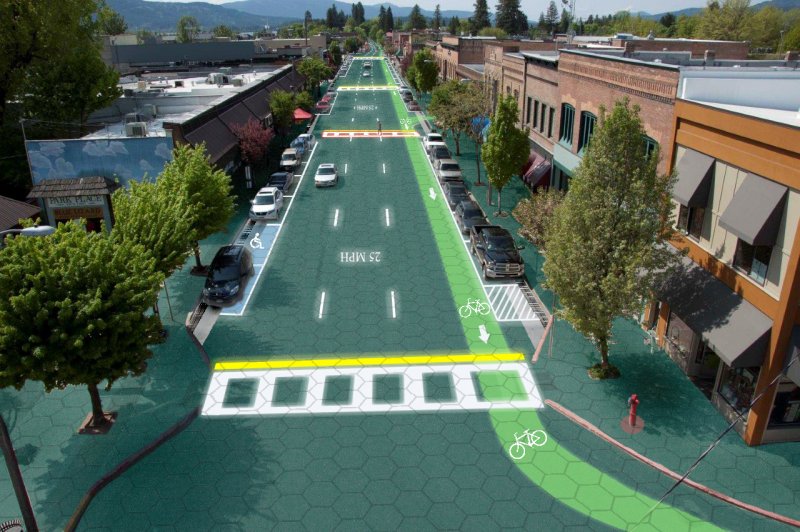
Solar Roadways

Solar panels that you can drive, park, and walk on. They melt snow and... cut greenhouse gases by 75-percent?!!!


Artist's rendition of Sandpoint, Idaho - Home of Solar Roadways
Graphic designed by Sam Cornett                                                 Thanks Sam!


Solar Roadways is a modular paving system of solar panels that can withstand the heaviest of trucks (250,000 pounds). These Solar Road Panels can be installed on roads, parking lots, driveways, sidewalks, bike paths, playgrounds... literally any surface under the sun. They pay for themselves primarily through the generation of electricity, which can power homes and businesses connected via driveways and parking lots. A nationwide system could produce more clean renewable energy than a country uses as a whole.

(http://solarroadways.com/numbers.shtml). They have many other features as well, including: heating elements to stay snow/ice free, LEDs to make road lines and signage, and attached Cable Corridor to store and treat stormwater and provide a "home" for power and data cables. EVs will be able to charge with energy from the sun (instead of fossil fuels) from parking lots and driveways and after a roadway system is in place, mutual induction technology will allow for charging while driving. 

Did you know: 

  • Solar Roadways has received two phases of funding from the U.S. Federal Highway Administration for research and development of a paving system that will pay for itself over its lifespan. We are about to wrap up our Phase II contract (to build a prototype parking lot) and now need to raise funding for production. 

  • Our glass surface has been tested for traction, load testing, and impact resistance testing in civil engineering laboratories around the country, and exceeded all requirements.
  • Solar Roadways is a modular system that will modernize our aging infrastructure with an intelligent system that can become the new Smart Grid. We won the Community Award of $50,000 by getting the most votes in GE's Ecomagination Challenge for "Powering the Grid" in 2010. We had the most votes again in their 2011 Ecomagination Challenge for "Powering the Home".
  • On August 21, 2013, Solar Roadways was selected by their peers as a Finalist in the World Technology Award For Energy, presented in association with TIME, Fortune, CNN, and Science.
  • Solar Roadways was chosen by Google to be one of their Moonshots in May of 2013. 
  • Solar Roadways was chosen as a finalist in the IEEE Ace Awards in 2009 and 2010.
  • Solar Roadways has given presentations around the country including: TEDx Sacramento, Google's Solve for X at Google's NYC Headquarters, NASA, Keynote Speaker for the International Parking Institute's Conference and much more...
  • Solar Roadways is tackling more than solar energy: The FHWA tasked us with addressing  the problem of stormwater. Currently, over 50% of the pollution in U.S. waterways comes from stormwater. We have created a section in our Cable Corridors for storing, treating, and moving stormwater.
  • The implementation of our concept on a grand scale could  create thousands of jobs in the U.S. and around the world. It could allow us all the ability to manufacture our way out of our current economic crisis.
[ from   https://www.indiegogo.com/projects/solar-roadways ]
---------------------

This seems like a great idea, as long as costs are reasonable.  A bit like the use of wastewater ponds to install floating solar panels, covered in another recent post.  


Posted by surfie999@gmail.com at 10:37 No comments:
Labels: solar electricity, solar energy, solar panels as roads, solar power

Friday, February 14, 2014

World's Largest Solar Power Station Officially Open

Solar power is taking some big steps with the official opening of the 400MW solar power station in the Mojave Desert in the USA.

Read more on the media reports here - http://www.environmental-expert.com//news/huge-thermal-plant-opens-as-solar-industry-grows-412652?utm_source=News_Energy_13022014&utm_medium=email&utm_campaign=newsletter&utm_content=feattextlink

While operating for a few months already, this week was the formal opening.

There are  hundreds of thousands of mirrors into the largest solar power plant of its type in the world, a milestone for a growing industry that is testing the balance between wilderness conservation and the pursuit of green energy across the West.

The Ivanpah Solar Electric Generating System, sprawling across roughly 5 square miles of federal land near the California-Nevada border, formally opened Thursday after years of regulatory and legal tangles ranging from relocating protected tortoises to assessing the impact on Mojave milkweed and other plants.

The $2.2 billion complex of three generating units, owned by NRG Energy Inc., Google Inc. and BrightSource Energy, can produce nearly 400 megawatts - enough power for 140,000 homes. It began making electricity last year.

More large systems are now under development, and these newer ones, along with other large systems around the world will begin to allow a decent system evaluation as they feed electricity into large grids for domestic and industrial use.

Ivanpah Solar Power station


A portent of future energy systems or just a curiosity?

Some authors believe it will take 50 years to switch over, and away from fossil fuels.  These large systems may just show the way.
Posted by surfie999@gmail.com at 14:46 No comments:
Labels: solar electricity, solar energy, solar power, solar water heating
Older Posts Home
Subscribe to: Posts (Atom)

About Me

surfie999@gmail.com
View my complete profile

Links

  • GMO Pundit
  • Kapillary Irrigation Sub surface System
  • Compost Australia
  • Microbe Pundit
  • Agriculture information and news - Lakshmanan's blog
  • Met Bureau - NT weather
  • Biobin - for organic waste
  • Ecoflex - a new way of managing waste tyres
  • Australian Institute of Agricultural Science and Technology
  • Nufarm Agrochemicals
  • Sygenta Agrochemicals
  • Google News
  • Best Business Blogs
  • The Monsoon Frog
  • Above Capricorn Technologies

Weather + Counter

Blog Archive

  • ▼  2020 (5)
    • ▼  March (1)
      • Stopping Fruit Mould - Without Pesticides
    • ►  February (2)
    • ►  January (2)
  • ►  2019 (22)
    • ►  December (2)
    • ►  November (6)
    • ►  June (1)
    • ►  May (1)
    • ►  April (1)
    • ►  March (3)
    • ►  February (5)
    • ►  January (3)
  • ►  2018 (32)
    • ►  October (1)
    • ►  August (3)
    • ►  July (5)
    • ►  June (2)
    • ►  May (7)
    • ►  April (4)
    • ►  March (4)
    • ►  February (5)
    • ►  January (1)
  • ►  2017 (21)
    • ►  December (1)
    • ►  October (3)
    • ►  September (1)
    • ►  June (6)
    • ►  April (2)
    • ►  March (1)
    • ►  February (2)
    • ►  January (5)
  • ►  2016 (39)
    • ►  December (2)
    • ►  November (3)
    • ►  October (2)
    • ►  September (2)
    • ►  August (8)
    • ►  July (1)
    • ►  June (3)
    • ►  May (2)
    • ►  April (1)
    • ►  March (8)
    • ►  February (3)
    • ►  January (4)
  • ►  2015 (64)
    • ►  December (9)
    • ►  November (7)
    • ►  October (8)
    • ►  September (11)
    • ►  August (1)
    • ►  July (3)
    • ►  June (4)
    • ►  May (4)
    • ►  April (4)
    • ►  March (1)
    • ►  February (3)
    • ►  January (9)
  • ►  2014 (65)
    • ►  December (8)
    • ►  November (5)
    • ►  October (9)
    • ►  September (1)
    • ►  August (3)
    • ►  July (10)
    • ►  June (11)
    • ►  May (7)
    • ►  April (3)
    • ►  March (2)
    • ►  February (4)
    • ►  January (2)
  • ►  2013 (99)
    • ►  December (3)
    • ►  November (5)
    • ►  October (6)
    • ►  September (4)
    • ►  August (12)
    • ►  July (9)
    • ►  June (8)
    • ►  May (12)
    • ►  April (15)
    • ►  March (11)
    • ►  February (9)
    • ►  January (5)
  • ►  2012 (59)
    • ►  December (2)
    • ►  November (4)
    • ►  October (8)
    • ►  September (3)
    • ►  August (5)
    • ►  July (6)
    • ►  June (11)
    • ►  May (7)
    • ►  March (4)
    • ►  February (6)
    • ►  January (3)
  • ►  2011 (78)
    • ►  December (2)
    • ►  November (4)
    • ►  October (7)
    • ►  September (11)
    • ►  August (3)
    • ►  July (10)
    • ►  June (5)
    • ►  May (12)
    • ►  April (6)
    • ►  March (6)
    • ►  February (6)
    • ►  January (6)
  • ►  2010 (44)
    • ►  December (1)
    • ►  November (7)
    • ►  October (4)
    • ►  September (1)
    • ►  August (2)
    • ►  July (2)
    • ►  June (7)
    • ►  May (10)
    • ►  April (2)
    • ►  March (2)
    • ►  February (4)
    • ►  January (2)
  • ►  2009 (52)
    • ►  November (1)
    • ►  October (6)
    • ►  September (7)
    • ►  August (5)
    • ►  July (5)
    • ►  June (8)
    • ►  April (2)
    • ►  March (7)
    • ►  February (4)
    • ►  January (7)
  • ►  2008 (59)
    • ►  December (4)
    • ►  November (8)
    • ►  October (6)
    • ►  September (3)
    • ►  August (4)
    • ►  July (3)
    • ►  June (5)
    • ►  May (3)
    • ►  April (4)
    • ►  March (5)
    • ►  February (4)
    • ►  January (10)
  • ►  2007 (69)
    • ►  December (2)
    • ►  November (7)
    • ►  October (4)
    • ►  September (4)
    • ►  August (3)
    • ►  July (5)
    • ►  June (3)
    • ►  May (20)
    • ►  April (5)
    • ►  March (9)
    • ►  February (5)
    • ►  January (2)
  • ►  2006 (11)
    • ►  December (4)
    • ►  November (7)

Labels

  • 1974 (1)
  • 2 (2)
  • 2016 (1)
  • 2017 (1)
  • 2018 (1)
  • 4 (1)
  • 4-D (2)
  • 4-D ester (1)
  • 4-DB (1)
  • 5-T (1)
  • ABA (1)
  • abattoir (9)
  • aboriginal (1)
  • Abscisic acid (1)
  • accountants (1)
  • acid mine drainage (1)
  • Aedes albopictus (1)
  • aerial sensors (1)
  • aerial survey (1)
  • aerospace (1)
  • Africa (4)
  • African Mahogany (4)
  • Agent orange (1)
  • agribusiness (6)
  • agrichar (10)
  • agricultural chemicals (9)
  • agricultural products (2)
  • agricultural science (7)
  • agriculture (135)
  • agriculture jatropha (3)
  • agrochemicals (1)
  • agroforestry (13)
  • agronomic systems (1)
  • agronomy (1)
  • aid (2)
  • aircraft. airplane (1)
  • algae to biodiesel (6)
  • allergens (1)
  • allergy (1)
  • almonds (1)
  • alternate pasteurisation (1)
  • alternative energy (2)
  • aluminium (1)
  • amine (1)
  • anaerobic digestion (2)
  • animal disease (1)
  • animal welfare (3)
  • Animals Australia (2)
  • ants (1)
  • aphids (1)
  • apiarists (1)
  • apiary (1)
  • apiculture (1)
  • apps (1)
  • aquaculture (1)
  • aquatain (1)
  • aquifer (1)
  • aquifer management (1)
  • Argentina (1)
  • Argentine Bahia grass (1)
  • arsenic (3)
  • art (1)
  • Asia (2)
  • asian honey bees (1)
  • asian monsoon (2)
  • asian tiger mosquitoes (1)
  • asian vegetables (1)
  • Asperger's syndrome (1)
  • atmosphere (1)
  • Australia (22)
  • Australia. (1)
  • autism (1)
  • axonopus compressus (2)
  • bacterial blight rice (1)
  • Bactrocera dorsalis (1)
  • bahia grass (2)
  • banana (1)
  • banana freckle. biosecurity (1)
  • banana streak (1)
  • bananas (5)
  • Banco Santander 130th anniversary (1)
  • barley (2)
  • battery back up. renewables (1)
  • bauxite (1)
  • beans (1)
  • bee keeping (1)
  • beef (22)
  • beef economics (2)
  • beef exports (9)
  • bees (2)
  • beneficial fungi (1)
  • beneficial insects (1)
  • berms (1)
  • best practice (1)
  • BHP Billiton (1)
  • Bill Gates (1)
  • biochar (11)
  • biocontrol (2)
  • biodiesel (16)
  • biofuels (18)
  • biofumigation (1)
  • biogas (1)
  • biomass energy (3)
  • bioplastics (3)
  • bioremediation (4)
  • biosecurity (9)
  • biowaste (1)
  • birds (1)
  • black soldier fly (2)
  • black soldier fly larvae (1)
  • black tiger prawns (1)
  • blackfella beef (1)
  • BluGen (1)
  • bokashi (1)
  • BOM (1)
  • book (1)
  • Borneo (1)
  • botany (2)
  • Bothriochloa spp (1)
  • Bothriochloa spp weed (1)
  • Botrytis (1)
  • box jelly fish (1)
  • Brachiaria (1)
  • brahman (1)
  • brahman cattle (4)
  • Brazil (5)
  • breeding (1)
  • broad leaf carpet grass (2)
  • Brussels sprouts (1)
  • BSE (2)
  • Bt cotton (2)
  • buffalo (1)
  • business (1)
  • business profile (2)
  • buying Compadre zoysia seed (1)
  • C3 (1)
  • C4 (1)
  • cacao (1)
  • cadmium (1)
  • caliente 199 (1)
  • camel (2)
  • cancer (1)
  • cane toads (1)
  • cap and trade (4)
  • carabeef (1)
  • carbon (60)
  • carbon abatement (1)
  • carbon capture (4)
  • carbon economy (4)
  • carbon emissions (3)
  • carbon tax (10)
  • carcinogen (1)
  • career (1)
  • carpet grass (4)
  • cassava (1)
  • Catholic Cathedral Darwin (1)
  • cattle (28)
  • cattle disease (3)
  • cattle export (30)
  • cattle herd numbers (4)
  • Cavendish (1)
  • Cavendish banana (1)
  • CCD (2)
  • cereals (4)
  • chaff cart (1)
  • chilli (3)
  • chilli pepper (2)
  • China (17)
  • China live export (1)
  • Chironex fleckeri (1)
  • chocolate (4)
  • CHP (1)
  • Christmas (1)
  • Christmas tree (1)
  • Chrysopogon acidulatus (2)
  • CIMMYT (1)
  • circular economy (1)
  • citrus (2)
  • citrus canker (2)
  • citrus greening (1)
  • city farming (1)
  • clean technology (10)
  • clean water (3)
  • climate (26)
  • climate change (61)
  • climate policy (3)
  • CO2 (5)
  • coal (1)
  • coal ash (1)
  • coffee (2)
  • coffee pods (2)
  • cold chain (1)
  • cold weather tolerance (2)
  • Coles (4)
  • Colony Collapse Disorder (1)
  • communications (1)
  • Compadre (1)
  • Compadre zoysia (45)
  • Compadre zoysia seed (18)
  • Companion zoysia (4)
  • compost (38)
  • compost berms (1)
  • composting (2)
  • computers (3)
  • concrete (1)
  • conservation tillage (1)
  • cool roofs (1)
  • cool weather (1)
  • corn (1)
  • costs (1)
  • cotton (4)
  • cotton genome (1)
  • court case GM contamination (1)
  • cover crops (1)
  • CRC CARE (1)
  • CRISPR (3)
  • crop production (1)
  • crops (17)
  • cure for warts (1)
  • customer referrals (1)
  • cut height (1)
  • cv (1)
  • Cyclone Marcus (1)
  • Cyclone Tracy (1)
  • cyclones (3)
  • cyclonic tree damage (1)
  • cyclotides (1)
  • dairy (1)
  • dairy cows (1)
  • Darwin (10)
  • Darwin CBD (1)
  • Darwin Waterfront Project (1)
  • defence (1)
  • Delta T (1)
  • Dengue fever control (1)
  • desalinination (1)
  • dicamba (1)
  • diesel (1)
  • digital future (1)
  • dingoes. wild dogs (1)
  • dioxin (2)
  • disaster (1)
  • disease (1)
  • dogs (1)
  • domestic jobs (3)
  • donkeys (2)
  • dormancy (1)
  • dormant (1)
  • drainage (1)
  • Drive herbicide (2)
  • drone (3)
  • drones (8)
  • drought (11)
  • dry season (1)
  • duckweed (2)
  • durian (1)
  • dwarf carpet grass (2)
  • e-invoices (1)
  • e-learning (1)
  • e-waste (2)
  • earliest life on earth (1)
  • early rainfall onset (1)
  • earth (3)
  • ebola (1)
  • ebola detection (1)
  • ebola testing (1)
  • ecoflex (3)
  • effluent reuse (13)
  • eggs (4)
  • electricity (1)
  • Elmich (1)
  • Embraer aircraft (1)
  • emergence (1)
  • emergency (1)
  • Emissions trading (4)
  • emoji (1)
  • Empire turf (7)
  • encycical (1)
  • energy (30)
  • energy efficiency (14)
  • envir (1)
  • environment (73)
  • erosion (17)
  • erosion control (3)
  • ESCP (1)
  • establishing lawn (1)
  • establishment (1)
  • ester (1)
  • ethanol (1)
  • ETS (2)
  • EU (3)
  • EU ban (1)
  • EU fishing policy reform (1)
  • EU ruling on CRSPR technology (1)
  • Europe (2)
  • exotic ants (1)
  • export fodder (1)
  • famine (1)
  • FAO (1)
  • farm product waste (1)
  • farm technology (1)
  • farmers (1)
  • fart (1)
  • feedlots (3)
  • feral animals (2)
  • Fertcare (2)
  • fertiliser (4)
  • fertilisers (11)
  • fire (1)
  • fire abatement program (1)
  • fish (1)
  • fishing (1)
  • flashmob (1)
  • Flinders Ranges (1)
  • floods (1)
  • florida (1)
  • Flow hive (1)
  • FMD (1)
  • fodder (4)
  • fodder crops (2)
  • food (8)
  • food bowl (1)
  • food conservation (1)
  • food energy (2)
  • food loss (4)
  • food prices (11)
  • food quality (20)
  • food safety (2)
  • food wastage (7)
  • food waste (12)
  • food waste. foodwastage (1)
  • Foot and mouth disease (2)
  • forage (1)
  • forage quality (2)
  • forest cover (1)
  • fossil fuel (2)
  • FRGP (1)
  • fruit (8)
  • fruit flies (1)
  • fruit fly (2)
  • FSANZ (1)
  • fuel cell (1)
  • fumig8tor (1)
  • funding (1)
  • fungi (1)
  • future work force (2)
  • GAANTRY (1)
  • gamba grass (1)
  • gas (2)
  • gas to liquids (2)
  • Gates Foundation (3)
  • gene editing (2)
  • gene technology (3)
  • generosity (1)
  • genetic engineering (2)
  • genetic improvement (1)
  • genetics (19)
  • genomics (1)
  • geology (1)
  • geophysical survey (1)
  • geothermal (1)
  • germination (2)
  • giant african land snail (1)
  • giant african snail (1)
  • glass recycling (2)
  • Global Megatrends (1)
  • glyphosate (6)
  • Glyphosate ban EU (1)
  • GM (3)
  • GM canola (1)
  • GM contamination (1)
  • GM crops (30)
  • GMO (3)
  • god and lawn care (1)
  • golf course (1)
  • Google Earth (2)
  • gossamer albatross (1)
  • grain yield (1)
  • grass (2)
  • grass fed beef (1)
  • grass slashing (1)
  • grass weeds (1)
  • green building (1)
  • green cover (1)
  • green fatigue (9)
  • green infrastructure (1)
  • green mark award (1)
  • green roof (11)
  • green wall (7)
  • green walls (1)
  • green waste (3)
  • greenhouse (1)
  • greenhouse gas (19)
  • groundwater (1)
  • growth regulators (2)
  • gyres (1)
  • Haiyan (1)
  • hand washing (1)
  • Harrington seed destructor (1)
  • hazelnuts (1)
  • head lice (1)
  • health (2)
  • heat island (1)
  • heavy metals (1)
  • heirloom seeds (1)
  • heirloom varieties (1)
  • herbicide quality (1)
  • herbicide resistance (1)
  • herbicides (10)
  • hi tech (1)
  • high rise agriculture (1)
  • highway (1)
  • honey bees (5)
  • hornless Friesian cow (1)
  • hornless Holstein (1)
  • horticulture (48)
  • hot weather (3)
  • hotchain (1)
  • huanglongbing (1)
  • hurricane tree damage (1)
  • hydro energy (1)
  • hydrology (1)
  • hydroponic growing (3)
  • hydroponics (1)
  • hydroseeding (1)
  • hyper accumulator plants (1)
  • immature compost (1)
  • India (4)
  • Indonesia (29)
  • indoor farming (1)
  • indoor farming. (1)
  • indoor plants (2)
  • indoor vegetable growing (2)
  • infrastructure (1)
  • innovation (1)
  • insect dispersal (1)
  • insect larvae (1)
  • insecticide (2)
  • insecticides (3)
  • insects (4)
  • insulated packaging (1)
  • intellectual property (2)
  • international plant health year 2020 (1)
  • International Year of Soils (2)
  • internet (1)
  • invasive ants (1)
  • IP (2)
  • IPM (1)
  • Ireland (1)
  • iron levels (1)
  • irrigation (17)
  • irrigation systems (2)
  • irrigation systems (1)
  • islands (1)
  • IT (2)
  • Italy (1)
  • Jade-AU (1)
  • Jansen potash project (1)
  • job growth (1)
  • Kalumburu (1)
  • Katherine (1)
  • kenaf (1)
  • Khaya sp (1)
  • Kimberley (1)
  • Kofi Annan (1)
  • Kota Kinabalu (1)
  • Kununurra (1)
  • labelling (1)
  • lamb (1)
  • lamb exports (2)
  • land development (4)
  • land management (12)
  • Landsat (1)
  • landscape (1)
  • largest solar plant (1)
  • lawn (4)
  • lawn care (2)
  • lawn grubs (5)
  • lawn mowing (1)
  • lawn myths (1)
  • lawn seed (2)
  • lawns (1)
  • laying turf (2)
  • lead (1)
  • LED (1)
  • legume pastures (1)
  • Les Baux en Provence (1)
  • leucaena (1)
  • light (1)
  • lighting (1)
  • litter (1)
  • live (1)
  • live cattle export (11)
  • live cattle trade (34)
  • live export (2)
  • livestock (36)
  • livestock emissions (3)
  • livestock methane (2)
  • LNG (3)
  • loess (1)
  • low maintenance (1)
  • mad cow disease (1)
  • mail delivery (1)
  • malaria (1)
  • managing old drugs (1)
  • mango (1)
  • mango emoji (1)
  • mangoes (2)
  • manufacturing (3)
  • marine stingers (1)
  • marine transport (1)
  • market (1)
  • Marrara soccer stadium (1)
  • materials (1)
  • maturing zoysia grass (1)
  • McDonalds (1)
  • meat (4)
  • median strip (1)
  • median strips (1)
  • medicines (1)
  • megatrends (1)
  • melbourne markets (1)
  • Melbourne zoysia (2)
  • meliodosis (1)
  • melons (1)
  • mendel (1)
  • metereology (1)
  • methane (8)
  • MFT gene (1)
  • microbiology (4)
  • microbionome (1)
  • microgrid (1)
  • microplastics (1)
  • microwaves (1)
  • milk (5)
  • milk processing (1)
  • mimosa (1)
  • mining (6)
  • misleading advertising (1)
  • modern agriculture (2)
  • moisture (1)
  • molecular markers (3)
  • money (1)
  • monsoon (2)
  • Monument herbicide (2)
  • mosquitoes (3)
  • mould (1)
  • mowing (3)
  • mowing height (1)
  • mulch (4)
  • mung bean (1)
  • mungbeans (1)
  • Myanmar (1)
  • mycorrhiza (4)
  • napier grass (1)
  • nature of work (1)
  • NBN (1)
  • neonicitinoids (1)
  • neonicotinoids (1)
  • neonics (1)
  • new varieties (1)
  • new varieties of potato (2)
  • niche food (1)
  • nickel (2)
  • nickel hyperaccumulation (1)
  • NLIS (1)
  • no till (1)
  • non GMO plants (1)
  • north Australia (7)
  • north korea (1)
  • northern Australia (28)
  • Northern Territory (23)
  • Novacq (1)
  • NT (5)
  • NT flora (1)
  • NT mangoes (1)
  • NT plants (1)
  • nutella (1)
  • nuts (1)
  • ocean (1)
  • oceans (1)
  • oestrogen (1)
  • oil palm (4)
  • oldest rocks (1)
  • olive disease (1)
  • olive oil (1)
  • olives (1)
  • Olympics (1)
  • omega -3 oil (1)
  • on-line tools (1)
  • online agribusiness (1)
  • opium (1)
  • opium poppy (1)
  • orange poinciana (1)
  • Ord (3)
  • organic (20)
  • organic beef (2)
  • organic fertiliser (1)
  • organic matter (7)
  • organic milk (1)
  • Oriental fruit fly (1)
  • ornamental horticulture (6)
  • oxygation (1)
  • P (1)
  • P750 (1)
  • palm diseases (1)
  • Palmerston NT (1)
  • palms (2)
  • Panama disease (3)
  • Panasonic (1)
  • paper (1)
  • pastoral industry (17)
  • pasture fed cattle (1)
  • pasture growth (1)
  • pasture growth start (1)
  • pastures (12)
  • PBR (1)
  • PCAS (1)
  • PCR (1)
  • peanuts (1)
  • pearl grass (1)
  • Perth (1)
  • pesticides (4)
  • phenoxy herbicides (1)
  • Philippines (1)
  • phosphorus (1)
  • phosphorus starvation tolerance gene (1)
  • photosynthesis (1)
  • phytomining (1)
  • phytoremediation (3)
  • pig (1)
  • plane (1)
  • planning (1)
  • plant biosecurity (4)
  • plant breeding (14)
  • plant disease (17)
  • plant genetic resources (1)
  • plant growth (1)
  • plant maths (1)
  • plant microbionome (1)
  • plant nutrition (17)
  • plant physiology (1)
  • plant varieties (2)
  • plant virus (1)
  • plants (12)
  • plastic waste (1)
  • plastics (1)
  • platinum (1)
  • playing field (1)
  • plum (1)
  • poinciana (1)
  • policy (1)
  • politics (2)
  • polystyrene (1)
  • Pope Francis (1)
  • poppy (1)
  • population (1)
  • potash (2)
  • potassium (2)
  • potato (2)
  • potatoes (1)
  • poultry disease (1)
  • prawns (1)
  • precision agriculture (2)
  • precision pastoral (1)
  • precision pastoralism (1)
  • probiotics (1)
  • protected cropping (1)
  • public defecation (1)
  • pulses (1)
  • pumping (1)
  • PV panels (1)
  • PV systems (3)
  • Pyongyang (1)
  • pyrethrin (1)
  • pyrolysis (1)
  • pyrolysis. soil carbon (1)
  • quadricopter (1)
  • quality (1)
  • quality food (1)
  • quality grain (1)
  • quarantine (8)
  • Queen garnet plum (1)
  • Queensland (2)
  • quinclorac (1)
  • quinoa (1)
  • r and d (2)
  • rabies (2)
  • rain (9)
  • rainfall (2)
  • Rainstop (1)
  • rainwater (1)
  • rainwater harvesting (5)
  • rainy season (1)
  • rank grass (1)
  • rat eradication (1)
  • recyclable paper cups (1)
  • recycling (24)
  • recycling nutrients (1)
  • recycling solar panels (2)
  • red meat (6)
  • red poinciana (1)
  • regulations (1)
  • remote sensing (2)
  • remotely piloted aircraft (2)
  • renewable energy (16)
  • renewables (2)
  • resources (3)
  • RFID (1)
  • rhizosphere (1)
  • rice (6)
  • Rinorea (1)
  • RNA technology (1)
  • roads (2)
  • roadside verge mowing (1)
  • robotics (1)
  • robots (1)
  • root organisms (1)
  • Roundup (1)
  • rum (1)
  • rural business (1)
  • rural development (34)
  • rural training (3)
  • sales (1)
  • salinity (4)
  • salt tolerance (5)
  • salvinia (1)
  • sand profile (1)
  • sandalwood (3)
  • sandalwood oil (1)
  • sanitation (5)
  • satellite imagery (2)
  • satellite tag (1)
  • science (1)
  • SE Asia (3)
  • sea (1)
  • sea urchins. (1)
  • sedge (1)
  • sediment (3)
  • sediment management (1)
  • seed (2)
  • seed priming (3)
  • seed sown zoysia (7)
  • seeded turf (6)
  • seeded zoysia (30)
  • seedling estabishment. turf (2)
  • seeds (3)
  • Seralini (1)
  • Sero-X (1)
  • sewerage (1)
  • shallow water (1)
  • shark (1)
  • sheep (1)
  • shipbuilding (1)
  • Silent Night song (1)
  • silent spring (1)
  • Simplot (1)
  • Sing (1)
  • Singapore (10)
  • slaughterhouse (1)
  • slow release fertiliser (2)
  • software (1)
  • soil (4)
  • soil biome (1)
  • soil carbon (18)
  • soil compaction (1)
  • soil conservation (2)
  • soil erosion (1)
  • soil health (2)
  • soil microbes (2)
  • soil moisture (1)
  • soil moisture measurement by drone (1)
  • soil pollution (1)
  • soils (36)
  • solar (1)
  • solar distillation (1)
  • solar electricity (7)
  • solar energy (23)
  • solar impulse (1)
  • solar panel (2)
  • solar panel end of life disposal (1)
  • solar panels as roads (1)
  • solar power (9)
  • solar water heating (2)
  • sorghum (1)
  • South America Brazil (8)
  • southern hemisphere (1)
  • sowing zoysia seed (1)
  • soybean (1)
  • sports oval (1)
  • spraying (4)
  • standing water (1)
  • steel (1)
  • stem rot palms (1)
  • sterile mosquitoes (1)
  • stormwater (5)
  • strawberries (1)
  • stunning (1)
  • styrofoam (2)
  • sugar (1)
  • sulfate (1)
  • sulfurous odours (1)
  • Sumba (1)
  • summer (1)
  • supermarkets (1)
  • sustainability (11)
  • sustainable (10)
  • sustainable agriculture (1)
  • sustainable intensification (1)
  • sustainable whiskey production (1)
  • Sydney Uni Agriculture Faculty (1)
  • System Rice Intensification (1)
  • take all (1)
  • take away coffee (1)
  • tall zoysia (1)
  • taste (1)
  • technology (5)
  • temperature (2)
  • Temple Grandin (1)
  • terra preta (1)
  • the Philippines (1)
  • thielaviopsis (1)
  • thorium (1)
  • tidal energy (1)
  • tidal power (1)
  • tillage (1)
  • toilets (8)
  • tomatoes (2)
  • Top End (1)
  • toshiba (1)
  • toxicity (1)
  • TR4 (3)
  • trade restrictions (1)
  • training (2)
  • transport corridor (1)
  • trawler (1)
  • trees (2)
  • trichoderma (1)
  • tropical agriculture (31)
  • tropical legumes (1)
  • tropical pastures (5)
  • tropical weather (1)
  • tropics (14)
  • trunk rot (1)
  • turf (16)
  • turf agronomy (1)
  • turf fertiliser (4)
  • turf management (37)
  • turf mowing (1)
  • turf seed (2)
  • turf seed sowing (1)
  • turf seed supply (2)
  • turf weeds (3)
  • types (1)
  • typhoon tree damage (1)
  • tyre recycling (1)
  • tyres in steel making (1)
  • UAV (5)
  • UAVs (1)
  • unmanned aircraft (2)
  • urban design (1)
  • urban horticulture (6)
  • urine (1)
  • USA (3)
  • USDA (1)
  • USEPA. Monsanto (1)
  • Value (1)
  • varieties (1)
  • variety improvement (1)
  • varroa mite (2)
  • vegetables (4)
  • versiwall (1)
  • Vietnam (1)
  • virus disease (2)
  • wagyu cattle (1)
  • wagyu oil (1)
  • Waite Institute (1)
  • warts (1)
  • waste (4)
  • waste management (34)
  • waste solar panels (1)
  • waste tyres (4)
  • wastewater (13)
  • water (44)
  • water buffalo (1)
  • water efficiency (1)
  • water management (1)
  • water pollution (1)
  • water purification (1)
  • water reuse (4)
  • water stress (1)
  • water treatment (13)
  • water use (3)
  • watering (2)
  • watersavr (1)
  • watersheds (1)
  • weather (20)
  • weed control (5)
  • weeds (19)
  • Western Australia (1)
  • wet season onset (1)
  • wheat (5)
  • wheat seed (1)
  • whiskey (1)
  • whitefly (1)
  • WHO (1)
  • wick wipe (1)
  • wind (2)
  • wind energy (8)
  • wind power (6)
  • wine (1)
  • winter (1)
  • Wolbachia (1)
  • woolcool (1)
  • Woolworths (1)
  • work (2)
  • work profile (2)
  • world record (1)
  • World Soils Day (1)
  • world toilet day (3)
  • world toilet day 2014 (1)
  • World Water Day (1)
  • world's hottest chilli (3)
  • world's tallest (2)
  • Wyndham (1)
  • Xeglyze (1)
  • XSTOL (1)
  • Xylella (1)
  • Yara (1)
  • Yara Australia (1)
  • yield (1)
  • you tube (1)
  • Zenith (2)
  • zenith zoysia (11)
  • zenith zoysia seed (9)
  • zoysia (60)
  • zoysia fertiliser (1)
  • zoysia history Australia (1)
  • Zoysia japonca (1)
  • zoysia japonica (1)
  • zoysia matrella (3)
  • zoysia seed (3)
  • zoysia seed 2019 (1)
  • zoysia seed available (1)
  • zoysia seed sowing (1)
  • zoysia tenuifolia (1)
  • zoysia tuf (1)
  • zoysia turf (5)