Thursday, September 19, 2013

World Soil Day - International Year of Soils

Soil is getting some worldwide recognition:

The United Nations' Food and Agriculture Organization has declared December 5 World Soil Day, launched an effort called the Global Soil Partnership, and designated 2015 the International Year of Soils.

The goal is to raise awareness of the importance of healthy soils for food security, ecosystem functions, and sustainable development.

Do your bit -------for your soil.

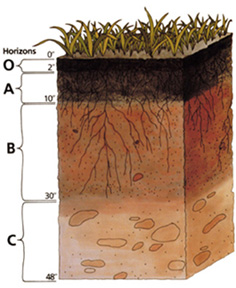
One of many soil profiles that is reasonably common

Monday, September 16, 2013

Global Food Wastage - US$750 Billion Annually!!!

The article below is a recent one that has looked at food waste globally.  There are studies for Australia and the USA that I am aware of [ the US one was the subject of a post a while back], but different regions tend to have food waste in different parts of the food chain, with production and other early areas more common in less developed areas.

But the big one is that the further along the chain the loss is, the greater the energy and other embedded costs are that are lost, or wasted.  Westernised societies thus do not do well in this regard.

We all need to lower our food wastage and losses - this is another timely reminder.  It is not a new issue - see the old poster from WW1.!!

Not a new issue - but a bigger one!

----------------------------------------
 
Around the world some 1.3 billion tonnes of food waste is produced annually, at a direct economic cost of some $750 billion, according to a new report by the Food and Agriculture Organization of the United Nations (FAO).

The report claimed that the huge volume of food going to waste annually is not only causing major economic losses but also wreaking significant harm on the natural resources that mankind relies upon.

The study, Food Wastage Footprint: Impacts on Natural Resources is said to be the first to analyse the impacts of global food waste from an environmental perspective, looking specifically at its consequences for the climate, water and land use, and biodiversity.

 Who wastes what?

 According to the FAO, 54% of the world's food waste occurs 'upstream' - during production, post-harvest handling and storage, while 46% happens 'downstream,' at the processing, distribution and consumption stages.

As a general trend, developing countries were found to suffer greater losses during agricultural production, while food waste at the retail and consumer level tends to be higher in middle- and high-income regions - where it accounts for 31% to 39% of total wastage - than in low-income regions (4% to 16%).

 The report also found that the later a food product is lost along the chain, the greater the environmental consequences - as the environmental costs incurred during processing, transport, storage and cooking must be added to the initial production costs.

Hot spots

Several world food waste hot-spots' were identified by the study:

The waste of cereals in Asia was found to be a significant problem, with major impacts on carbon emissions and water and land use. Rice's profile is particularly noticeable, given its high methane emissions combined with a large level of wastage.

The volume of meat waste across the globe was found to be comparatively low. However, the meat sector generates a substantial impact on the environment in terms of land occupation and carbon footprint, especially in high-income countries and Latin America, which in combination account for 80% of all meat wastage. Excluding Latin America, high-income regions are responsible for about 67% of all meat waste

 Meanwhile fruit waste was said to contribute significantly to water waste in Asia, Latin America, and Europe - mainly as a result of extremely high wastage levels.

Similarly, large volumes of vegetable wastage in industrialised Asia, Europe, and South and South East Asia was shown to translate into a large carbon footprint for that sector.
 
Causes and solutions

 A combination of consumer behaviour and lack of communication in the supply chain were found to underlie the higher levels of food waste in affluent societies.

According to the FAO consumers fail to plan their shopping, over purchase, or over react to 'best before dates’, while quality and aesthetic standards lead retailers to reject large amounts of perfectly edible food.

In developing countries, significant post-harvest losses in the early part of the supply chain were reported to be a key problem, occurring as a result of financial and structural limitations in harvesting techniques and storage and transport infrastructure, combined with climatic conditions favourable to food spoilage.

To tackle the problem, FAO has launched a '
tool-kit' that contains recommendations on how food loss and waste can be reduced at every stage of the food chain and details three general levels where action is needed:

High priority should be given to reducing food wastage in the first place. Beyond improving losses of crops on farms due to poor practices, doing more to better balance production with demand would mean not using natural resources to produce unneeded food in the first place.

In the event of a food surplus, reuse within the human food chain -  finding secondary markets or donating extra food to feed vulnerable members of society - represents the best option. If the food is not fit for human consumption, the next best option is to divert it for livestock feed, conserving resources that would otherwise be used to produce commercial feedstuff.

Where reuse is not possible, recycling and recovery should be pursued: by-product recycling, anaerobic digestion, composting, and incineration with
energy recovery allow energy and nutrients to be recovered from food waste were all said to represent a significant advantage over dumping it in landfills.

 “All of us - farmers and fishers; food processors and supermarkets; local and national governments; individual consumers - must make changes at every link of the human food chain to prevent food wastage from happening in the first place, and re-use or recycle it when we can't,” urged FAO director general, José Graziano da Silva.

Read More
Recycling Food Waste into Animal Feed within the UK’s Legislative Framework
Paul Featherstone, group director of SugaRich, looks at legislation and logistics to reduce the waste of former foodstuffs and instead turning them into valuable resources.
 VIDEO: Micro Anaerobic Digestion Biogas Unit Wins U.S. Defense Award
UK based small scale biogas technology specialist, SEaB Energy, has been selected as one of the Winners in the 2013 Defense Energy Technology Challenge.

Biofuel from Food Waste Certification in US Following Corn Plant Conversion
California based renewable fuel specialist, Aemetis has been granted approval to produce ethanol from separated food waste at its 55 million gallon per year renewable ethanol plant in Keyes, California.

http://www.waste-management-world.com/etc/designs/default/0.gif

Monday, September 09, 2013

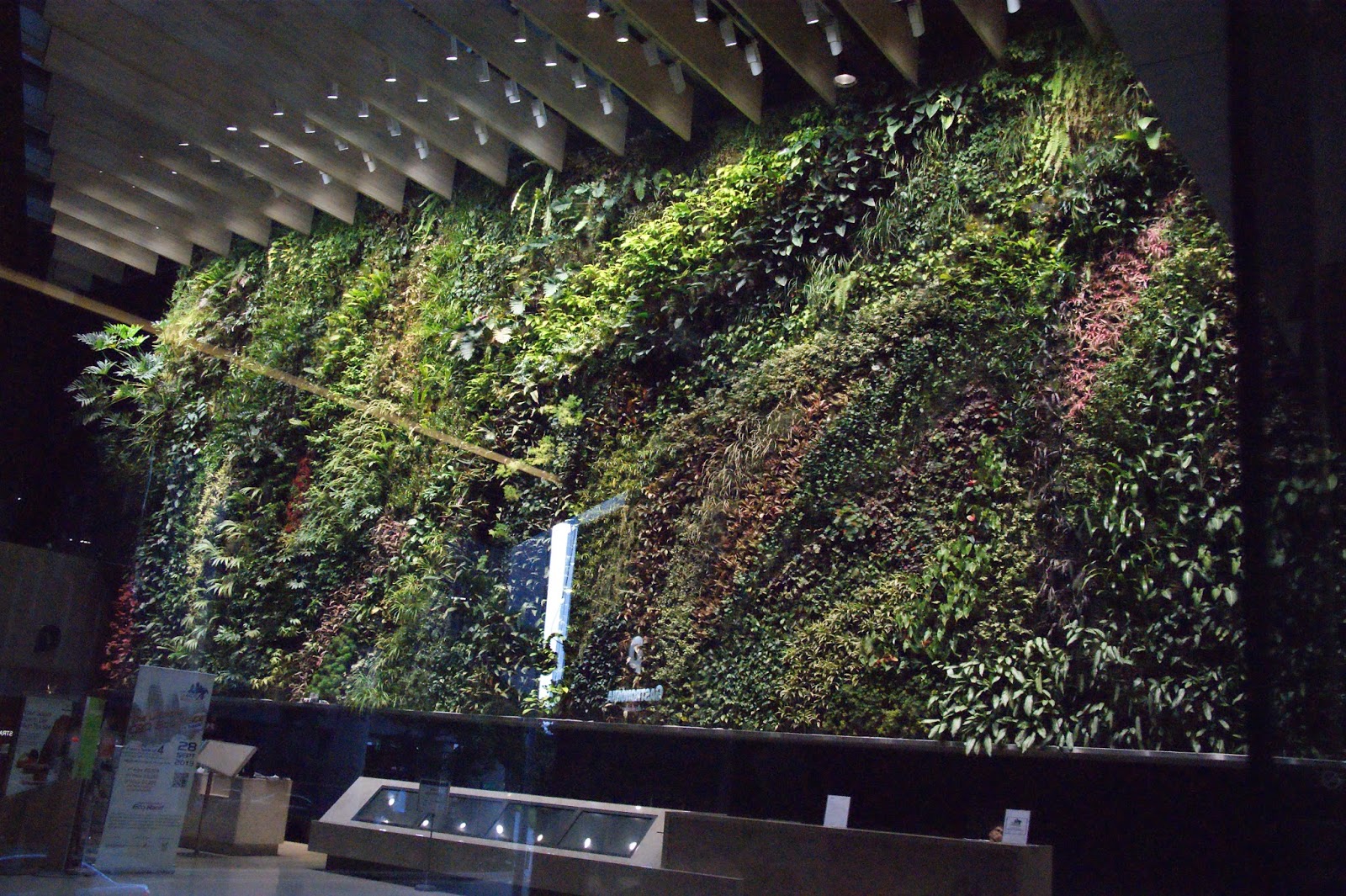
Green Walls - Getting Artistic, as well as Green


While the concept of installing green walls is now more common in buildings – both new and during refurbishing, a recent trend has been to actually make the walls a piece of art.
This is achieved through changes of texture and colour in the plants being used, their leaf length and shape, and growth habit.

Photos of a few examples illustrate this trend quite clearly.
One is a large outdoor green wall on the outside of a building, with the pattern providing a clear arty look.

outdoors green wall - with art pattern
 
The other is inside the ground floor foyer of a refurbished bank building, and in this case the green wall in enhanced through use of a clear roof to adequately direct light onto the wall, which covers the full width of the foyer from front to back.  Again, an arty pattern is used to generate additional interest in the display.
 
Sure, the use of an art design means that more effort is needed to maintain the full collection of plants in the green wall, clearly showing the design.  In many less art focused or design focused walls, the emphasis has been on the functionality of the green wall itself, with concepts of more oxygen, soothing greenery and so on – rather than any art pattern.

 This option of a pattern or design allows the green wall creators some additional flair in the design process.  I am sure we shall see more along this trend line over the next few years as better understanding of plant performance itself in these green wall scenarios, as well as better use of more variable colours in the plants – there are many, many leaf patterns and colours available,  not just the more common green and yellowish or variegated leaves.

Tuesday, September 03, 2013

Robotics in Horticulture and Agriculture

Just when you thought it safe and you escaped from the drones overhead, technology on your farm may get even scarier.

Robotics are coming to a farm near you - sometime in the next year or two.  Initially, they will not be everywhere - but they are coming, and reasonably quickly.
 
A group of engineers from the University of Sydney are leading the charge to create the first robot in the world to measure yield, pick vegetables and even weed crops.

Mark Calleija, a researcher from the Centre for Field Robotics, says his team is in the starting stages of building a generic machine that can work with vegetables, cotton and grains on a commercial scale. Not considered an easy feat by the industry, there are going to be many trials ahead but the initial progress is positive.

"It's looking like, in the next year or so, we are going to have a tele-operated partially autonomous robot out in the field that will be able to gather data and provide useful crop intelligence back to the farmer," he said.
 
Mark has predicted that within the next two to three years there will be autonomous weeding, autonomous crop intelligence and autonomous harvesting.

While robotics have seen developing use in industry, with fixed robots, the trend has been to try and match and develop co-operation between robots and their mentors [ if that is the term].  A recent Scientific American magazine [May 2013] had an intriguing story of industrial robots and their operators, and the level of co-operation that can be developed.  It was extraordinary - and made for real improvements in speed and quality of work.

How quickly it will develop in agriculture is probably still even too early to speculate.

But agriculture has often been a keen user of new technologies - it is not a backwards looking industry at all, and current use of drones is quite relevant to how robotics may move in the industry.

Develop a decent option - it will be commercialised and used!

Thursday, August 29, 2013

Indonesia Likely to Modify Live Cattle Import Rules

Several different sets of discussions, both in Australia and Indonesia, seem to be heralding a major change in attitude from Indonesia over beef imports to the country.

Last week in Brisbane was a very important meeting between Indonesian officials at a high level, and Australian participants in the live cattle trade to the country - the term of note is free and frank discussions - to try and develop some improvements and sensible co-operation in improving beef food supplies in Indonesia.  There is a monumental need to get the beef price down to around 75000 Rp per kg.  It has been well over 100000!  Indonesia also pretty well admitted that self sufficiency in 2014 for beef supplies was not achievable.  Then the ANZ Agribusiness area examined [ commissioned by the Indonesian Government] what self sufficiency might mean to Indonesia - for example was meeting 70% of demand a more reasonable goal, and a more achievable one?  This document is not yet publicly available, although there has been some media comment around.

Today saw announcements coming from Indonesia about a possible 60000 head increase in live cattle imports, and a potential change in how imports might be adjusted - with the critical issue being market beef prices.  If they rise, then that triggers more imports; if it falls below the nominated figure [ nominally around 76000Rp /kg] then trade reduces or stops.

All of the changes seem to signal a positive note for the live cattle trade into Indonesia, as well as some increase in boxed beef from Australia.

There is sure to be more, and clarification from Indonesia is certainly needed to ensure local pastoralists are able to begin some planning about how to be part of the increased live cattle trade.

More is here - http://www.abc.net.au/news/2013-08-29/indonesia-live-cattle-changes/4921398
and here - http://www.abc.net.au/news/2013-08-29/female-cattle-exports/4919486

and here - http://adf.farmonline.com.au/news/state/general/elections/indoz-meeting-held-in-brisbane/2669324.aspx?storypage=0

http://www.abc.net.au/news/2013-08-23/dist-indon-beef/4907554

and here too - Original Jakarta Post article: http://www.thejakartapost.com/news/2013/08/28/govt-issue-new-rules-meat-imports.html [ update on 29/8/13]

There certainly has been major discussions.  Lets see how it transforms into better co-operation between Australian and Indonesian interests in this important cattle trade business. 

It can be a win-win for both countries and their respective business areas.  And hopefully quite quickly, as we do need each other!


Wednesday, August 28, 2013

Hotter and Wetter Pre Wet Season Predicted by BOM.

The BOM released the latest modelling for the pre wet season period of 2013 this week.

Be warned - it is predicted to be warmer [ especially at night] and wetter in the pre wet season period in the Top End of the NT.

South of Katherine, it could be slightly drier than the median values.

These predictions are quite strong for the Top End, north of Katherine, with an order of a 75% or better chance for the warmer temperatures, and around 65% for the rainfall.  And thus, there are implications for management of pastoral and farming properties.  Could there be opportunities for some early pasture plantings?  Or will there be a need for less hay as the resumption of pasture growth will allow grazing?

Read more directly off the BOM site here:

http://www.bom.gov.au/climate/ahead/rain.naus.shtml   for rainfall, and here for temperatures:

http://www.bom.gov.au/climate/ahead/temp.naus.shtml

Remember - they are predictions!  But they do come with some strong probability numbers for night temperatures, and medium strong for rainfall.

Think of them as a planning tool to aid your decision making.

Tuesday, August 27, 2013

Faith in Potash - Says BHP Billiton

While current potash production is having its machinations [ see recent post ] it seems that aspiring producer, BHP is keeping the faith and proceeding to develop its new production site in Canada.

The Jansen site, expected to be in production in the second half of the decade, is a potentially large and low cost mine.  Something new for BHP Billiton, and to many an odd fit with the history of the company.
Jansen potash project site - BHP-Billiton

It is obvious that BHP-Billiton sees lots of potential in agriculture and horticulture for potash sales and use.  From an agricultural perspective, that is probably true - there will be increasing demand for potash as a needed nutrient in food production, as areas expand, and as is the case now, labile elements such as potash are so readily depleted.  There is also industrial use of potash based products, something more akin to BHP areas of expertise.

There is more here - http://www.queenslandcountrylife.com.au/news/agriculture/agribusiness/general-news/bhp-in-hunt-for-potash-partner/2669193.aspx?storypage=0

as well as more on the BHP Billiton web site and remarks made by management and often reported on the stock exchange web site - [ see www.asx.com.au and search for BHP].

BHP of course has excellent links to countries such as China, Brazil and others in Asia - will they leverage these connections to develop market share in potash products?

Tuesday, August 20, 2013

Computer Technology and Autism - A Good Fit?

As people with [ mostly ] relatively little contact with those with some form of autistic behaviour, many of us have little real world knowledge of the condition and its influence on those with the condition.  Many see a future for these people in sheltered workshops or similar places.

As an overview - we seem to believe that it is a sentence for which there is little in the way of positive outcomes.  Maybe that view is dated, very dated.  Current thinking sees autism as a spectrum disorder with very wide ranges of being affected - and unfortunately some may have a less than rosy future.  But for many, there may be some more positive outcomes, related to development and a real career.

One of the world's largest and more influential technology companies, with operations in many countries including Australia, is SAP, a software provider and systems integrator to large corporations and governments.  Well guess what?  SAP is now hiring people with autism.  Yes, there may be some serious help in work and career development for those with the condition.

Strange, well  maybe not so strange.

In 2002 a Scottish hacker with Asperger’s [a form of autistic spectrum disorder] achieved ‘the biggest military computer hack of all time’ against NASA and other US defence sites, leaving such helpful notes as "your security is crap".

Today, Silicon Valley is reportedly full of people with Asperger Syndrome; dozens of start-up CEOs all known to be obsessive, antisocial, and incredibly blunt. Bill Gates of Microsoft is reputedly an Asperger Syndrome person. Isn’t it time the rest of the workers followed suit?

Disability and tech often go hand in hand. If it’s not diagnosis of tech leaders, it’s how new technologies are making life better.  Chinese researchers recently developed a way for Microsoft’s Kinect to  translate sign language into written text, which could be valuable for the deaf.

Indian start-up Kriyate has created a Braille smartphone, while the fantastic OrCam is basically Google Glass for the blind. Outside of hardware, there are plenty of apps: Apps for wheelchair users, apps for Alzheimer’s sufferers and carers, and apps for autistics looking for more independence.

Technology can never make being disabled a breeze, but every little helps, and little things like apps can make a big difference to people. But possibly the most important thing that tech can provide is jobs.......real jobs, and careers even .

Technology companies are a major employer these days, and often the disabled struggle to find work, so I was surprised and pleased when SAP announced plans for an autistic recruitment drive.

Looking for software testers and programmers, the German company wants 1% (equal to the worldwide proportion of people affected) of its global workforce of 65,000 employees to be autistic by 2020. “Only by employing people who think differently and spark innovation will SAP be prepared to handle the challenges of the 21st century,” SAP human resources Chief Luisa Delgado said. Six have already been hired in the firm’s Bangalore office.  And in India that is a big, big step where disability is seriously looked down on. 

With only 15% of adults with autism in full-time employment, according to the US National Autism Society, this move could be the start of a mini revolution.

SAP isn’t the first company to adopt this policy. In fact many smaller tech start-ups are made up almost entirely of autistic and aspergic people, but it’s by far the biggest tech company to make such an announcement. Denmark-based Specialisterne is helping them in their hiring, but there’s also Autonomy Works, the German company Auticon, US- based Aspiritech, and Square One all making a point of hiring people lying somewhere on the autism spectrum.

Is it happening here in Australia?  Is there any local data available?

And it makes perfect sense. In the logic, numbers-based world of software, some autistics can  thrive. Their often maths-orientated and usually super-focused minds are less prone to distraction and incredible memory combined with a general intolerance for error means the work is often to a higher quality than other people’s.

Obviously some changes may have to be made around the office, and managers educated on how to best communicate with the notoriously blunt workers (which can be a shock to the unfamiliar, who often mistake pure logical thinking for rudeness), but small concessions can mean a more effective and diverse workforce.

What SAP and all these other companies are doing is really fantastic.

If more of the tech firms [especially some of the larger ones] follow suit, technology could lead the way in actually providing equal opportunities hiring, and reducing stigmas.

THAT has to be a good thing for society in general.

There is some more here on this issue -

http://www.idgconnect.com/blog-abstract/2863/we-need-more-autistics-in-tech

http://www.idgconnect.com/blog-abstract/2926/apple-ipad-gives-autistic-children-voice-Canada

[some material in this blog adapted from the first article above]

Saturday, August 17, 2013

Indonesia to Run Out of Cattle ??

Indonesia is still struggling with policy settings to address the demand for beef, now that the live cattle trade with north Australia has been truncated.

The import restrictions which they have imposed have certainly been a cause of the big spike in beef prices in major cities.  Australia is not without some blame, over the instant curtailment of the trade on animal welfare grounds too.

Both countries have a range of groups to deal with in developing new policy parameters.

But there are some worrying news snippets coming out of Indonesia and recently reported on by Tempo magazine.

See - http://en.tempo.co/read/news/2013/08/14/055504422/No-More-Cattle-in-4-Years-Minister-Says

and http://en.tempo.co/read/news/2013/08/15/056504579/Beef-Prices-Remain-High-in-East-Java

and
http://en.tempo.co/read/news/2013/08/14/080504478/Breakthrough-in-the-Procurement-of-National-Beef

all from this week.  There are some others as well.

Which ever way one appraises the situation, Indonesia needs more beef and they are not in a position to produce what they need, not anytime soon, and that was the understood situation by many in the cattle industry in north Australia anyway.  When a minister announces that a country will run out of cattle in 4 years though - it is serious!

Both countries have election complications, but the Australian side is probably far less complicated than Indonesia where beef prices are likely to be a significant issue unless moderated before the 2014 Presidential elections.  And Indonesian political machinations are notoriously complex and often somewhat twisted!

There seem to be some broad easing of restrictions on live cattle exports to Indonesia announced recently, but the factors around the cattle numbers to be sent are relatively short term.  If a longer term perspective was announced for a year or several, then a bit of planning and some logic might allow better scheduling of animal movements, and local fattening in feed lots in Indonesia prior to slaughter.

Beef is in demand - with China now increasing [mostly] boxed beef imports, but some live cattle will go as well.

Could Indonesia be squeezed over prices such as they could not afford to buy cattle?  Possibly not immediately but could it happen...........maybe, if demand continues to surge from other countries in Asia.


Friday, August 16, 2013

Give Food Waste a RED Card

Food waste is an insidious problem. 

It is not something many think about yet the data is staggering, and in westernised economies as much as 50% of food is wasted, based on losses from production through to food thrown out after use.

The UN has been developing a major effort about the problem, and help is coming from an unusual source.

One of Brazil's most popular soccer teams has joined the program with a slogan - "Give Food Waste a RED card".  Clever marketing!

Particularly so with the World Cup in Brazil next year [2014] and the Olympics in 2016.

Read more about the program here.
 http://www.environmental-expert.com//news/brazils-biggest-football-team-gives-food-waste-the-red-card-388477?utm_source=News_Waste_Recycling_15082013&utm_medium=email&utm_campaign=newsletter&utm_content=feattextlink

Thursday, August 15, 2013

Compadre Zoysia - Sow by Seed

Using turf sod is expensive, and more so even in the Northern Territory.

Good quality turf sod, depending on the species e.g. couch, buffalo or zoysia and the variety within a particular species, seems to be in the $8 to $17 per sq. m range with at least one producer charging over $20 per sq. m for at least one zoysia variety.  Commercial laying can cost $3-5 per sq. m, depending on the nature of the area and size of the job, possibly more if the contractor supplies other items eg topsoil.

Sod prices do not equate well with some advertised prices in other jurisdictions around Australia.

Some might argue local prices are too high - I am not judging that, as all individual producers of sod have their own costs to deal with including water, location, freight, fertiliser and herbicides, equipment, labour and even scale of operation.

But if you want to use Compadre zoysia - rather than buy turf sod, try using seed.

There are some disadvantages - with time to reach a usable surface being one of them.  But that also applies to using seed of any type, and many people use Bahia grass seed to establish a lawn or turf area..........why not Compadre zoysia seed?  A reasonable appearance of an area from seed can be achieved in 5-8 weeks and a usable surface for light use in 10-12 weeks, although 16 weeks is more the period for a dense surface.  This will vary quite widely, depending on location and husbandry of the turf area and is a guide only.  The real trade off is reduced cost of the area, and with zoysia the shade tolerance, lower water and fertiliser use once established and much reduced mowing during the lawn life.  And for those interested - reduced mowing means lowered greenhouse gas emissions too! 

Seed is available, and recommendations and procedures for sowing Compadre seed are well developed.

zoysia seedlings showing density at 8 weeks - see runners developing
You can use simple hand sowing, keeping the seed close to the soil surface, and using a light mulch cover to assist with moisture management at the surface.  It is vital to ensure soil does not dry out during the first 3 weeks of establishment, and that means several periods of irrigation during the day, or using low application rate sprinklers let run for maybe an hour several times in the day [ these systems tend to deliver 1-2mm/hr].

Sowing seed between May and July is not recommended at all.  Yes, you can establish seed in this period, but commonly nights are cool to cold [ especially if inland a little where night temperatures below 10C are reasonably common] and progress of the germination and establishment is slow. 

Waiting to sow until August is better, as temperatures are a bit warmer, germination a bit faster and yet it is still not too hot in the daytime, and evaporation is mostly below 6-7mm per day.  That figure is about what you need to apply as irrigation each day to ensure a moist soil surface.  Evaporation is a BOM value derived from an open area of water, and from grass and soil it is maybe 10 -20% less, so that adjusted value is what is needed each day to fill the soil moisture and keep the surface moist.  Evaporation data for many areas is on the BOM web site.

From September onwards in north Australia, the storm period is approaching and there can be heavy rain.  It does not prevent establishing a turf area, but there is a need to be aware of the need for some surface protection at times to prevent erosion and seed loss.  Light mulch will usually help a lot, and once the seedlings are established, they will also help bind the soil. 

There can be problems - yes there can, but surface protection can help.  Getting a vigorous establishment and growth of the seedlings is probably the best way to solve most of the problems about seed wash.  If you are unlucky and get a big storm very soon after sowing and where there is no seedling emergence, you might have problems.  Best to avoid sowing from December onwards through March, unless surface protection is used. 

Using commercial hydroseeding can be a good way to mix the seed and a protective mulch, essentially providing that surface protection.
 

Compadre zoysia is suitable for this method of sowing [see photo above from Darwin, hydroseeded in late December at approx. 10 weeks from sowing] and there are areas very successfully done this way around Darwin, and it is very widely used in the Houston, Texas area of the US, where Compadre zoysia is a commonly used seed sown turf .  However, there is a need to ensure the mixing tank and all pipelines on the equipment are clean, especially of other seed types, and for small areas such as a small backyard, that can be a bit of a cost.  Less of an issue if larger areas are being hydroseeded, for example a small municipal park.

A clean seed bed is absolutely essential - this is easier in new areas, more tricky in old areas where turf weeds might be lurking still from previous lawn areas.  Getting the weeds to emerge and grow and then killing them with herbicides is a normal recommended practice and may be needed more than once.  Glyphosate is usually used, although a few turf weeds are not killed by this chemical and a dicamba /MCPA mix might be needed for those [several trade names incl Kamba -M].

Compadre zoysia seed is available from us and we can supply specific guideline sheets for establishment and maintenance.  It is a cost effective option to use seed, and a good turf area can be easily achieved with a modest amount of effort, and a little bit of attention to detail.............at a much lower cost than using turf sod.

Saturday, August 10, 2013

Accountants to Save the World?

Professor Tony Allen says they might - along with farmers and optimists.  His FAO.  Not the old hard core Food and Agriculture Organisation of the UN.

Read about it here - http://www.farmingahead.com.au/articles/1/8755/2013-07-29/news/three-keys-to-food-security-and-saving-the-world

It is controversial, but he has form on some big thinking issues.

Do you think it might happen?

Friday, August 09, 2013

Potash Prices Implode - Will It Mean Cheaper Potash Fertilisers?

The world of potash is in a free fall mode after the price recently imploded due to a cartel breakup.

At the end of July, Uralkali pulled out of the Belarus Potash Corporation (BPC) export cartel that controlled about 45% of the global potash market. Uralkali asserted that Belaruskali, it's partner in BPC, had been selling outside of the cartel. This is almost certainly true, however, it appears to be minor in scale.
The result has been a massive sell-off in US stock market listed potash fertiliser companies, including Potash, Mosaic and Agrium, as well as, international companies such as K+S in Germany, Uralkali and Belaruskali.

Recently it has been learned that two Russian billionaires sold out of their shares of Uralkali ahead of the decision to pull out of the joint trading venture BPC. This is a major red flag. It is clear they must have known this decision was coming. Zelimkhan Mutsoev and Alexander Nesis both sold off billion dollar plus positions in Uralkali.  Insider trading?  - usually frowned upon! 
Interestingly, a different Russian billionaire Suleiman Kerimov has maintained his stake, but sees Uralkali as a long-term play. He certainly must be involved in the decision by the company to back out of the cartel. What is his strategy?

The company already has said it will ramp up production and increase sales to China, India and Brazil. They will add about 3.5 million tons of output by 2015. Uralkali can do this because they have the lowest cost of production near $80 per ton.
What are Uralkali's true motives? The second thing, the one we are meant to see, is to keep competitors out of their market. BHP has been planning to build the world's largest potash mine in the world in western Canada. They have been able to consider building this facility largely because of the artificially high potash prices created by BPC and Canpotex - the Canadian cartel made up of Potash (54% ownership), Mosaic (37%) and Agrium (9%).


potash mining in Ural mountains

What Uralkali is doing is certainly predatory pricing by a big player. If successful they will keep BHP out of the market for a while and kill some higher cost producers. We'll see later this year the impact as BHP is making decisions about the mine soon.
But there's more, and information coming from Russia may be not always true.

Will we see lower potash and potash mix fertiliser products here in Australia anytime soon?  Do not hold your breath.............but it would be a boost if we did!

See more here - http://americanresourceboom.com/boom-blog/100-implosion-of-potash-prices

and here - http://www.theaustralian.com.au/business/opinion/bhp-happy-to-fly-solo-in-russias-potash-war/story-fnciil7d-1226689095235

and here too - http://www.reuters.com/article/2013/07/30/us-russia-uralkali-idUSBRE96T0S220130730

The focus has been on the financial markets so far, without much comment related to potash use in agriculture at lower prices.  One would have to think with reasonable prices for many ag products and even for horticulture and dairy products that demand would improve, which would suit lower cost producers, especially Uralkali, a very low cost producer.


Thursday, August 08, 2013

Indonesian Cattle Herd Declines - NOT Increases

At the middle of the dispute over importing cattle and beef into Indonesia is the tenet that the herd was increasing and would be sufficient to meet domestic demand by 2014.

While many had views this was possibly not correct there has now emerged more recent 2013 herd statistics that seem to clearly show a rather large decline over a few years of several million head.  There are also reports that breeder cows are also being slaughtered in considerable numbers.  Hardly the path way to a bigger cattle herd.

The data has been leaked from new official statistics of a 20% drop in herd numbers since 2011, although many had believed the previous data to be rather inflated.  Whatever......it hardly indicates that Indonesia will be sufficient in beef production any time soon.

Sources in the Australian cattle export industry said they had always suspected the 2011 figures were grossly inflated to help justify the import quota system which has caused beef prices to skyrocket in Indonesia.

Indonesia's Tempo magazine published the leaked figures in this month's edition and reported that in many regions breeding heifers were being slaughtered for meat.

Agriculture Minister Suswono claimed last month that Indonesia was on target to reach its self-sufficiency target in 2014. "We hope it will be achieved next year," he said.

It is too soon to even speculate about increases in live cattle numbers going to Indonesia, especially as there are already some considerable increases still to be worked through over the next month or so.  It will be import numbers for early 2014 that will be critical, and it might be they will improve.

Friday, August 02, 2013

Renewable Energy, The Philippines and Microgrids

The Philippines government has recently announced they want to convert to renewable power sources over a 10 year period, and be 100% using renewables.

There is some scepticism over the plan, and a recent article seems to be not very positive.
http://www.energynewspremium.net/storyview.asp?storyID=801570666&section=Asia+Watch&sectionsource=s1384047
 
However, the author does not factor in the potential for all renewables in the Philippines - solar, wind, biomass gasification and pyrolysis and ........geothermal.  This latter source could provide baseload power.  Geothermal power is widely used in NZ, and with the Philippines on the Pacific Rim of fire - it is conceivable that it could be a valuable energy source, supplemented by other forms of renewable energy.  It is also a country of islands - where smaller localised supply sources are more useful than large mega energy plants.  The island of Palawan has already commenced some widespread use of renewable energy.

The other concept that might be valuable is the idea of microgrids.  Cuba has moved to use microgrid power, and by so doing has virtually eliminated power outages that were common with the older centralised power generation system.  More on microgrids and the Cuba experience here - http://blog.rmi.org/blog_2013_07_23_microgrids_and_municipalization and here -
http://blog.rmi.org/blog_2013_07_29_learning_from_the_cell_phone_phenomenon  There is also discussion on local sources and community management of demand, especially critical at times with PV sources. See more here  - http://blog.rmi.org/blog_2013_07_31_debunking_renewables_disinformation_campaign


While renewable energy usually gets bad publicity over intermittent production, there are techniques to fix that issue, even without using sophisticated storage, although that approach has a lot of adherents, including the commercial companies developing these systems.  They must be doing it right as a system with molten salt storage has been installed at a large mine in South America.

The move by the Philippines is a bold one.  Could it be a model for others - including Australia?

Thursday, August 01, 2013

Better Growing EcoFriendly Prawns - an Australian FIRST.

I like eating prawns.  A childhood indulgence was even to go and catch prawns in the local lake, with a drag net, then cook in boiling salt water [ocean preferred] and eat warm.
 
Fast forward to the current time when prawn production is still wild caught, but with prawn farming a major contributor, albeit with a very bad rap, due to ecological issues in many prawn farms, particularly over recent times in SE Asia.
 
That might be about to change dramatically with a couple of recent announcements in Australia of recent research now being used commercially.

Aquaculture is part of animal production, so it does fit in my blog broad theme.
 
Australian black tiger prawns - after genetic improvement/ breeding
The first was about two weeks ago, when the results of about eight seasons of genetic improvement - call it animal breeding if you like - that indicated that monster improvements in production of tiger prawns was achievable commercially through breeding, and was being demonstrated commercially here in Australia.  Yields of 24t/ha have been achieved with breeding, with normal average commercial yields somewhere around 5t/ha.
 
Read more here - http://www.csiro.au/en/Outcomes/Food-and-Agriculture/tiger-prawn-farming.aspx
 
The second which seems to have been more of a media event, has been the announcement of new feed formulations which eliminate fish / marine based materials and offer much better feed conversion efficiencies, leading to a 30% faster growth rate.
 
The product is now commercially produced by Ridley Agri-products.  Novacq is an entirely natural food source based on the smallest organisms in the marine environment, the marine microbes which are the foundation of the marine food pyramid. It is based on over 10 years of CSIRO research to understand the natural marine microbial processes that occur in prawn farm ponds and natural marine estuaries, and the role of microbes in prawn nutrition.
 
More here - http://www.csiro.au/Portals/Media/Perfect-food-for-perfect-prawns.aspx 

Taken together, these two announcements once translated into broad commercial practice will be of major commercial and environmental importance.

Australians should be proud of this science based great leap forward!

Are you now looking for some farm grown environmentally friendly tasty prawns??

Thursday, July 25, 2013

Dioxin Found in Imported Phenoxy Herbicides in Australia

There has been a monster fuss over dioxin in the phenoxy herbicides used in the 1970s.  Agent Orange, helicopters, defoliation.....Vietnam era one says.........the manufacturers do it better now.

The good ones do.............but with a race to the lowest cost product for the ultra competition which drives the cost issue in agriculture and horticulture in Australia..............guess what?  Imported product has suddenly appeared on the scene with plenty of dioxin present as a by product of the production of technical grade 2,4-D and 2,4,5 -T.  Same  quality control issue as the 1970s, one would suspect.

Phenoxy herbicides are not banned and many do a great job at low rates, and modest cost.  Combination products are widely used - eg 2,4-D and MCPA or dicamba, and often in horticulture and even home garden use as turf herbicides.  2,4-D was probably the first real herbicide and has been used since the 1950s.

But the costs have fallen and there are many manufacturers in China, and some it now seems are really cutting corners.

Yes, Australia has probably not done enough monitoring of ongoing imported products either. 

As is often the case, initial supply is fine - meets specifications etc.  As volume goes up.......sadly, quality plummets!  Or a different lower cost producer replaces the decent producer who is meeting quality requirements and the exporter [ often not the producer] says little.......but quality is going down, but not enough to indicate the product is not doing its job. 

It is the by product that is the problem - dioxin.
Herbicide spraying - Vietnam war era.

It is deadly stuff.............look it up eg wikipedia, plenty of detailed reports on line.  It is VERY NASTY!

It is unclear how widespread the problem is in Australia, but some believe that it is not major, restricted to some importers and formulators using lower cost product to drive their sales into the market.  It might take some time to sort out, but as a guide.........BEWARE if using phenoxy herbicides.  You should be now anyway.

Everyone seems to have thought the dioxin issue was dead and buried.........and with quality technical product from quality manufacturers it broadly had not been an issue for many years.  However, it is back.

It is interesting to also speculate how much poor technical product also went into other Asian countries - Malaysia, Vietnam, Laos, Burma, Cambodia etc where cost is probably an even bigger concern.  They are unlikely to have respected regulators to get on top of this issue.

Is it any wonder many do not trust Chinese product?  Whether agricultural chemical or baby formula, seems immaterial - they are suspect, and one wonders why Chinese want our rural products???

See - http://www.abc.net.au/news/2013-07-23/industry-supports-regulator/4838078

and http://www.abc.net.au/radionational/programs/bushtelegraph/dioxin-follow/4837862


UPDATE - also see this article from later in the week after the blog written.

http://www.queenslandcountrylife.com.au/news/agriculture/cropping/general-news/dioxins-slip-through-system/2665361.aspx?page=2